
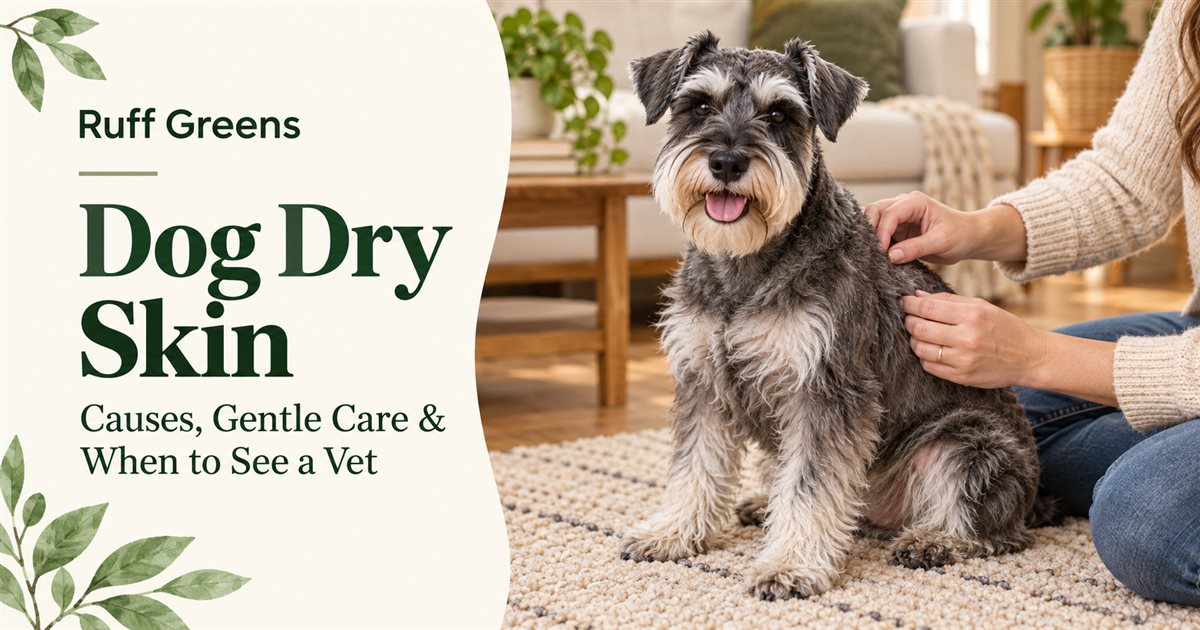

Dog dry skin, white flakes on a dark couch. A coat that feels like straw. A dog that scratches at night. In fact, that is how dog dry skin usually shows up at home. It is a finding, not a diagnosis. Mild winter flakes can settle with gentler baths, a humidifier, and daily nutrition. However, redness, odor, hair loss, or raw skin needs a different plan.
What dog dry skin looks like under the coat
Dog dry skin is extra scale sitting on the surface of the skin, often with a dull, brittle coat. Owners notice white flakes on the back, rump, and bedding. For example, the fur can feel dusty. Some dogs itch. Some just look unkempt. Veterinary dermatologists call the dry, flaky pattern seborrhea sicca. The oily, smelly version is seborrhea oleosa. A dog can show both at once.
The flakes are dead skin cells shedding faster than they should. In general, a little dander is normal. A snow-like scatter on a dark throw, a brush full of scale, or a coat that never looks clean after a bath is the version people search for.
How to Recognize Dry, Flaky Skin
Part the hair down to the skin. Dry dog skin looks pale, tight, and sometimes a little crusty. Itchy dog skin looks pink, scratched, or scabbed. If your dog is also licking paws raw, do not treat that as simple winter dryness. Raw feet are a different problem than a few flakes on the back.

Key Takeaways
-
Flakes are a clue, not a label
Dog dry skin can be winter air, too many baths, or an underlying skin problem. Look at itch, odor, and hair loss before you pick a home fix.
-
Overbathing makes a dry coat worse
Human shampoo and hot water strip the oils that keep a dog's skin barrier intact. Most healthy dogs need fewer baths, not more.
-
Itch plus odor is not simple dryness
Yeast, bacteria, mites, and allergies can look like dandruff. Moving flakes, sores, or a greasy smell belong in a clinic, not in a coconut-oil experiment.
-
Daily nutrition supports skin from the inside
Omegas, vitamins, and a measured greens scoop can support a dog's coat. They do not treat infection, mites, or hormone disease.
Table of Contents
- What dog dry skin looks like under the coat
- Why a dog's coat turns dry, flaky, and itchy
- Dry dog skin vs allergies, dandruff, and walking dandruff
- When a dog's dry, itchy skin is more than winter flakes
- How to soothe a dog with dry skin at home
- Daily greens that support a dog's dry skin and coat
- FAQs about dog dry skin
Why a dog's coat turns dry, flaky, and itchy
A dry, flaky coat happens when the skin barrier loses water and oil faster than it can replace them. Indoor heat, harsh shampoo, low-fat diets, and inflammation all push that barrier the wrong way. The coat then looks dull because the hair shaft is dry too.
For example, winter is the classic season. Forced-air heat drops humidity in the house. Owners describe a trail of white flakes on the sofa after the furnace has been running. That pattern can be environmental. It can also unmask a skin problem that was quieter in humid weather.
Similarly, bathing too often is another everyday trigger. Canine skin sits at a different pH than human skin. A people shampoo, a hot rinse, or a weekly "just because" bath strips sebum. The coat looks worse two days later, so the dog gets another bath. That loop is how mild dryness turns into an itchy, flaky coat.
Underlying Skin Conditions
However, parasites, allergies, yeast, and bacteria sit underneath a lot of "just dry skin" cases. The AKC overview of seborrhea notes that secondary seborrhea, driven by another condition, is far more common than the inherited form. Allergies, external parasites, endocrine disease, and nutritional gaps all make the list.
The Merck Veterinary Manual puts hormonal disorders and allergies at the top of secondary seborrhea causes. Allergies are more likely if the itch started before age five. Hormone workups come up more often when the flakes start later and the dog is not that itchy. Nutrition still matters: a diet short on essential fatty acids can leave hair brittle and skin tight. If your dog is also losing hair, treat that as a bigger coat-health question than a humidifier can answer.
Dry dog skin vs allergies, dandruff, and walking dandruff
Dog dry skin, dandruff, and itch get used as if they were one problem. They overlap. They are not the same job.
Specifically, dandruff is the flake. Dry skin is the tight, dusty feel under the coat. Itch is the behavior: scratching, chewing, rubbing, licking. A dog can have flakes with almost no itch. A dog can itch with almost no flakes. The combination tells you more than any one word.
PetMD's dandruff guide splits the picture into dry seborrhea, oily seborrhea, and "walking dandruff." Walking dandruff is not dandruff. It is Cheyletiella mites that look like moving white flakes on the back. If the snow on the coat seems to crawl, that is a parasite visit, not a moisturizer project.
Signs That Point to Allergies or Infection
By contrast, allergies usually itch first. Paws, face, ears, armpits, and belly are the usual zones. Recurring ear gunk, red feet, and seasonal flares point that way. Dry winter scale on the topline, with a comfortable dog, points more toward environment and bathing.
Meanwhile, oily, smelly scale is not a coconut-oil problem. Yeast and bacteria love extra sebum. They add odor, greasy clumps, and more itch. Clearing the infection often changes the whole picture, which is why vets sample the skin instead of guessing from the couch flakes.
Finally, thick, crusty pads or a crusty nose is another fork. That can be hyperkeratosis in dogs, extra keratin on hairless skin, not the same as a flaky back. Do not scrape either one at home.
When a dog's dry, itchy skin is more than winter flakes
Mild flakes on a bright, eating, comfortable dog can wait for a short home trial. The emergency is not the flake. The emergency is what rides with it.
Therefore, get a same-week exam if the itch is constant, the skin is red or raw, there is hair loss, or the coat smells sour or cheesy. Open sores, yellow crusts, and spreading bald patches are not seasonal dandruff. Neither is a dog that suddenly drinks more, gains or loses weight, or seems tired.
Urgent Warning Signs
Also, go in now if flakes seem to move, other pets start itching, or people in the house get itchy bumps. Mites and some fungal infections can spread. A painful, wet, angry patch can become a hot spot in a day.
Do not wait out a senior dog whose coat collapsed along with appetite, thirst, or heat-seeking. Those signs can sit with hormone disease. Dry skin is the billboard. The metabolic problem is the story.
At the clinic, a visit usually includes a hands-on skin exam, a flea comb, and samples. Cytology looks for yeast and bacteria. A skin scrape looks for mites. Bloodwork comes in when the history points to hormones or a systemic illness.
How to soothe a dog with dry skin at home
Home care for a dry, flaky coat works when the dog is otherwise well, the flakes are dry and light, and the itch is mild. Give it two to four weeks. If the coat is worse, stop guessing.
First, cut the baths. Many dogs do better every three to four weeks, not every weekend. Use lukewarm water and a dog-formulated oatmeal or moisturizing shampoo. Rinse until the coat squeaks. Leftover soap is a quiet cause of ongoing itch. Skip human dandruff shampoo. The pH and some actives are wrong for canine skin.
Next, brush on a schedule. A few minutes, several days a week, lifts dead coat and spreads natural oil. That is also when you see new bald spots, fleas, or scale that looks greasy instead of dusty. Use a tool that matches the coat. A Miniature Schnauzer's wiry jacket is not a Lab's undercoat.
Humidity, Oils, and Daily Skin Support
In addition, add moisture to the air, not just the dog. A humidifier in the room where your dog sleeps helps when the furnace has been on for weeks. Keep water bowls full. Dehydration shows on skin the same way it shows on people.
However, be careful with kitchen oils. Coconut oil is the home remedy owners reach for first. A thin smear on a small dry patch can sit on the surface. A thick coat that the dog licks off adds calories and can upset a sensitive stomach. Essential oils and leftover human cream do not belong on dog skin.
Finally, ask your veterinarian before you add a fish-oil capsule from the pantry. Marine omega-3s (EPA and DHA) are the fats most often used to support the skin barrier. Our guide to omega-3 for dogs covers amounts without treating oil as medicine. Stay on year-round flea control. One flea bite can look like dry, itchy skin in an allergic dog.

Daily greens that support a dog's dry skin and coat
Skin is an organ that rebuilds every day. A dog's dry, itchy coat often looks better when the bowl covers fatty acids, antioxidants, and the micronutrients that feed that turnover. That is everyday nutrition, not a cure for mites, yeast, or thyroid disease.
Using a Daily Nutritional Topper
Where do you get that in a form a picky dog will actually eat? Ruff Greens VitaSmart is a sprinkle-on blend of fruits, vegetables, vitamins, minerals, omegas, probiotics, and digestive enzymes. Mix the scoop for your dog's size into the meal you already feed. The job is daily skin-and-coat support from the inside, not a medicine claim.
Therefore, give a nutrition change four to eight weeks. New skin cells do not appear overnight. Keep grooming and humidity going. A greens scoop does not replace a medicated shampoo or a food trial. If you want a wider shelf after the diagnosis is clear, browse the itchy skin and coat collection. Start with the bowl, not a stack of chews.

A dry coat can look like a grooming problem and still be a nutrition problem. Flakes on the couch do not mean you failed. They mean the skin barrier wants water, oil, calmer baths, and a bowl that covers the basics. Get the red-flag cases diagnosed. For the rest, keep the routine kind, and let daily greens support the coat you want to see in the next month.

Ruff Greens, VitaSmart
All Stages Formula, All Breeds Ruff Greens® is a highly concentrated blend of Fruits, Vegetables, Digestive Enzymes designed for your dog. Add it to your current dog food of choice to give your dog t… Read more
FAQs about dog dry skin
Can winter heat cause dog dry skin?
Yes. Forced-air heat and low indoor humidity pull water out of the skin barrier the same way they dry your own hands. Mild flakes on the back, a dusty coat, and little itch often track with the furnace. A humidifier, fewer baths, and a measured greens scoop are a fair first pass. Add a clinic visit if itch, odor, or hair loss join the flakes.
Is coconut oil safe for a dog with dry, itchy skin?
A thin smear on a small, intact patch is a common home try. A heavy coat that the dog licks off is extra fat and can upset digestion. Coconut oil does not treat mites, yeast, or allergies. Skip it on broken skin, around the eyes, and in dogs with pancreatitis risk. Finally, ask your veterinarian before it becomes a daily leave-on.
How long until a dog's dry coat looks better?
Gentle grooming and humidity can cut visible flakes in one to two weeks if the only problem was dry air or overbathing. Nutrition changes take longer because skin and hair turn over slowly. Plan on four to eight weeks before you judge a daily scoop. If the coat is worse at two weeks, or the dog is miserable, switch from home care to an exam.
Can a daily greens scoop help a dog with dry skin?
It can support the skin barrier when the diet is light on fatty acids, vitamins, and plant antioxidants. Ruff Greens VitaSmart is mixed into the existing meal as daily nutrition, not as a treatment for infection or hormone disease. Keep the scoop next to the kibble, stay consistent, and let the coat tell you over the next month.

