
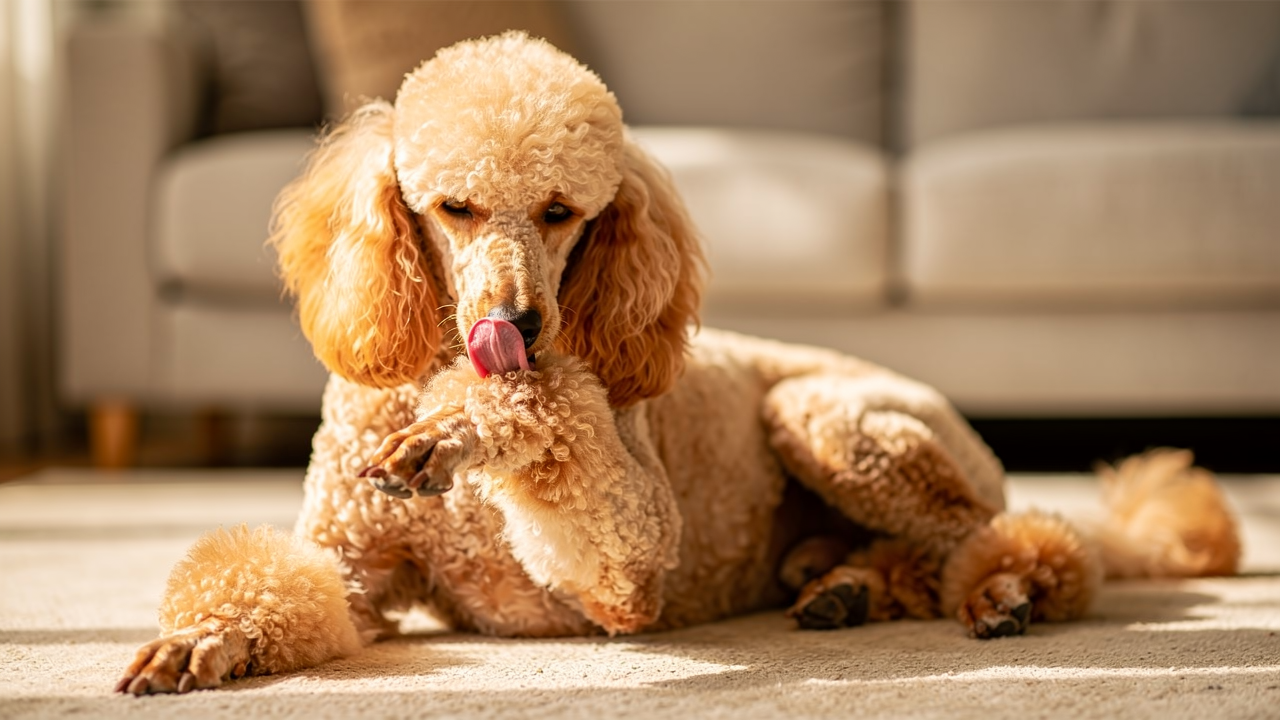

A dog licking paws raw is trying to soothe itch or pain. Allergies, yeast, irritants, injuries, and sometimes anxiety are the usual causes. Check the paw, rinse it, and stop the licking. Call your vet if the skin is broken, swollen, smelly, or not better in a day or two.
Key Takeaways
-
Raw licking is a medical sign
Dogs do not lick paws until they are raw for fun. Itch, pain, infection, or stress is driving the behavior, and the skin damage makes it worse.
-
Allergies and yeast lead the list
Environmental allergies (atopy), fleas, food reactions, and yeast between the toes are the most common reasons paws turn pink, smelly, and sore.
-
Broken skin needs a vet
Bleeding, swelling, pus, a foul odor, or a limp are see-a-vet signs. Open skin is an easy path for bacteria and yeast.
-
Stop the lick cycle while you look
Rinse irritants, keep paws dry, and use a cone or recovery suit so the skin can rest. Home steps help. They do not replace a diagnosis.
-
Nutrition supports skin from inside
Omega fats, antioxidants, and gut support can help the skin barrier. They do not treat, cure, or replace veterinary care for a raw paw.
Why a Dog Licking Paws Raw Is a Warning Sign
A dog licking paws raw is not "just a habit" you should ignore. Licking is how a dog tries to soothe itch, sting, or pain. When it goes on long enough, saliva and teeth break the skin. Then yeast and bacteria move in, and the itch gets worse.
Cornell University notes that dogs with atopic dermatitis often lick and chew their feet. Hair in those spots can turn brown from saliva. The skin can look normal at first. Redness, hair loss, and thicker skin come later.
Night licking is one of the most common owner complaints. The house is quiet. There is nothing else to chew. The itch that was easy to miss at the park becomes the whole evening. If you hear rhythmic licking after lights-out, treat it as a symptom log, not a quirky bedtime ritual.
Count how many paws are involved. Four feet plus a face rub points toward allergy. One foot after a hike points toward injury or a foxtail. Both patterns can end with raw skin. The pattern still changes what your vet will check first.
The American Veterinary Medical Association lists excessive licking, chewing, and redness as classic allergy signs. The same signs can also point to parasites, infection, or other illness. That is why a raw paw is a clue, not a diagnosis.
Reddit threads and "people also ask" searches repeat the same clues: night licking, a corn-chip smell, rust-brown fur, one paw that bleeds after a walk, or licking that started after a lawn treatment. Those details help your vet sort itch from injury and from boredom.

Common causes of a dog licking paws raw
The most common reason for a dog licking paws raw is allergic itch. Other causes include yeast, a cut or foxtail, lawn chemicals, and, less often, anxiety. Your job is not to guess the label at home. It is to notice the pattern and get the right exam.
Allergies and atopy
Atopy is an environmental allergy. Pollen, mold, dust mites, and dander land on the skin. In some dogs the outer skin layer is already leaky, so those allergens set off itch. Cornell estimates atopic dermatitis may affect 10 to 15 percent of dogs. Signs often start between 6 months and 3 years of age. About 40 to 75 percent of cases begin as seasonal and can become year-round.
Paws, face, ears, armpits, and belly are typical hot spots. Dogs chew their feet, rub their faces, and scratch their elbows. Recurring ear infections are common. If this sounds like your dog, read our guide to dog skin allergies.
Allergens do not have to be inhaled to cause paw trouble. Pollen and mold cling to grass. Dust and cleaners cling to floors. The dog walks through it, then licks it off. That is why a door-side rinse can help even when the "real" problem is atopy.
Flea saliva can trigger intense itch even when you never see a flea. Food allergies are less common than environmental allergies, but they can look similar. Vets usually consider food after fleas and infections are under control. A true food trial takes weeks, not a weekend of swapping kibble. Our dog food allergies guide explains how that process works.
Yeast and bacteria between the toes
Yeast (*Malassezia*) lives on normal dog skin. Allergic skin makes extra oil. Constant licking adds heat and moisture. That is a perfect setup for yeast to overgrow. VCA Animal Hospitals notes that yeast dermatitis is extremely common and is often tied to allergic skin disease. Poodles are among the breeds more likely to develop it.
Clues include a musty or "Frito" smell, red skin between the pads, greasy fur, and rust-colored staining. Some dogs also get bacterial skin infection (pyoderma) at the same time. Yeast is not something you "catch" from another dog. It tends to return until the underlying allergy is managed.
Vets confirm yeast with an in-clinic smear, not a guess from the smell. Do not restart leftover antifungal pills. Those drugs can affect the liver and need a current plan.
Injury, pain, and contact irritants
Sudden licking of one paw is a different story than four itchy feet. Check between the toes for foxtails, thorns, glass, ticks, or packed ice-melt. Hot pavement can burn pads. Road salt and lawn fertilizers can sting. Household cleaners on kitchen floors can do the same.
Rinse the paws with plain lukewarm water after walks. Dry them well, especially the webbing. If licking drops off after a rinse-and-dry routine, a contact irritant is a strong lead.
Pain higher up the leg can also send a dog to the same paw. Arthritis, a nail problem, or a hidden foreign body can look like "just licking." Do not assume allergies because you cannot see a wound.
Anxiety and boredom
Anxiety and boredom can drive licking, but they are less common than skin disease. Studies and clinical vets typically consider behavior only after itch, infection, and pain are ruled out. Some dogs lick when left alone, at night, or after a schedule change. The motion can become a loop even after the first trigger fades.
If your dog also paces, hides, or destroys things when you leave, look at our guides on dog anxiety warning signs and calming supplements. Treat those as add-ons, not as the first answer for raw skin.
| Cause | Typical clues | First step |
|---|---|---|
| Allergies / atopy | Seasonal or year-round itch, brown saliva stains, face and ears too | Vet exam, flea control, allergy plan |
| Yeast overgrowth | Musty or "Frito" smell, red skin between toes, greasy coat | Vet cytology; follow prescribed soaks or meds |
| Injury or irritant | Sudden licking of one paw, limp, after a walk or lawn treatment | Check for objects; rinse and dry paws |
| Anxiety or boredom | Happens when alone or at night, other stress signs | Rule out medical causes, then add exercise and enrichment |

When to see a veterinarian if my dog is licking its paws
See a veterinarian the same day if the paw is bleeding, swollen, hot, draining pus, or smelling foul. Go the same day if your dog is limping, hiding the paw, or will not stop even when you interrupt. Raw, open skin is already damaged. Waiting "to see if it calms down" often lets yeast and bacteria get a head start.
Call within 24 to 48 hours if licking has lasted more than a day or two, keeps the household up at night, or comes with face rubbing, scooting, or ear odor. AVMA advice is clear: many of these signs overlap with other diseases, so a vet visit is how you sort them out.
Your vet may look at the skin under a microscope (cytology), scrape for mites, check for fleas, and look between every toe. They may ask about season, diet, treats, walks, and flea prevention. That history matters as much as the exam.
Bring notes: start date, which paws, odor, and what you already tried. Photos from a bad night help if the skin looks calmer in the lobby. Mention lawn service, new cleaners, and new treats.
If an infection is present, your vet may prescribe soaks, wipes, or medication. Itch relief is their call. If the same cycle keeps returning, ask about a veterinary dermatologist. Cornell notes that harder atopic cases often need specialist care.
Do not start leftover antibiotics, human cream, or essential oils on a raw paw. Some products burn damaged skin. Some delay the right diagnosis. If raw spots spread or turn into moist, painful patches, that can become a hot spot. Those need prompt care too.
How to help at home when my dog is licking his paws
Home care supports the vet plan. It does not replace it. The goal is simple: protect the skin, remove what is stinging it, and break the lick-itch loop.
Check the paw in good light. Look at the top, the pads, the nails, and the webbing. If you find a thorn or foxtail you can see clearly, remove it and then call your vet if the hole is deep or the licking continues.
Rinse paws after grass, salt, or chemical exposure. Use lukewarm water. Pat dry. Moisture left between toes feeds yeast. A clean wipe at the door is one of the highest-yield habits for seasonal itch.
Stop the licking so the skin can close. A well-fitted cone, recovery suit, or snug sock (supervised) is kinder than another night of chewing. If the dog panics in a cone, ask your clinic about other barriers.
Follow the bath or wipe plan your vet gives you. Medicated shampoos for yeast often need a 10-minute contact time. Rinse well. Do not stack random "anti-itch" products on broken skin.
Give the dog a job. A tired dog licks less from boredom. Two solid walks, a sniffy session in the yard, and a food puzzle help. They will not fix atopy on their own.
Skip vinegar, tea tree oil, and hydrogen peroxide on raw skin. They can burn or delay healing. Before the appointment, rinse with plain water or a product your clinic named.
Keep flea prevention current, even in winter indoors. A few bites can undo weeks of progress in a flea-allergic dog.

Nutrition for a dog's skin, coat, and paw comfort
Food will not treat a raw paw. It will not cure atopy or yeast. What nutrition can do is support the skin barrier, the immune system, and the gut while your vet handles the diagnosis.
The skin is a hungry organ. It needs protein, essential fatty acids, zinc, vitamin E, and a steady supply of antioxidants. When kibble is cooked at high heat, some of those fragile nutrients do not survive in the bowl the way they did in the recipe. That is one reason many itchy dogs still look dull even on a "complete" diet.
Omega-3 fats from marine sources can help the body make fewer itch-signaling chemicals. Vets often use them alongside other therapies, not instead of them. See our guide to omega-3 for dogs and our roundup of the best skin and coat supplements.
Gut health matters too. A large share of immune activity lives in the gut. Dogs with chronic skin disease often do better when stool quality, gas, and food tolerance are also on the radar. That is a support lane, not a stand-alone cure.
A whole-food powder is a practical way to add those pieces without swapping the diet your dog already eats. Ruff Greens VitaSmart is a sprinkle-on blend of fruits, vegetables, vitamins, minerals, omegas, probiotics, and digestive enzymes. The aim is everyday
How to add daily nutrition support skin-and-coat support from the inside, not a medicine claim. If you want a small first bag, the Jumpstart trial is built for that. For a wider look at options, browse our itchy skin and coat collection and this guide to the best dog supplement for itchy skin.
Give any new topper two to four weeks, unless your vet says otherwise. If the paw is already raw, start the vet visit first. Add nutrition as the supporting player.

A dog licking paws raw will not get better from willpower. Find the itch or the pain, protect the skin, and support the body while it heals. Work with your veterinarian. Then keep the daily basics boring and consistent: clean paws, flea control, a diet that actually fills gaps, and enough exercise to take the edge off.

Ruff Greens, VitaSmart
All Stages Formula, All Breeds Ruff Greens® is a highly concentrated blend of Fruits, Vegetables, Digestive Enzymes designed for your dog. Add it to your current dog food of choice to give your dog t… Read more
FAQs about your dog licking its paws
Why is my dog licking his paws until they bleed?
Bleeding means the skin barrier is already broken. Intense itch from allergies or yeast, a hidden object, or a wound the dog will not leave alone are the usual drivers. Clean the area gently, block more licking, and call your veterinarian the same day so infection does not take hold.
Is paw licking always caused by allergies?
No. Allergies and atopy are the most common medical causes, but they are not the only ones. Yeast, bacteria, foxtails, road salt, lawn chemicals, mites, and joint pain can all drive licking. Anxiety is less common and should be considered only after a vet rules out itch and pain.
Can anxiety or boredom make a dog lick paws raw?
Yes, but it is less common than skin disease. Some dogs lick when they are left alone, under-stimulated, or stressed. The licking can become a habit even after the first trigger fades. Have a veterinarian check the paws first. Then add walks, puzzle toys, and a calmer routine.
How can I stop my dog from licking his paws at home?
You cannot just tell a dog to stop. Check for objects, rinse irritants, and keep the paws dry. Use a well-fitted cone, recovery suit, or socks so the skin can heal. Follow your vet's bath or wipe plan. Extra exercise helps boredom licking. Nutrition supports skin. It does not replace treatment.
Does a raw or infected paw need a vet visit?
Go now if the paw is bleeding, swollen, hot, pus-filled, smelly, or if your dog is limping. Also go if licking lasts more than a day or two, keeps you up at night, or comes with face rubbing and ear problems. Raw skin is an open door for bacteria and yeast.
Can VitaSmart help if my dog is licking its paws?
VitaSmart can support skin and coat nutrition from inside the bowl. It does not replace a diagnosis, a cone, or treatment for allergies, yeast, or injury. Use a measured daily greens scoop while you follow your veterinarian's plan for the paws.
If allergies are part of the picture, our guide to quercetin for dogs with itchy paws covers what the research does and does not show.

