
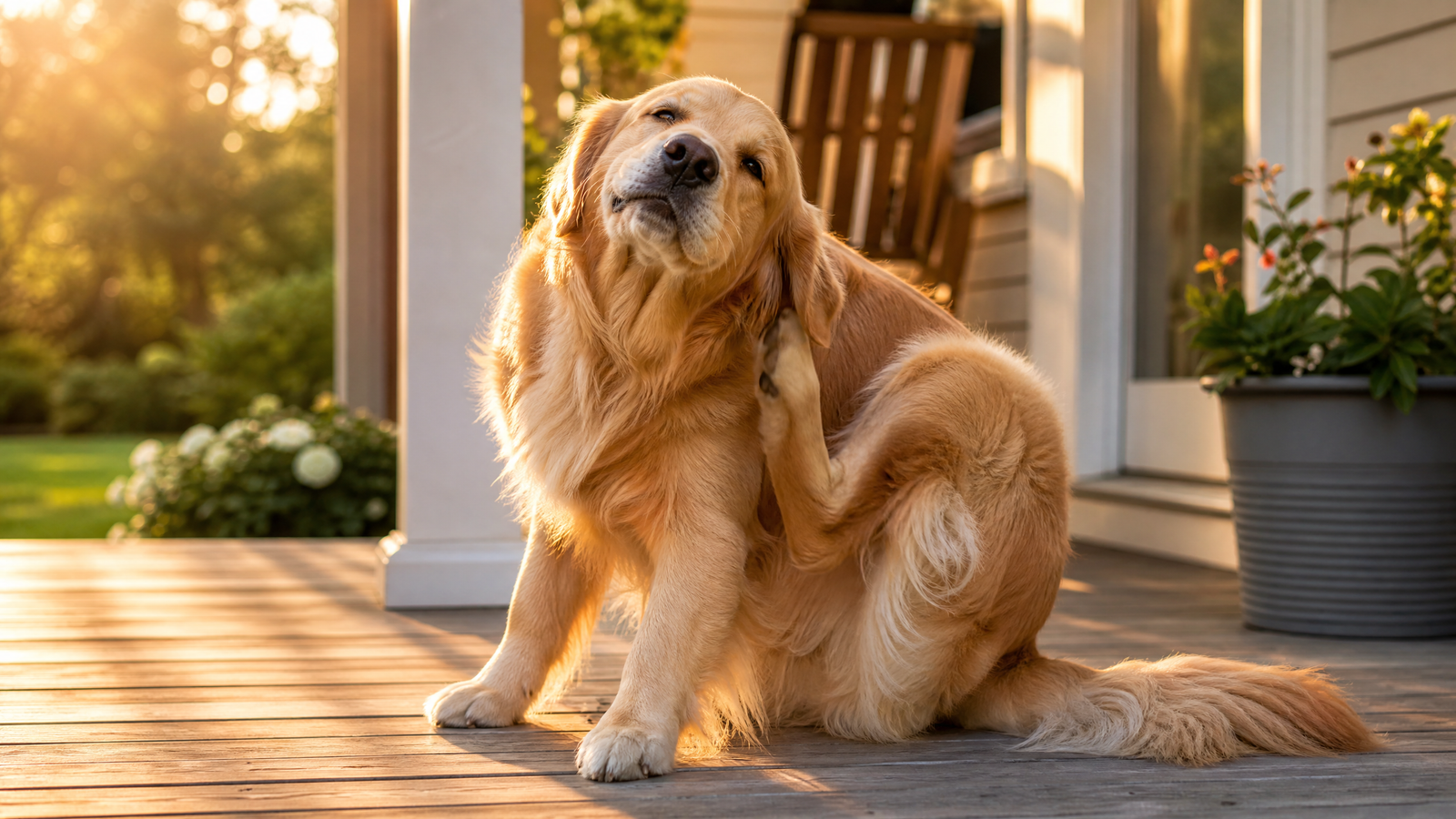

TL;DR: Hot spots on dogs are painful, rapidly spreading skin sores caused by the lick itch lick cycle, usually triggered by allergies, flea bites, moisture, or ear infections. Treat by stopping the licking, trimming fur, cleaning gently, and applying a vet approved cream. See a vet if the sore is over 24 hours old, oozing, or spreading.
Key Takeaways
-
Hot spots spread fast
A pinpoint of redness can grow into a raw, oozing sore the size of a pancake within hours, so act the moment you spot one.
-
Licking is the real engine
The lick itch lick cycle drives every hot spot. Stopping your dog from licking the sore is the single most important treatment step.
-
The 24 hour rule matters
Cornell veterinarians advise that any sore older than 24 hours is likely infected and needs a vet visit rather than home care.
-
Allergies are the top trigger
Skin allergies rank as the number one health problem in dogs, and most hot spots start with an allergic itch that never got addressed.
-
Prevention starts in the bowl
Year round flea control, thorough drying after swims, and daily nutritional support for the skin and immune system stop most hot spots before they start.
What Are Hot Spots on Dogs?
Hot spots are red, inflamed, rapidly growing skin sores that ooze, sting, and often hide under matted fur. Veterinarians call them acute moist dermatitis or pyotraumatic dermatitis, and the name "hot spot" comes from the warmth the inflamed skin gives off. According to PetMD, hot spots are among the most common skin conditions veterinarians see in dogs, and the most frequent locations are the head, legs, and hips, though a hot spot can appear anywhere on the body.
What makes hot spots different from ordinary skin irritation is speed. Veterinarians note that owners can leave for work after noticing a pinpoint area of redness and come home to a raw lesion the size of a pancake. The sore typically looks like a large wet scab. It may bleed, ooze pus, and smell unpleasant, and the surrounding hair often becomes crusted and matted.
Hot spots are painful. Many dogs will flinch, whine, or even snap when the area is touched, so always approach a suspected hot spot gently and watch your dog's body language before handling it.

What Causes Hot Spots on Dogs?
Hot spots are almost always self inflicted. Something makes the skin itch, the dog licks and scratches at it, the trauma inflames the skin further, and the inflammation triggers even more licking. Veterinarians call this the lick itch lick cycle, and it is the engine behind every hot spot.
The real question is what starts the itch in the first place. The most common underlying triggers include:
| Trigger | How It Leads to a Hot Spot |
|---|---|
| Allergies (food or environmental) | Allergic itch drives licking and chewing until the skin breaks open |
| Flea and insect bites | A single flea bite can ignite intense itching in allergic dogs |
| Moisture trapped in the coat | Swimming, baths, or rain leave damp skin under thick fur, a perfect home for bacteria |
| Ear infections | Dogs scratch at painful ears, creating sores on the ear flap, neck, and cheek |
| Anal gland problems | Dogs lick under the tail when glands are impacted or infected |
| Boredom or anxiety | Stress licking targets paws and forearms, wearing the skin raw |
| Arthritis and joint pain | Dogs lick over sore joints and pressure points, especially seniors |
Allergies deserve special attention because they are the single most common trigger. Skin allergies have ranked as the number one health condition in dogs for 15 consecutive years according to Nationwide pet insurance claims data. If your dog battles recurring itch, our guide to the best dog supplement for itchy skin and allergies explains how to calm the scratching from the inside, and our dog food allergies guide walks through identifying food based triggers.
Which Dogs Are Most at Risk?
Any dog can develop a hot spot, but thick coated and water loving breeds top the risk list. The Cornell Riney Canine Health Center reports that hot spots are most common in dogs with long or thick coats, such as Newfoundlands, German Shepherds, and Golden Retrievers, and that dogs with drop ears face additional risk.
Warm weather raises the stakes. Cornell notes that while hot spots can occur any time of year, warm months bring more cases because dogs swim more, get caught in summer rain, and carry damp coats that never fully dry. A double coated dog that goes for a lake swim and air dries is a hot spot waiting to happen.
Risk also climbs for dogs with a history of skin problems. Dogs with recurring ear infections, seasonal allergies, flaky or oily skin, or ongoing shedding issues carry chronic low grade inflammation that only needs one bad itch to erupt. If your dog's coat has been looking rough lately, our article on why dogs lose hair and how to fix it covers the warning signs worth checking.

How to Treat Hot Spots on Dogs at Home
A small, fresh hot spot caught within the first day can often be treated at home. Cornell veterinary dermatologist Dr. William Miller recommends a simple three part approach: stop the licking, clip the hair, and act fast. Here is the full home treatment sequence veterinarians recommend:
Step 1: Stop the licking immediately. Use an Elizabethan collar or a soft donut collar so your dog cannot reach the sore. Cornell puts it bluntly: dogs are their own worst enemies with these sores, because licking and chewing increase inflammation, spread the sore, and delay healing.
Step 2: Trim the fur around the sore. Carefully trim long hairs so they do not trap ooze against the skin. Veterinarians warn against using scissors close to the skin because one sudden move can cause a cut that needs sutures. For large or painful areas, let a vet or groomer clip the area safely.
Step 3: Clean gently. Wash the area with a mild soap such as Dove, Cetaphil, or Castile soap, or use a chlorhexidine antibacterial cleanser. Pat dry with a clean towel. The skin needs to stay clean and dry to heal.
Step 4: Apply a soothing first aid cream. Cornell recommends a first aid cream such as Neosporin cream, or a 1% hydrocortisone cream applied 3 to 4 times daily for healthy dogs. For dogs that should not receive steroids, products containing pramoxine offer temporary pain relief instead.
Step 5: Let the scab do its job. When the redness fades and a healthy scab forms, stop treating and leave the scab alone. Peeling it off restarts the healing clock.
Skip the folk remedies. Apple cider vinegar is a popular internet suggestion, but it stings open wounds and has no scientific support as a hot spot treatment. Harsh or heavily fragranced grooming products can make matters worse too, as we cover in our guide to dog shampoo ingredients that worsen skin problems.

When to See the Vet
Follow the 24 hour rule. Cornell veterinarians advise that if a sore is more than 24 hours old, an infection is likely and a trip to the veterinarian is in order. The moist, inflamed surface of a hot spot is prime real estate for secondary bacterial infections that home care cannot resolve.
Head to the vet promptly if you notice any of the following:
| Warning Sign | What It Suggests |
|---|---|
| Sore older than 24 hours | Likely bacterial infection needing prescription treatment |
| Worsening redness, swelling, or heat | Infection is progressing deeper into the skin |
| Oozing pus or a foul smell | Established bacterial infection |
| Rapid spreading despite home care | The underlying trigger is still active |
| Significant pain or aggression when touched | Deep lesion that may need sedation to treat |
| Repeated hot spots in the same area | Chronic underlying cause such as allergy or ear infection |
Veterinary treatment typically involves clipping and disinfecting the lesion, then a combination of oral antibiotics, corticosteroids, antihistamines, or nonsteroidal anti inflammatories depending on the dog and the severity. Your vet will also hunt for the underlying cause, because treating the sore without fixing the trigger practically guarantees a repeat performance.
How to Prevent Hot Spots for Good
Prevention beats treatment, and it centers on removing the triggers before the itch begins. Cornell calls good flea and tick control the single most important preventive step, since flea allergic dogs can erupt from a single bite. Keep prevention going year round, not just in summer.
Moisture management comes next. After swimming or bathing, dry your dog thoroughly. A towel works for short coats, but double coated dogs need brushing and often a blow dryer to get truly dry at the skin level. Remove mats whenever you find them, because matted fur locks moisture against the skin and blocks airflow.
Make quick body checks a habit. Look inside the ears daily for redness or discharge, lift the tail weekly to check for licking or inflammation, and investigate any spot your dog keeps rubbing or chewing. Catching a hot spot at the pinpoint stage turns a vet bill into a five minute home treatment.
Finally, address the deeper drivers. Dogs with chronic allergies, weak skin barriers, or gut imbalances will keep producing hot spots no matter how diligent your grooming routine is. That is where nutrition enters the picture.
Nutrition and Hot Spots: The Inside Out Approach
Healthy skin is built from the inside. The skin is the body's largest organ and one of the first places poor nutrition shows up, which is why dogs with dull coats, dander, and chronic itch so often share the same root issues: inflammation, immune overreaction, and missing nutrients.
Three nutritional levers matter most for hot spot prone dogs. First, omega 3 fatty acids such as EPA and DHA help support a resilient skin barrier and a balanced inflammatory response, as we detail in our guide to omega 3 for dogs. Second, a balanced gut microbiome helps regulate the immune system, and research summarized by the American Kennel Club consistently points to allergies and immune overreaction as the root of most hot spots. Our article on probiotics for dogs explains the gut skin connection in depth. Third, foundational micronutrients including zinc, vitamin E, and B vitamins fuel the constant repair work healthy skin demands.
Ruff Greens VitaSmart brings all three levers together in one food topper. It delivers live probiotics, digestive enzymes, omega fatty acids, and a broad spectrum of vitamins and minerals that support the skin, coat, and immune system every single day. Instead of scrambling to treat the next hot spot, you are quietly removing the conditions that create them. For dogs that need immune reinforcement beyond the bowl, our guide on how to boost your dog's immune system lays out the full playbook, and you can start your dog with the VitaSmart nutritional food topper risk free.

Ruff Greens™ VitaSmart
A premium nutritional food topper packed with probiotics, omega fatty acids, digestive enzymes, and essential vitamins that support healthy skin, a strong immune system, and a shiny, comfortable coat.
Frequently Asked Questions
1. Do hot spots on dogs go away on their own?
No. Hot spots almost never heal on their own because dogs cannot resist licking the irritated skin, which keeps the lick itch lick cycle running. Without intervention the sore typically grows larger and becomes infected. Stop the licking, clean the area, and treat it promptly, or see your veterinarian.
2. What can I put on a dog's hot spot at home?
For a fresh, small hot spot on a healthy dog, clean the area with mild soap or chlorhexidine, then apply Neosporin cream or a 1% hydrocortisone cream 3 to 4 times daily. Avoid apple cider vinegar and alcohol, which sting open wounds. If the sore is over 24 hours old, see your vet.
3. How long does a hot spot take to heal?
With proper treatment, most mild hot spots begin improving within 2 to 3 days and form a healthy scab within a week. Infected or deep hot spots treated with antibiotics may take 2 weeks or longer. Healing stalls whenever the dog resumes licking, so keep the cone on until the skin closes.
4. Why does my dog keep getting hot spots?
Recurring hot spots signal an unresolved underlying trigger, most often environmental or food allergies, flea sensitivity, chronic ear infections, or anal gland issues. Work with your vet to identify the root cause, and support your dog's skin barrier and immune balance daily with omega 3s, probiotics, and complete micronutrients.

