
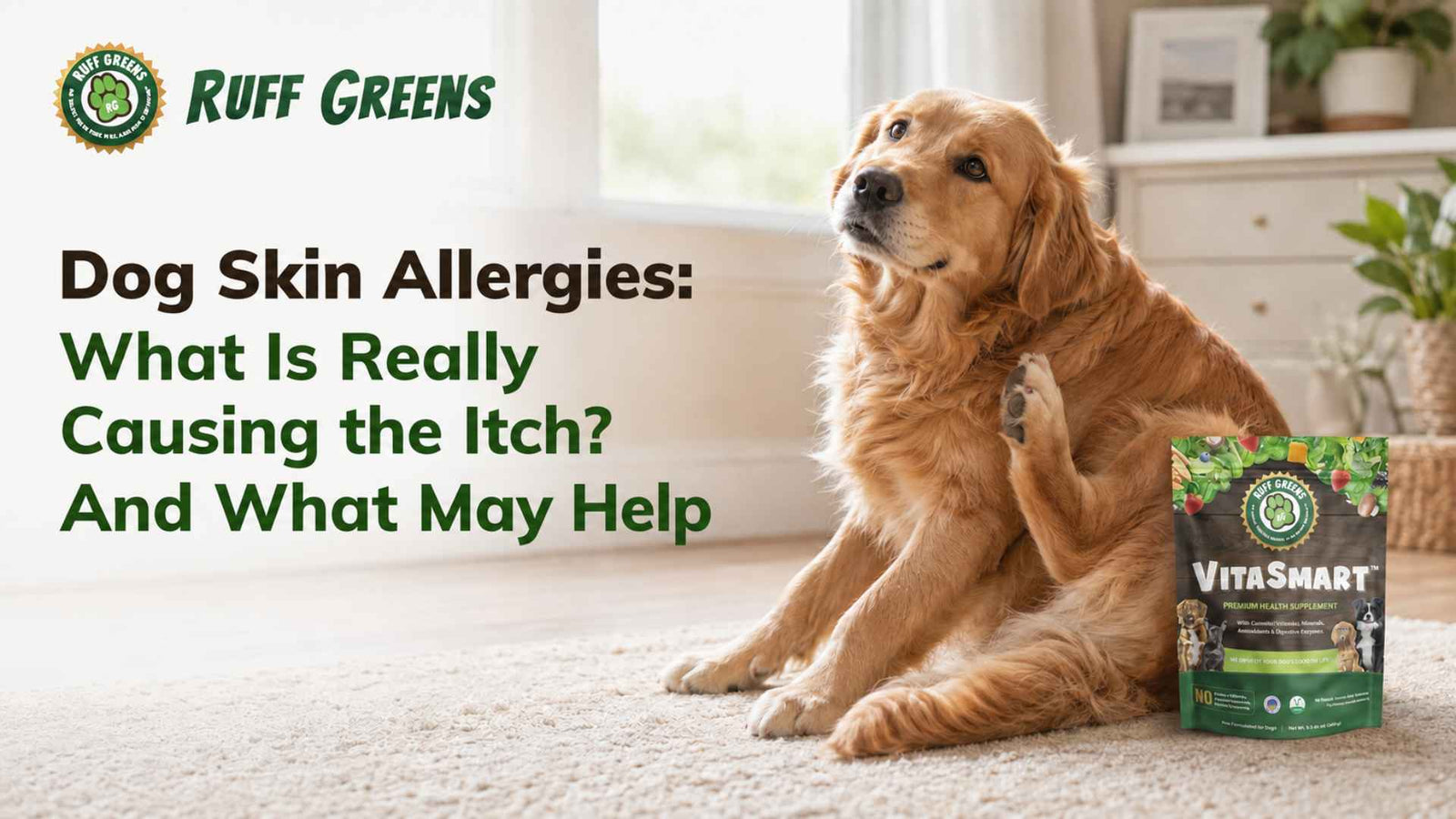

Dog skin allergies can feel like a never-ending cycle. Your dog scratches. Then comes the itching, gnawing, and licking their paws. Maybe there is a hot spot. Maybe it is another special shampoo, another vet trip, another thing you hoped would finally do it.
Here is the part that is easy to miss: an itchy dog does not automatically have one simple “allergy problem.” Fleas, mites, yeast, bacteria, irritated skin, food reactions, and outdoor triggers can all put a dog in that same miserable loop. Before you spend another dollar trying to fix it, the job is to find out what is actually going on, apply a healthier solution for dog skin allergies, and give your dog the relief they need.
Key Takeaways
Your Dog's Itch Is A Symptom, Not The Diagnosis.
Allergies are common, but parasites and skin infections can cause the same scratching and paw licking.
The Location of Your Dog's Itch Can Be a Useful Clue.
Paws, ears, belly, and the base of the tail each give your veterinarian a more useful starting point.
Don't Ignore These Spots On Your Dog's Skin.
Raw, wet, smelly, painful, or spreading skin might need a veterinary call.
Treat the root cause of Your Dog's Skin Allergy.
A food reaction, flea allergy, environmental allergy, and yeast infections may have different solutions.
Small Routine Changes With Your Dog Can Reduce The Load On Irritated Skin.
Consistent flea prevention, clean bedding, and rinsing outdoor allergens away can be worthwhile while you work with your vet.
A Daily Dog Skin Routine Can Support Comfort Over The Long Haul.
Nutrition, hydration, and gentle grooming can support skin and coat care, but none can identify or cure the cause of an itch.
Dog Skin Allergies Can Look Like a Lot More Than Scratching
Most dog owners can relate to dog skin allergies looking a lot more than scratching. Your dog is seemingly on a never-ending cycle of scratching, itching, gnawing, licking their paws, hot spots, vet trips, medical shampoos, and more vet trips. It can feel like the cycle never ends. Your dog is miserable, which makes you miserable, and everybody in the house feels it.

But dog skin allergies do not always look like a dog scratching behind one ear. It may be paw licking. It may be chewing between the toes. Some dogs rub their face on the carpet. Others get belly rashes, red ears, hair loss, or skin that smells a little off.
But those signs do not tell us the cause by themselves. AAHA points out that allergies are common, but parasites, infections, and skin-barrier trouble can lead to the same scratching, licking, chewing, and rubbing. Read AAHA’s itchy-dog guide and one point comes through fast: the same behavior can have very different reasons behind it.
So look for the pattern. Did it start when the grass came back? After a new shampoo? After a food change? Are the ears red or smelly? Is your dog working on all four paws—or one spot that is clearly sore?
Write that down. It will help the vet a lot more than trying to guess the answer from one picture online.
The “Itch-Scratch Cycle” Can Damage the Skin Fast
The itch-scratch cycle is exactly what it sounds like. Skin gets irritated. Your dog scratches, chews, or licks it. Then the skin gets damaged, and yeast or bacteria can jump into the picture. Now it itches more. Around and around it goes.

Ruff Greens™ VitaSmart
A premium nutritional food topper packed with probiotics, omega fatty acids, digestive enzymes, and essential vitamins that support healthy skin, a strong immune system, and a shiny, comfortable coat.
That is how a small red place can become a real mess faster than you expect. Hot spots are the classic example: damp, tender patches where all that licking and chewing has broken the skin. Do not put a shirt over a hot spot and wait a week to see what happens. They can spread fast.
Call your veterinarian promptly if you see any of these:
- Raw, bleeding, swollen, wet, or foul-smelling skin
- A hot spot that is spreading or seems painful
- Hair loss with scabs, crusting, or pus
- Ear redness, head shaking, discharge, or a strong odor
- Constant scratching that is keeping your dog from resting
- Facial swelling, hives, vomiting, diarrhea, weakness, or breathing trouble
Facial swelling or breathing changes can be an emergency. Do not wait for a skin-care product or a food change to work.
What May Actually Be Causing the Paw Licking and Itchy Skin
What may actually be causing the paw licking and itchy skin is the question to answer before you buy another bag, bottle, or chew. And a dog can have more than one thing going on. That is one reason a simple “allergy fix” can look promising for a few days and then disappoint you.

Some dog skin allergy factors can include:
- Environmental allergies can involve pollen, grass, mold, dust mites, and all the other things a dog picks up just by being a dog. Paws, ears, face, belly, and underarms are places owners notice a lot. A seasonal pattern is a clue—not proof.
- Flea allergy dermatitis means even one flea bite can set off a huge reaction in a sensitive dog. The tail base and hind end are worth checking. You may not spot a live flea or flea dirt yourself, which is why reliable flea control has to cover every pet in the house and sometimes the home too.
- Food reactions can show up in the skin too, but you cannot diagnose one just from the itch. Your vet may use a controlled elimination diet or a hydrolyzed diet. Changing foods every few days—or starting several new chews all at once—makes it much harder to learn anything.
- Skin infection, mites, or contact irritation can look an awful lot like allergy. Feet and ears get especially itchy with yeast and bacterial infections. A vet may do a skin scraping or cytology to look for mites, yeast, or bacteria. VCA walks through that diagnostic work here.
That is the useful meaning of “treat the root cause, not just the symptoms.” Find the cause first. Then treat the right thing. The point is not to keep covering up the same flare-up. The point is to know whether you are dealing with fleas, an infection, food, outdoor triggers, or something else entirely.
A Simple Log Can Make Your Vet Visit More Productive
A simple log can make your vet visit more productive. Once you get in the room, it is easy to forget whether the ears smelled bad first or whether the paw licking started after the weekend at the lake. You do not need a fancy spreadsheet. Notes on your phone are fine.
For seven to fourteen days, jot down:
- Where your dog is itching, licking, or chewing
- What time of day it happens and whether it is seasonal
- Walks in grass, swimming, boarding, grooming, or other possible exposures
- Food, treats, chews, supplements, and recent diet changes
- Flea-prevention date and product
- Ear odor, skin odor, rashes, hair loss, stool changes, or vomiting
- Clear photos taken in good light, especially before and after a flare-up
Bring the packaging for anything your dog is getting. The thing that seems unrelated may matter. And do not start five remedies in the same week. If your dog gets better or worse, you need a fighting chance of knowing what changed.
Daily Support for an Itchy Dog: Useful Things That Do Not Overpromise
Daily support for an itchy dog is about backing off the irritation while your veterinarian works out the cause. It is not a shortcut around diagnosis.
Stay on top of the flea prevention your veterinarian recommends. Wash the bedding. If your dog is worse after being outside, wipe the paws and rinse the coat after a walk, then dry the feet well. And stay with products made for dogs. Human shampoo and strong-smelling household products can be rough on already irritated skin.

Nutrition belongs in this conversation too, but let’s keep it plain. A complete diet is the base. Some owners add a nutritional topper with fatty acids, probiotics, digestive enzymes, vitamins, and minerals as part of the everyday routine. That is not about chasing a miracle. It is about what goes into the bowl every day.
The Ruff Greens point of view is that plant-based essential vitamins and minerals, omega oils, probiotics, and digestive enzymes give pet parents a way to add live nutrition to a normal bowl of food. Ruff Greens describes Ruff Greens VitaSmart as whole-food nutritional support with those ingredients. In the brand’s words, the longer you keep your pup on a consistent nutrition routine, the more you are making the daily bowl count through every stage of life.
That is a longevity-minded routine, not a promise that a scoop will make a dog live longer. It is also not proof that VitaSmart treats dog skin allergies. It is one part of the bigger support picture: skin and coat, digestion, hydration, daily activity, and a dog owner paying attention before a small problem turns into a big one.
If you use it, use the labeled serving size and let your vet know, especially if your dog is on a diet trial or has a medical condition. The realistic goal is simple: support ordinary nutrition, keep the routine consistent, and judge changes with your veterinarian instead of promising that one scoop will solve every skin problem.
Build a Skin-and-Coat Routine Around Nutrition, Hydration, and Grooming
Build a skin-and-coat routine around nutrition, hydration, and grooming after the diagnosis—not instead of it. This is where daily care stops feeling like chasing one flare-up after another and starts feeling more manageable.
Nutrition: Keep meals steady while you and your vet work through the cause. If Ruff Greens VitaSmart is already in the bowl, keep it in its lane. It is a nutritional topper, not treatment for an infection or an allergy. Being consistent tells you more than adding and removing things every other day.
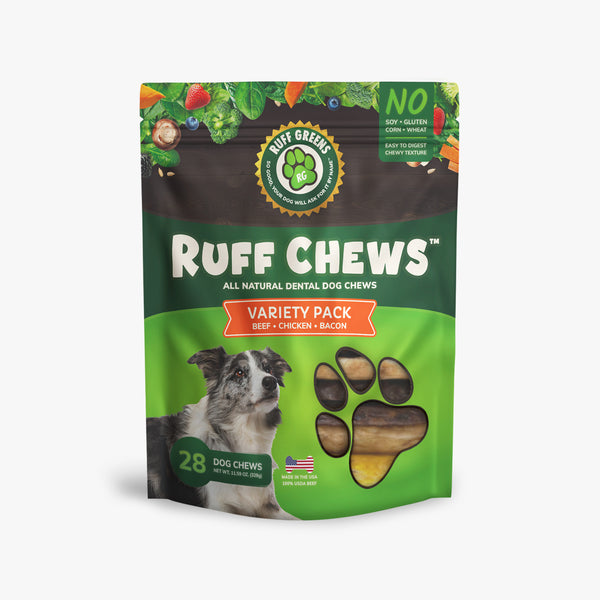
Ruff Chews, 28 Count
All Stages Formula, All Breeds Our Ruff Chews are enhanced with the added benefits of Ruff Greens Premium Nutritional Supplement, a 100% Natural Blend of Essential Vitamins and Minerals, Potent Prob… Read more
Hydration: Fresh water comes first. Always. On normal days, Ruff H2O can be a dog-specific hydration-support option if it works for your dog’s routine. Think of it as part of keeping the everyday routine easy, especially on warm days, travel days, and days with more play. It is not for dehydration, allergic reactions, vomiting, diarrhea, or a dog that looks sick. Those are vet questions.
Grooming: Clean skin and a soft, manageable coat make it easier to spot a new rash, hot spot, or sore area early. Ruff Greens describes Ruff Naturals as a professional-grade grooming system designed to soothe skin, soften coats, and make everyday care easier. Follow the directions. Keep it out of the eyes and ears. If the skin looks worse, stop. A grooming system can help with coat care; it cannot clear an infection or an allergy.
The bigger picture is not one miracle product. It is a routine you can actually keep up with: good nutrition, water available, gentle grooming, flea prevention, and veterinary care when the skin is asking for more than daily support. That is how you give your dog the best shot at staying comfortable, active, and easier to care for through the years. It is a much better plan than waiting until your dog is miserable again and trying one more random thing.
What to Expect From Your Veterinarian
What to expect from your veterinarian is a little detective work. The visit may include looking at the skin and ears, checking for fleas, looking at skin samples, and asking a lot of questions about food and seasons.

If allergy looks likely, there can be a few moving parts. First, you may have to deal with infection or parasites. Then there is flea control, bathing, a food trial, or prescription itch treatment. That can feel like a lot when you have already made several vet trips. It is still better than guessing.
Medication is not one-size-fits-all. Some dogs need it, and some need it while the vet gets an infection under control. Some need it as part of a longer plan. That call belongs with the vet who knows your dog’s history, symptoms, medications, and test results.
Sometimes the honest answer is management, not a permanent cure. That is not a failure. It is a way to help a dog sleep, play, and get out of that scratch-lick-chew cycle.
For owners comparing gentle nutritional options, our guide to quercetin for dogs and seasonal allergy support explains the evidence, safety questions, and why veterinary guidance matters.
Frequently Asked Questions
How Do I Know if My Dog Has Skin Allergies?
You cannot know from itching alone. Scratching, paw chewing, face rubbing, ear trouble, and red skin may point to dog skin allergies, but parasites and infections can look the same. Look at the full picture and get a veterinary exam instead of picking one answer from a symptom list.
Why Does My Dog Keep Licking or Chewing Their Paws?
Paw licking can be an environmental allergy, a food reaction, yeast, bacteria, contact irritation, an injury, or something stuck in the paw. That is a long list, which is why “just give them something for allergies” is not always the answer. One suddenly painful paw, swelling, or a limp needs an exam.
Can Dog Food Cause Itchy Skin?
It can. But food is not the only possibility, and dog owners can spend months changing bags without getting an answer. Symptoms do not separate food reactions from environmental allergies. Ask your vet before switching again; a structured diet trial tells you more than guessing.
When Should I Take My Itchy Dog to the Vet?
Call when the skin is raw, bleeding, wet, smelly, painful, or getting worse. Call for a hot spot, painful ears, hair loss, severe redness, or an itch that just will not settle. Get urgent care for facial swelling, breathing trouble, collapse, or vomiting and diarrhea with a sudden reaction.
Can a Supplement Cure Dog Skin Allergies?
No. A supplement can be part of a nutrition and skin-and-coat routine. It cannot tell you whether your dog has allergies, fleas, an infection, or another cause of itching. It does not replace treatment when your dog needs it.
Can Ruff H2O or Ruff Naturals Help With Itchy Skin?
Ruff H2O can be part of the normal hydration routine, and Ruff Naturals is for grooming and coat care. Neither one tells you what is causing dog skin allergies or treats that cause. Keep fresh water out, follow the label, and call your vet when the itch will not quit, the skin is damaged, or your dog looks sick.

