
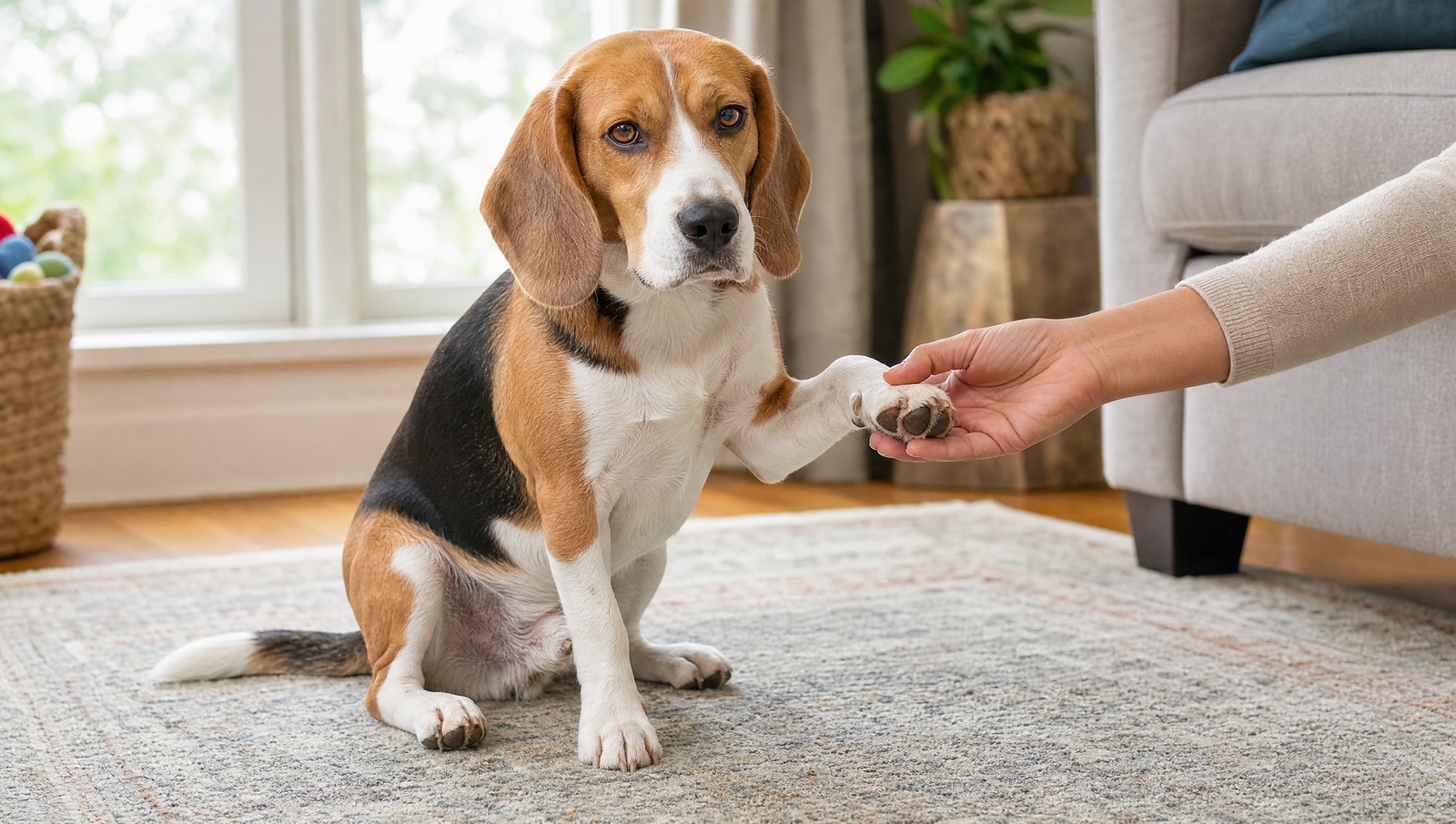

If you have ever flipped a paw and thought, "that looks like hair growing out of the pad," you are not imagining it. Hyperkeratosis in dogs is extra keratin piled onto hairless skin, most often the paw pads and the nose. Owners also call it hairy feet or a crusty nose. It is a finding, not a full diagnosis. Your job is to notice the change, keep the tissue comfortable, and let a veterinarian sort out why it showed up.
What hyperkeratosis on a dog's paws and nose actually is
First, that extra keratin, the same protein in skin, hair, and nails, is building up faster than it sheds. On paw pads it can look feathery, fronded, or like a worn shag carpet along the edges. On the nose, the usual cobblestone pattern flattens into a dry, crusty plate. Pads may feel like sandpaper. Some dogs do not mind. However, others lick, limp, or start avoiding hard floors.
How the keratin buildup can look and feel
That "hairy" look is not fur. It is thick, dry skin that failed to flake off. Veterinary dermatologists describe tightly stuck keratin on the nasal planum, the footpads, or both, especially in older dogs. The AKC notes that the finding tells you what the skin looks like, not automatically why it happened.

If your dog is also licking paws raw, do not assume it is only dryness. Raw skin, a bad smell, or sudden lameness is a different problem than a little extra crust.
Key Takeaways
-
It is extra keratin, not extra fur
This finding is a buildup on hairless skin, usually paw pads and the nose. Mild cases can be a senior change. Pain, cracks, or illness need a vet.
-
Do not cut or peel it at home
Over-trimming causes bleeding and infection. Soften with a vet-approved balm or a warm, wet cloth. Leave any filing or trimming to the clinic.
-
Cause matters more than the crust
Age, breed, pressure, zinc issues, autoimmune disease, and rare infections can all thicken pads or the nose. The look is the clue. The why is the workup.
-
Comfort first, then daily support
Keep pads and noses intact. Use dog-safe grooming around irritated skin. A measured daily greens scoop can support skin nutrition. It does not treat hyperkeratosis.
Signs of hyperkeratosis on dog paws and noses
For example, mild hyperkeratosis often shows as a firmer nose, smoother pads that lost their pebbled texture, or little keratin feathers at the pad rims. The dog still walks, eats, and acts like itself. Many seniors live with this for years.
Watch for the jump from cosmetic to uncomfortable:
| What you see | Often milder | Call the vet sooner |
|---|---|---|
| Paw pads | Dry, thick, feathery edges | Cracks, bleeding, limping, refusing hard floors |
| Nose | Dry, crusty, lost cobblestone look | Painful splits, color loss, sores, blocked nostrils |
| Behavior | Normal energy, occasional lick | Relentless licking, yelping when paws are touched |
| Whole dog | Only the pads or nose look different | Poor appetite, lethargy, sores around eyes or mouth |
When to call your veterinarian
In contrast, severe footpad involvement can cause pain and lameness, and cracks may follow as keratin piles up.
Call the same day if pads or the nose are bleeding, oozing, foul-smelling, or so painful the dog will not walk. Call promptly if crusting shows up with other skin sores, weight loss, or a sick-dog look. Mention it at the next visit if you only see a little extra crust and your dog is otherwise fine.
Paw licking that goes with yeast, allergies, or a wound is covered in our licking-paws guide. Itchy skin and allergies can sit next to hyperkeratosis. They are not the same thing.
What causes hyperkeratosis in dogs in the first place
In other words, hyperkeratosis is the skin's output, not always one disease. A veterinarian is looking for which bucket your dog is in.
Age and wear. Older dogs shed skin layers less cleanly. They also move less, so pads and noses get less natural friction. Arthritis can shift weight so unused pad edges thicken. Elbows and other pressure points can grow calluses on hard beds.
Breed and anatomy. Short-faced dogs such as Boxers, Bulldogs, and Boston Terriers often get a crusty nose because the top of the nasal planum does not rub on bowls the way a longer muzzle does. Cocker Spaniels, Irish Terriers, Labrador Retrievers, and Dogues de Bordeaux show up more often in hereditary pad or nose keratin stories. Owning a Beagle or a Husky does not mean you should panic. Change and comfort matter more than the breed label.
Nutrition and zinc. Some northern breeds absorb zinc poorly. Growing puppies on an unbalanced diet can, too. Zinc-responsive skin disease can thicken the nose and pads. That is a veterinary diagnosis, not a kitchen experiment.
Medical causes a veterinarian may check
Infection and immune disease. Canine distemper earned the nickname hard pad disease because pads can harden. The AVMA notes that the virus can thicken the surface of the nose and footpads. Leishmaniasis is a concern in some regions. Autoimmune diseases such as pemphigus foliaceus or discoid lupus can crust the nose or feet and usually bring other lesions. Rare metabolic skin disease tied to the liver can crack pads and make a dog systemically ill.
The Merck Veterinary Manual describes nasal hyperkeratosis in older dogs as often non-painful, with treatment not always required when inflammation is absent. That is the mild, age-related picture. It is not the picture if your dog is sick.
Therefore, a vet exam may be enough for a senior with classic feathery pads. Bloodwork, cytology, or a biopsy enters the plan when the story does not fit, when young dogs are badly affected, or when other skin and body signs pile on.
Paw and Nose Care That Keeps Dogs Comfortable
Ultimately, the goal is not a perfectly smooth nose. The goal is comfortable, intact skin that does not split or get infected.
Soften, do not carve. Hold a warm, damp washcloth on the nose for a few minutes, then apply a dog-safe moisturizer your veterinarian is fine with. For pads, a short lukewarm soak can help before balm. Do not use human corn removers, razors, or scissors on living pad tissue. AKC clinicians warn that aggressive peeling or cutting at home can cause pain, bleeding, and infection.
Use products made for dogs. Petroleum jelly or a veterinary paw-and-nose balm is a common starting point. Skip zinc oxide unless your vet signs off, because dogs lick and zinc can be a problem in quantity. Keep balm out of the nostrils.
Protect paws during walks and bathing
Protect the walk. Wipe salt, ice melt, and hot-pavement grit off the feet. Boots help some dogs on rough or hot ground. A cushioned bed takes pressure off elbows.

Groom around irritated skin, do not strip it. Harsh shampoo can dry already stressed skin. If bath time is part of the week, choose a gentle dog formula instead of a human product. Ruff Naturals is our K9 Care grooming line for everyday skin and coat washing, including a 4-in-1 soothing shampoo. It is for bathing and coat comfort. It is not a hyperkeratosis treatment, and it does not replace a paw balm or a vet visit. Our note on shampoo ingredients that worsen dryness is worth a pass if baths leave your dog itchier the next day.

If a crack turns into a wet, spreading sore, treat that as a hot spot emergency and get help rather than adding more home products.
However, when the keratin is severe, the clinic may soften it and carefully reduce the extra tissue. That is a controlled procedure, often with sedation if a lot of pad is involved. Ask them to show you a safe home routine. Do not copy a Dremel video from social media.
Nutrition support for a dog's skin, pads, and coat
Importantly, food will not sand extra keratin off a pad. Diet can still support the skin those pads sit in. Fatty acids, zinc in the right context, vitamin E, and a complete everyday nutrient mix show up in veterinary skin conversations because the barrier is built from what the dog absorbs, not only from what you rub on.
If you are already hunting for a simple add-in, a measured daily greens scoop is the place many households land. Ruff Greens VitaSmart is our all-in-one food topper with vitamins, minerals, omegas, enzymes, and probiotics. You mix it into the meal you already feed. It can support skin, coat, and overall nutrition. It does not treat, cure, or reverse hyperkeratosis in dogs.

If you want that measured daily greens scoop, VitaSmart is here. Mix it into the bowl you already feed. It supports everyday nutrition. It is not a hyperkeratosis treatment.
Start small, mix it in, and keep treats plus toppers in a sensible calorie range. Our dog food toppers guide walks through how to choose an add-in without wrecking a complete diet. If coat and itch are the bigger worry alongside the crust, see best skin and coat supplements for dogs.
Work with your veterinarian before adding extra zinc on your own. The dose that helps a Husky with zinc-responsive disease is a medical plan, not a scoop from the pantry.

Ruff Greens, VitaSmart
All Stages Formula, All Breeds Ruff Greens® is a highly concentrated blend of Fruits, Vegetables, Digestive Enzymes designed for your dog. Add it to your current dog food of choice to give your dog t… Read more
FAQs about hyperkeratosis in dogs
Is hyperkeratosis in dogs painful?
Often it is not. Mild extra keratin feels like a callus. It becomes painful when pads or the nose crack, bleed, or pick up a secondary infection. Limping, yelping, or refusing walks means it is past the cosmetic stage. Have a veterinarian look before you try to trim anything at home.
Can I trim the crusty growth off my dog's paws?
Not as a DIY project. Living pad tissue sits under that keratin. Cutting or peeling at home can bleed and infect. Soften with a vet-approved balm. If a lot of tissue needs to come off, let the clinic do it. Ask them to teach a safe maintenance routine if they want you involved.
Why is my senior dog's nose suddenly crusty?
Age-related nasal hyperkeratosis is common. Older dogs shed keratin less well, and short-faced breeds get less natural wear on the top of the nose. A dry, crusty nose with no sores and a happy dog can wait for the next appointment. Pain, pigment loss, or other skin lesions should not wait.
Does a supplement fix hairy paw pads?
No. Nutrition can support the skin barrier. It does not melt extra keratin or replace topical care or a diagnosis. Use food toppers such as VitaSmart as daily nutrition support, then keep following the paw and nose plan your veterinarian set. Skip cure claims on any powder or chew.
When is a crusty nose an emergency?
Go in now if the nose or pads are bleeding, pus-filled, extremely painful, or paired with lethargy, no appetite, or sores around the eyes and mouth. Those signs can point to infection or a systemic skin disease, not simple senior dryness.
Can VitaSmart help a dog with hyperkeratosis?
VitaSmart can support everyday nutrition for skin, pads, and coat. It does not melt extra keratin or replace topical care or a diagnosis. Use it as a measured daily greens scoop beside the paw and nose plan your veterinarian set. Skip cure claims on any powder or chew.

