
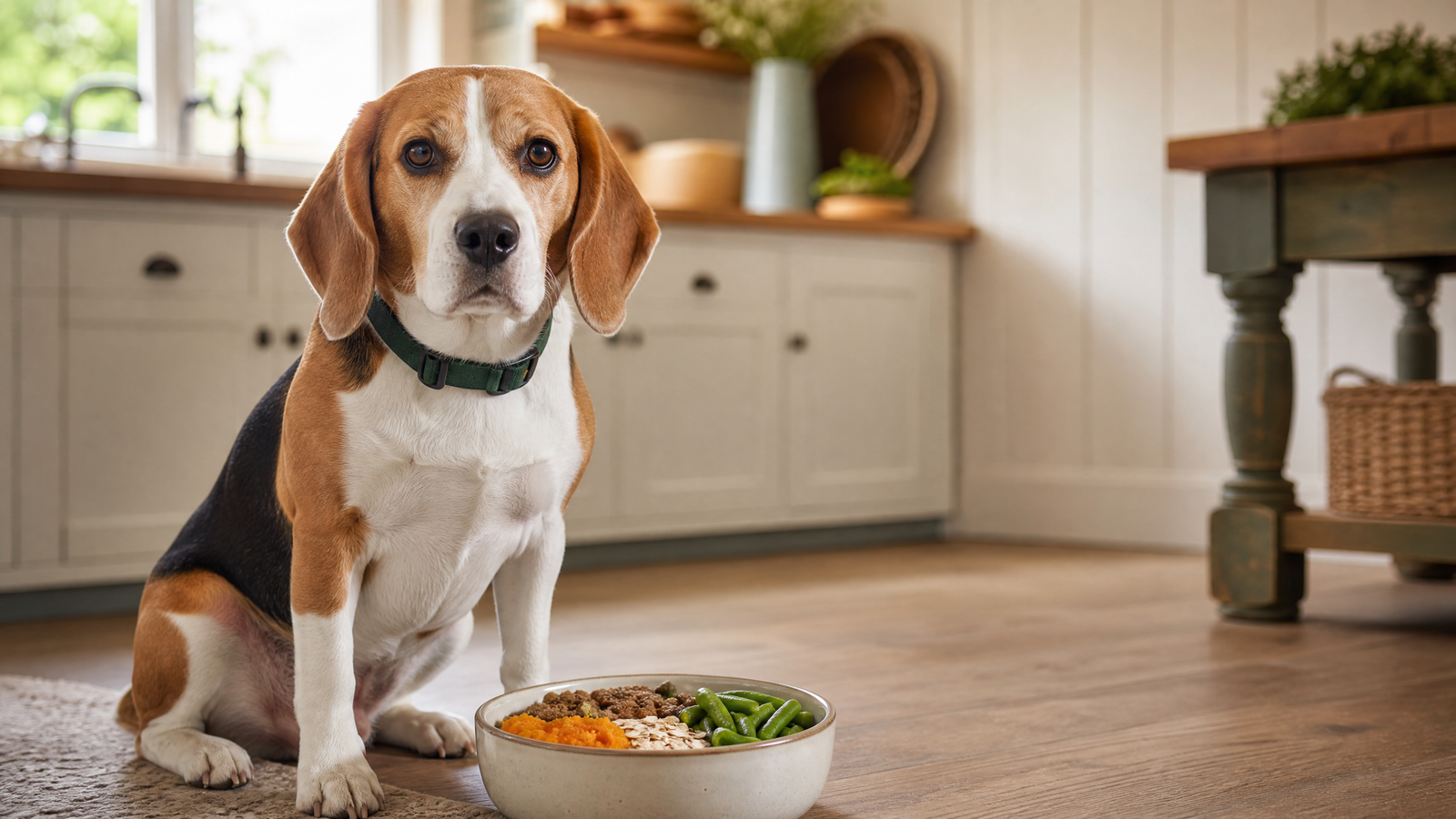

Fiber for dogs can support stool quality, intestinal movement, fullness, and beneficial gut microbes. The right source and amount depend on the dog, the complete diet, and the reason for adding it. Introduce changes gradually, keep fresh water available, and ask your veterinarian about persistent constipation, diarrhea, pain, or vomiting.
Key Takeaways
-
Fiber Is Not One Thing
Its source, water holding ability, and fermentability can change how it affects a dog.
-
Different Types Have Different Jobs
Some fibers add stool bulk while others feed microbes in the large intestine.
-
The Goal Guides the Choice
A source that helps one stool pattern may not fit another dog or another condition.
-
Slow Changes Are Safer
Add one source gradually, keep water available, and watch stool quality and comfort.
-
Red Flags Need a Veterinarian
Pain, vomiting, blood, marked lethargy, or repeated straining should not be treated as a simple fiber problem.
What Is Fiber for Dogs?
Fiber is the part of plant based carbohydrate that a dog's own digestive enzymes do not fully break down. It moves through the stomach and small intestine, then reaches the large intestine where it can influence stool structure, water balance, intestinal movement, and microbial activity.
That broad definition matters because fiber is not a single ingredient with a single effect. Cellulose, psyllium, inulin, pumpkin, oat bran, beet pulp, and green beans all supply fiber, yet they differ in how much water they hold and how readily bacteria ferment them. Recent canine nutrition research also shows that the source of fiber can shape digestive and microbial responses, even when total fiber looks similar. [1]
Some fiber leaves the body mostly unchanged and adds bulk. Other fiber becomes food for microbes in the colon. When those microbes ferment suitable carbohydrates, they produce compounds such as short chain fatty acids that can help nourish cells lining the large intestine. This relationship is one reason fiber and the microbiome are closely connected. For a broader look at that ecosystem, read how probiotics support a dog's gut microbiome.
Fiber may also increase the volume of a meal without adding many usable calories. That can help some dogs feel satisfied during a veterinarian guided weight plan. It does not mean every dog should eat a high fiber diet. Active dogs, dogs that need to gain weight, and dogs with certain digestive conditions may need a different approach.

Soluble, Insoluble, and Fermentable Fiber
Soluble and insoluble describe how fiber behaves in water. Fermentability describes how readily gut microbes can use it. These qualities often overlap, but they are not identical. That is why a simple soluble versus insoluble label does not tell the whole story.
Soluble fiber can dissolve or swell in water and may create a gel. Many soluble fibers are also fermentable, so they can provide substrate for microbes in the colon. Inulin, some gums, and pectin are common examples. Too much rapidly fermentable fiber can create gas and discomfort.
Insoluble fiber does not dissolve in water. It generally adds physical bulk and can influence how material moves through the intestine. Cellulose and wheat bran are familiar examples. Very large amounts can lower the calorie density of food and may reduce the availability of some nutrients.
Psyllium and beet pulp contain a mixture of characteristics. Psyllium holds substantial water, while beet pulp supplies both fermentable and less fermentable fractions. The practical lesson is simple: choose fiber by its function and the dog's response, not by a marketing term alone.
| Fiber Category | Main Action | Common Examples | Practical Caution |
|---|---|---|---|
| More soluble | Holds water and may form a gel | Pectin, inulin, selected gums | A rapid increase may cause gas or loose stool |
| More insoluble | Adds bulk and influences movement | Cellulose, wheat bran | Excess can dilute calories and nutrients |
| Mixed properties | Combines water holding, bulk, and fermentation | Psyllium, beet pulp, oat bran | The result still depends on dose and the complete diet |
When Can Fiber Help a Dog?
Fiber can help selected dogs, but the reason for a stool change should guide the plan. Constipation, large bowel diarrhea, food intolerance, parasites, pain, dehydration, medication effects, and obstruction do not all need the same response.
For mild constipation, the right fiber may add bulk and hold water in the stool. Yet constipation can also reflect dehydration, pain, a swallowed object, prostate disease, a mass, or another condition that needs medical care. VCA notes that either a lower fiber or higher fiber diet may be appropriate depending on the cause. [2] Review these safe steps for dog constipation before trying to manage repeated straining at home.
Fiber can also help some dogs with large bowel diarrhea. Water holding fibers may improve stool form, and selected fermentable fibers can change microbial activity. That does not make fiber a cure for every loose stool. Sudden diarrhea can follow dietary indiscretion, infection, parasites, toxins, medication, pancreatitis, and other problems. Use our guide to the causes of dog diarrhea and when to call a veterinarian to assess the full situation.
In a small uncontrolled veterinary study, dogs with chronic large bowel diarrhea improved while eating one complete therapeutic diet made with a specific fiber blend. The finding supports targeted nutritional care, not the idea that any fiber topper will treat chronic diarrhea. A veterinarian should evaluate persistent signs and decide whether a therapeutic food, medication, testing, or another plan is appropriate.
Fiber can support satiety in a carefully designed weight plan because it adds volume while contributing fewer usable calories than fat or starch. It may also help some senior dogs with regularity. Other senior dogs need a more digestible, energy dense diet, so age alone is not a reason to add more.

Best Fiber Sources for Dogs
The best fiber for dogs is the source that fits the goal, works within a complete diet, and produces a comfortable response. A food source and a concentrated supplement are not interchangeable.
Plain pumpkin provides a mixture of fiber and water. It can be a convenient topper, but a spoonful contains less fiber than many owners expect. Use plain pumpkin puree rather than pumpkin pie filling, which can contain sugar and spices. Our guide to plain pumpkin benefits and serving cautions for dogs explains the difference.
Plain green beans add bulk and can be useful as a low calorie treat. Fresh, frozen, or steamed beans are preferable to heavily salted or seasoned versions. Oat bran supplies mixed fiber. Beet pulp is commonly used in complete dog foods because it can contribute both stool structure and fermentable substrate.
Psyllium is concentrated and absorbs a great deal of water. Veterinarians use it in selected bowel management plans, but it needs adequate liquid and careful handling. Cornell advises mixing psyllium thoroughly with food and water in its specific chronic enteropathy diet protocol. [3] That protocol is not a universal dose for every dog.
Inulin and chicory root are fermentable fibers that can serve as prebiotic ingredients. They may support selected microbes, yet too much can cause gas or loose stool. The amount already present in a complete food should be considered before another source is added.
| Fiber Source | General Profile | Possible Role | Important Note |
|---|---|---|---|
| Plain pumpkin | Mixed fiber with high moisture | Small food topper for selected dogs | Use plain puree, not pie filling |
| Green beans | Mostly structural plant fiber | Satiety and bowl volume | Serve plain and keep extras modest |
| Oat bran | Mixed and moderately fermentable | General fiber variety | Adds calories as well as fiber |
| Beet pulp | Mixed fermentable and structural fractions | Stool quality in complete foods | Evaluate it as part of the full formula |
| Psyllium | Strong water holding mixed fiber | Veterinary directed bowel support | Mix with adequate liquid and avoid if blockage is possible |
| Inulin or chicory | Highly fermentable | Prebiotic substrate | Rapid increases can create gas |
Extras should remain a modest part of daily intake so they do not displace the nutrients in a complete food. For practical ways to protect that balance, see our list of healthy dog food toppers that protect bowl balance.
How to Add Fiber Safely
Start with the reason, not the ingredient. Is the goal better stool form, more regular movement, satiety, or support for a veterinarian diagnosed condition? If signs are ongoing, the first step is a veterinary assessment.
Review the current food before adding anything. The guaranteed analysis does not reveal every type of fiber, and a formula may already contain beet pulp, cellulose, psyllium, chicory, or another source. More is not always better.
Choose one change at a time. Introducing pumpkin, a new food, a probiotic, and a concentrated supplement together makes it hard to identify what helped or caused trouble. A single change also makes stool tracking more useful.
Introduce the new source gradually over several days. The exact amount should come from your veterinarian or the feeding directions for a dog specific product because body size, current diet, hydration, and the reason for use all matter. This article does not provide a universal teaspoon or gram dose.
Keep fresh water available. Water is especially important with psyllium and other fibers that swell. Never give a dry powder in a way that could be inhaled or form a difficult mass. Check every human product for xylitol, sweeteners, flavorings, or additional active ingredients before considering it for a dog.
Track stool form, frequency, straining, gas, appetite, water intake, and comfort. If the stool worsens, the dog becomes uncomfortable, or a new symptom appears, stop the experiment and contact the veterinary clinic.

How Much Fiber Does a Dog Need?
There is no single daily fiber number that fits every dog. A healthy dog may do well on a complete food with moderate fiber, while a dog with a particular medical need may require a therapeutic formula with a carefully defined blend.
Pet food labels make simple comparisons difficult. The listed crude fiber percentage has traditionally represented only part of the insoluble fraction, and it is stated as a maximum rather than an exact amount. It does not show the full soluble fraction or how readily the ingredients ferment.
The useful question is not simply, “How much fiber?” A better set of questions is, “Which fiber sources are present, what is the goal, and how is the dog responding?” Your veterinarian can compare the full diets, examine symptoms, and request more complete nutrient data from a manufacturer when needed.
How to Read Fiber on a Dog Food Label
Begin with the nutritional adequacy statement. A complete and balanced food should remain the foundation unless a veterinarian has prescribed a different approach. Then review the guaranteed analysis and ingredient list together.
Crude fiber is usually shown as a maximum percentage. Because it does not capture the complete soluble fraction, two foods with the same crude fiber number can have very different total fiber and very different effects on stool.
Look for named sources such as beet pulp, cellulose, oat fiber, pea fiber, psyllium, chicory root, or inulin. Their position in the ingredient list shows order by weight before cooking, not their precise functional contribution. Ask the manufacturer for total dietary fiber and soluble versus insoluble information when a precise comparison matters.
When moving between wet and dry foods, remember that label percentages are reported with their existing moisture. Direct comparisons can be misleading. A veterinarian or veterinary nutritionist can compare values on a dry matter or calorie basis.
Signs of Too Much Fiber
Too much fiber or a change that happens too quickly can cause gas, bloating, abdominal discomfort, loose stool, vomiting, or a larger stool volume. Some dogs may eat less because they feel full. A very high fiber plan can also lower calorie density, which is a concern for dogs that need energy or weight gain.
Long term excess may reduce the availability of some nutrients or contribute to unintended weight loss. A dull coat or declining body condition needs a full dietary and medical review rather than an assumption that fiber is the only cause.
These signs are not specific. Gas, vomiting, diarrhea, appetite loss, and weight change can arise from many conditions. If symptoms persist, stop making changes and arrange veterinary care.
When to Call Your Veterinarian
Call your veterinarian when a dog repeatedly strains without producing stool, has not passed stool for 48 to 72 hours, or shows pain while trying. Seek prompt care for vomiting, a tight or painful abdomen, blood, marked lethargy, appetite loss, dehydration, or suspected ingestion of a foreign object. [2]
Do not give psyllium when an intestinal blockage is possible or when a dog has trouble swallowing. Fiber cannot push a dangerous object safely through the intestine. A physical examination and imaging may be needed.
Puppies, senior dogs, dogs with diabetes, and dogs with kidney, liver, pancreatic, or chronic intestinal disease should receive individual advice before a major fiber change. Medication interactions can also matter.
When speaking with the clinic, report the current food, all treats and supplements, the last normal bowel movement, stool appearance, vomiting, appetite, water intake, possible swallowed objects, and any recent diet change. Clear details help the veterinary team judge urgency.

Support the Whole Bowl
Fiber works within the whole diet. Protein quality, fat, vitamins, minerals, hydration, digestibility, and feeding consistency all influence how a dog feels and how the stool looks. A fiber change should complement that foundation rather than replace it.

Ruff Greens™ VitaSmart
VitaSmart complements a complete dog food with whole food nutrition, probiotics, and digestive enzymes. It can support the broader nutritional foundation while you work with your veterinarian to choose the right fiber source and amount for your dog.
Pet parents who want a smaller first step can explore the Ruff Greens VitaSmart Jumpstart Trial.
Frequently Asked Questions
1. What is the best fiber for dogs?
The best fiber depends on the goal and the individual dog. Plain pumpkin or green beans may suit a small food topper, while psyllium or a therapeutic fiber blend may be used under veterinary guidance. The complete diet, stool pattern, hydration, and medical history should guide the choice.
2. Can I give my dog fiber every day?
Dogs commonly eat fiber every day within a complete and balanced food. Extra fiber can be used daily for some dogs, but only when the source and amount fit their needs. Introduce one change gradually, keep water available, and review ongoing supplementation with your veterinarian.
3. Does fiber help dogs with constipation or diarrhea?
The right fiber may help selected cases of constipation or large bowel diarrhea by changing stool bulk and water handling. It does not treat every cause. Repeated straining, vomiting, blood, pain, dehydration, or persistent diarrhea requires veterinary evaluation rather than a home fiber trial.
References
- PetMD, Fiber for Dogs: How Much and What Kinds Are Best?
- VCA Animal Hospitals, Constipation in Dogs
- Cornell University College of Veterinary Medicine, Inflammatory Bowel Disease and the Home Prepared Diet

