

TL;DR: Zesty Paws Vet Strength Native Canine Probiotic Powder is designed to support dogs with occasional diarrhea using a blend of canine-derived bacterial strains. While early research shows these native strains are well tolerated, probiotics should not replace veterinary care if a dog experiences severe or prolonged digestive distress.
Key Takeaways
-
Canine Sourced Strains Matter
Probiotics formulated with organisms native to the dog digestive tract may establish colonization and support gut balance more effectively than strains sourced from other species.
-
Occasional Diarrhea Support
Zesty Paws uses a proprietary blend intended to help manage occasional loose stool and promote digestive consistency.
-
Veterinary Warning Signs
A probiotic is not a cure for severe illness. Diarrhea accompanied by vomiting, lethargy, or blood requires immediate veterinary attention.
-
Comprehensive Daily Nutrition
While targeted probiotics address specific digestive episodes, broad spectrum nutritional support provides the foundation for long term vitality and immune health.
Understanding Native Canine Probiotics
The canine gastrointestinal tract is home to a complex community of microorganisms that support digestion, immune function, and overall health. When this delicate balance is disrupted by stress, dietary changes, or antibiotic use, dogs can experience digestive upset, including occasional diarrhea. According to the Cornell University College of Veterinary Medicine guide to probiotics for dogs, probiotics are beneficial microorganisms that may support a healthier microbial balance and help the immune system respond appropriately [1].
However, not all probiotics are created equal. The American Kennel Club notes that the most effective direct fed microbials usually contain strains naturally found in the canine gut [2]. Historically, many commercial pet probiotics relied on strains sourced from humans, poultry, or swine. A native canine probiotic uses organisms originally isolated from healthy dogs. This host specific approach is intended to improve compatibility with the canine intestinal environment. That does not mean every native organism will permanently colonize every dog, and it does not make all products interchangeable. Probiotic effects depend on the exact organism, strain, dose, storage conditions, and health concern being addressed.

Inside the Zesty Paws Formulation
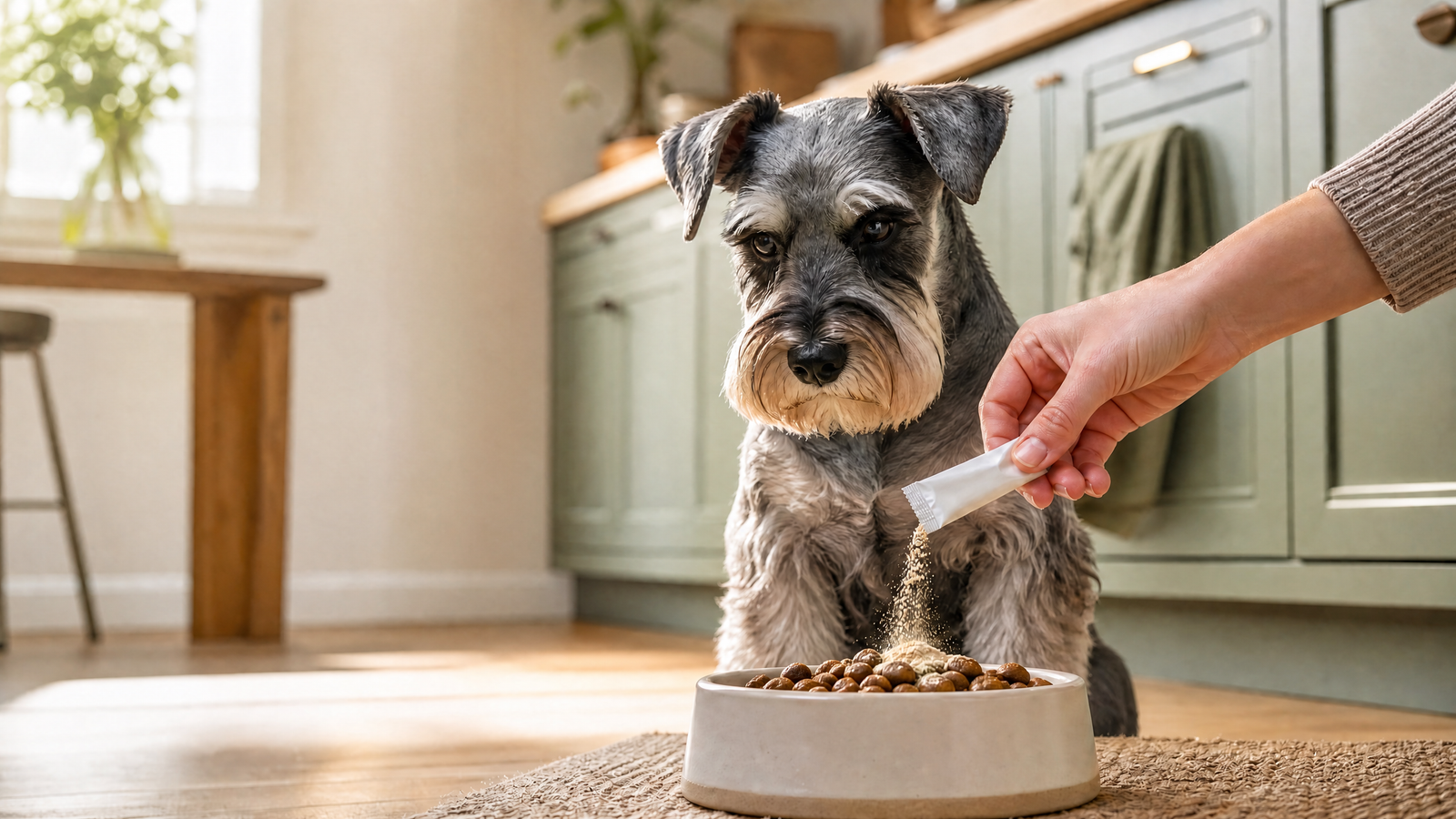
Zesty Paws Vet Strength Native Canine Probiotic Powder is specifically marketed to support dogs experiencing occasional diarrhea and to promote healthy gut flora. The product is delivered in individual powder packets, making it simple to sprinkle over a dog's daily meal.
The core of the formulation is the proprietary Canine Triple Shield Blend. According to the manufacturer, this blend provides 6 million Colony Forming Units (CFU) per serving. The accessible ingredient panel lists three organisms. The public label provides the combined CFU amount, but it does not show strain identifiers or a separate count for each organism. This distinction matters because veterinary probiotic evidence is strain specific, not merely species specific.

| Organism | Primary Function |
|---|---|
| Enterococcus faecium | A lactic acid producing bacterium commonly found in the canine gut, frequently used in veterinary medicine to support stool consistency and immune health. |
| Megamonas funiformis | A commensal organism associated with healthy metabolic states in dogs, involved in fiber fermentation and short chain fatty acid production. |
| Peptacetobacter hiranonis | A critical organism for canine gut health that converts primary bile acids into secondary bile acids, which help inhibit the growth of pathogenic bacteria. |
Together, these organisms are intended to address several functions within the canine microbiome. Their names alone, however, cannot predict the result for an individual dog. A useful probiotic label should help an owner identify the organisms, serving amount, storage conditions, expiration information, and directions for use. The Zesty Paws format provides thirty individual packets, which can make daily serving more consistent and reduce repeated exposure of the remaining powder to air and moisture.
Before starting any live microbial supplement, check whether the product needs refrigeration or protection from heat and humidity. Follow the package directions rather than assuming that a larger serving will work faster. More CFU is not automatically better. The most meaningful dose is the one evaluated for the specific organisms and intended use. If a veterinarian has recommended a different probiotic, do not replace it solely because another product advertises a larger number.
Owners should also consider the dog's full routine. A sudden food change, table scraps, scavenging, parasites, medication, and stress can all affect stool quality. A powder may fit conveniently into a meal, but convenience does not identify the cause of diarrhea. Keep notes on stool consistency, appetite, energy, vomiting, and the time each serving is given. This simple record can help a veterinarian evaluate whether the dog is improving and whether the timing suggests any relationship to the supplement.
Clinical Evidence and Tolerability
Veterinary research into canine specific probiotic strains is an active and evolving field. A 2026 peer reviewed pilot study in Frontiers in Veterinary Science evaluated a novel three organism probiotic blend containing the same named species listed on the Zesty Paws product page [3]. The study enrolled eleven adult dogs experiencing chronic diarrhea that had lasted more than five days.
The researchers found that the native canine probiotic blend was well tolerated, with no adverse events reported during the trial. Eight of the eleven dogs met the study definition of stool improvement within the first week, and six of seven dogs who continued long term showed increased fecal microbial diversity after one week [3]. These observations are useful because they describe tolerability and measurable biological changes in client owned dogs rather than only laboratory findings.
The design also places firm limits on interpretation. Every enrolled dog received the probiotic, there was no placebo group, owners and clinicians knew what was being given, and only eleven dogs participated. Diarrhea can improve for several reasons, including natural recovery and dietary management, so the study cannot establish how much of the change was caused by the blend. The trial formulation also disclosed strain identifiers and per gram counts that are not visible on the current retail ingredient panel.
While these early results are encouraging, the study authors emphasized that the trial was a small, uncontrolled pilot study designed primarily to assess tolerability rather than to definitively prove efficacy. Pet owners should view this probiotic powder as a supportive tool for gut health and immunity rather than a guaranteed medical cure. It is also important not to assume that the retail product and the research protocol are identical unless the manufacturer confirms the strain designations and dosing used in both.

When to See a Veterinarian
Probiotics can be an excellent way to support a dog through minor digestive upset, but they are not a substitute for professional medical care. The VCA Animal Hospitals guide to diarrhea in dogs advises that while many cases of acute diarrhea resolve with conservative management, severe, bloody, or prolonged diarrhea and broader signs of illness require prompt veterinary attention [4].
You should contact your veterinarian immediately if your dog's diarrhea is accompanied by any of the following symptoms:
- Blood in the stool or dark, tarry feces
- Frequent vomiting or inability to hold down water
- Significant lethargy, weakness, or collapse
- Loss of appetite lasting more than twenty four hours
- Signs of abdominal pain or a swollen, tense stomach
Additionally, if you are currently giving your dog a probiotic for diarrhea and their condition does not improve within two days, or if they are severely immunocompromised, consult your veterinarian before continuing use. Puppies, seniors, and dogs with other medical conditions can lose fluids quickly, so waiting for a supplement to work may not be appropriate.

Comprehensive Nutritional Support
Targeted probiotic powders can be highly beneficial when a dog is facing a specific digestive challenge. However, long term canine health requires more than just gut flora management. A thriving dog needs a complete spectrum of vitamins, minerals, essential fatty acids, and antioxidants to support their joints, skin, coat, and immune system.
For dogs that have recovered from acute digestive issues, transitioning to a broad spectrum daily nutritional supplement like the Jumpstart Trial can help maintain that hard won health. Providing a foundation of complete nutrition and consistent feeding habits can support normal digestion alongside veterinarian recommended care. A targeted probiotic and a daily nutritional supplement serve different purposes, so one should not be presented as a direct substitute for the other.


Ruff Greens™ VitaSmart
Once your dog's digestion is back on track, support their long term vitality with a comprehensive nutritional foundation. VitaSmart delivers essential vitamins, minerals, omega fatty acids, and digestive enzymes to help maintain a healthy gut, a shiny coat, and youthful energy every single day.
Frequently Asked Questions
1. How long does it take for a dog probiotic to work?
Many pet parents notice improvements in stool consistency and gas within a few days of starting a high quality probiotic. However, establishing a robust and balanced microbiome can take several weeks of consistent daily use.
2. Can I give my dog human probiotics instead?
While human probiotics are generally not toxic to dogs, they are not ideal. A dog's digestive tract has a different pH and relies on different bacterial strains than a human's. Canine specific supplements are far more likely to survive digestion and colonize effectively.
3. Should I give probiotics with food?
Yes, it is highly recommended to give probiotic powders or chews with a meal. Food helps buffer the harsh stomach acids, allowing more of the beneficial live bacteria to survive the journey into the intestines where they do their work.
References
[1] Cornell University College of Veterinary Medicine. "The power of probiotics." Riney Canine Health Center. https://www.vet.cornell.edu/departments-centers-and-institutes/riney-canine-health-center/canine-health-topics/power-probiotics
[2] American Kennel Club. "Probiotics for Dogs." AKC Expert Advice. https://www.akc.org/expert-advice/nutrition/probiotics-for-dogs/
[3] Doshier, J., et al. "Pilot study evaluating tolerability and changes in fecal microbiota associated with novel probiotic administration to dogs with diarrhea." Frontiers in Veterinary Science, vol. 12, 2026. https://doi.org/10.3389/fvets.2025.1720932
[4] VCA Animal Hospitals. "Diarrhea in Dogs." VCA Pet Health Information. https://vcahospitals.com/know-your-pet/diarrhea-in-dogs

