

Choosing a hydration product for your dogshould start with one question that is more important than the flavor, the label, or the promise on the front: is your dog healthy and simply having a bigger-than-usual day, or do they look unwell?
For a healthy dog, clean water is still the foundation. A dog-specific hydration product can be a practical extra for warm weather, travel, activity, or a picky drinker. But when vomiting, diarrhea, weakness, confusion, or trouble keeping water down enters the picture, stop shopping and call your veterinarian.
With the right choice, you can feel more confident supporting your dog on active days
Key Takeaways
Choosing dog hydration products makes more sense.
A product formulated and labeled for dogs is a better choice than guessing with a human sports drink.
A dog hydration product label should tell you exactly what to expect.
Look for clear ingredients, a serving direction for dogs, and a reason to skip any product that hides behind vague “proprietary” language.
Hydration Flavors can help dogs who are picky drinkers
Choose a flavor your dog will actually drink, start with a small serving, and always keep fresh water available alongside it.
Human sports drinks are a poor choice for dogs.
These drinks are formulated for people, so a dog-specific product is the more sensible place to start when routine hydration support fits.
Mixing and storage directions are part of the product, not fine print.
Choose a format you can prepare correctly and refresh on time, especially if your dog takes small drinks all day.
A simple dog hydration product should be easy to use.
Clear ingredients and straightforward directions matter more than a long list of dramatic promises.
Is a Hydration Product Right For Your Dog?
Start by deciding whether a hydration product is the right tool before making a purchase. Most healthy dogs on a complete diet do not need a special drink after every ordinary walk. They need easy access to fresh water and enough breaks to cool down.

A dog-specific product can make sense when the day is different from normal: a humid afternoon at the park, a long car ride, an outdoor event, a hike, or a dog that has always needed a little encouragement to visit the bowl. In those situations, the product is a convenience and routine-support choice, not a diagnosis.
The line changes quickly if your dog seems ill. Veterinary guidance is clear that an electrolyte solution does not address the reason a dog is vomiting or has diarrhea.
Call your veterinarian for repeated vomiting or diarrhea, marked tiredness or weakness, refusal to drink, water that comes back up, confusion, collapse, or suspected heat illness. Puppies, senior dogs, and dogs with kidney disease, heart disease, diabetes, or a medically prescribed diet deserve a veterinary check before you add an electrolyte product.
That is the first useful filter: normal dog, demanding day, optional support. If you cannot honestly put your dog in that lane, do not let a cheerful package talk you out of getting help.
Choose a hydration flavor your dog will actually like
Choose a flavor your dog will actually use, because a hydration product cannot help if your dog walks away from it. This is the part product roundups often skip. A perfect-looking ingredient panel is not very useful to the owner of a dog who dislikes the smell, refuses a new flavor, or only drinks from a familiar bowl.

Packets are handy for travel and make it easier to follow a one-serving routine. A tub may make more sense at home if you are comfortable measuring every time. Ready-to-pour liquids can be simple, but they still need clear serving and storage directions. There is no prize for buying the fanciest format. Choose the one you can use accurately on the days you actually need it.
Flavor is practical too. A mild dog-friendly flavor can encourage a picky drinker, but it should not be a reason to stop offering plain water. Try any new hydration product on a quiet, ordinary day first, in the amount the label allows. Keep a separate bowl of fresh water available. That lets you learn whether your dog accepts it without making a long trip, heat, or heavy play the first test.
If your dog suddenly refuses both the product and plain water, that is not a flavor-preference puzzle to keep solving at home. It is a reason to pay attention to how they are acting and call the vet if the change persists or comes with other symptoms.
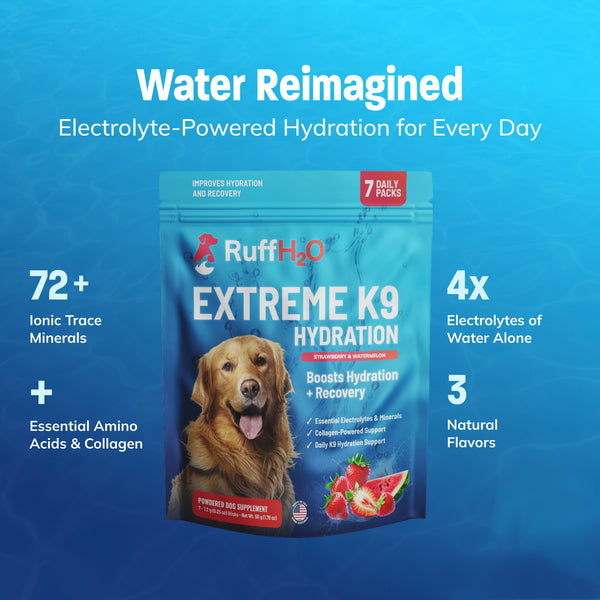
Ruff H2O, K9 Hydration
7 Daily Packs of Powdered Hydration Supplement for Dogs Every dog deserves more than plain water. Ruff H2O™ supports deeper hydration by replenishing essential electrolytes and nutrients dogs lose ev… Read more
Hydration Product Labels Should Be Easy To Read
Read a dog hydration product label like a short safety checklist, not like an ad. A package does not have to sound medical to be worth understanding.
Here is the buyer's checklist to use before adding anything to your cart:
- Is it made and labeled for dogs? A human sports drink is formulated around human needs. Many sports drinks are high in sugar and sodium and may contain ingredients that are not a good fit for dogs. A dog-specific formula is the clearer choice for a dog’s bowl.
- Can you see the full ingredient list? You should be able to identify what is in it, including flavoring and sweetening ingredients. Never give a dog a product containing xylitol; it is highly toxic to dogs. If a label is unclear, ask the maker or choose another product.
- Are the mixing and serving directions specific? Look for directions that tell you how much water to use, how to serve it, and whether the prepared water needs to be discarded after a set time. “Just sprinkle some in” is not enough information.
- Does the product make a routine-support claim or a medical claim? Be wary of anything that says it fixes dehydration, treats an electrolyte imbalance, or replaces veterinary fluids. Veterinary fluid therapy is individualized; it is not something a retail drink can copy at home.
- Does it mention medical conditions? A responsible label should point owners with a dog under veterinary care toward their veterinarian. That is useful information, not a drawback.
Electrolytes such as sodium, potassium, and chloride are real minerals involved in fluid balance. That does not make more automatically better. The product earns its place when it is appropriate for the dog, transparent about what it contains, and used according to the label.
Will This Hydration Product Fit Your Dog’s Routine?
A hydration product that fits your dog's routine can make all the difference. Make mixing, freshness, and cost fit your real routine before you buy a month's supply. A product is only convenient if it works on the specific days you want it: before a road trip, in a cooler at the field, after a long walk, or at home with a dog who sips gradually.
Ask these small questions:
- Can I mix it with the amount of water my dog normally drinks?
- Will I remember to replace it when the label says to replace it?
- Do I have clean bowls and plain water available wherever we are going?
- Is the price per prepared serving reasonable for the days I plan to use it?
- Can I keep an unopened packet in the travel bag without relying on a human drink in a pinch?
Freshness deserves more attention than it gets. If a product is mixed into a bowl and your dog leaves some behind, follow the maker’s discard direction. Do not keep topping up yesterday's flavored water. Wash the bowl, make a fresh serving when needed, and always leave plain water accessible too.
This is also where a hydration product can earn a spot in a sensible long-term routine without taking over the whole conversation. Ruff Greens positions VitaSmart as a daily nutritional topper, while Ruff Naturals is its grooming and coat-care line. Those products serve different everyday roles. None replaces water, a balanced diet, cooling breaks, or veterinary care when your dog is unwell.
Compare hydration products that support dogs
Comparing hydration products with ingredients formulated for dogs makes the buying decision much easier. The question is whether the formula has a clear role in your dog's routine and whether you understand what every added ingredient is doing there.

For a healthy dog, the essentials are straightforward: a dog-specific product, a transparent label, and directions that are easy to follow. Electrolytes may be part of that formula. Some products also add amino acids, collagen, or vitamins. Those additions may be part of the brand's product design, but they do not turn the product into treatment for dehydration, illness, or a measured mineral imbalance.
Ruff H2O K9 Hydration is one example of a dog-specific option. Ruff Greens lists electrolytes, amino acids, collagen, and vitamin B12 for the product. The use pattern is simple: mix one sachet into fresh water, replace the mixed water every 24 hours, and keep fresh water available. Owners of dogs with medical conditions should check with their veterinarian before use.
That is the kind of detail worth looking for in any product: what it contains, how to prepare it, how long it stays fresh, and where the product's limits are. What you do not need is a label full of dramatic promises.
FAQs
What should I look for in a dog hydration powder?
Look for a product labeled for dogs with a full ingredient list, clear mixing and serving directions, storage instructions, and a reminder to consult a veterinarian for medical conditions. Skip products that promise to treat dehydration or hide their ingredient details.
Are hydration packets for dogs better than electrolyte water for people?
For routine dog use, a dog-specific packet or powder is the more appropriate option because it is formulated and labeled for dogs. Human electrolyte waters and sports drinks can contain more sugar or sodium than a dog needs, as well as flavors or sweeteners you should not guess about.
What is the best hydration product for a dog that will not drink water?
First make sure the change is not a health problem. If your dog is otherwise healthy, a mild dog-specific hydration product may be worth a small, label-directed trial alongside a separate bowl of fresh water. If your dog will not drink at all, suddenly drinks far less, or seems unwell, call your veterinarian rather than trying to solve it with flavor.
How long can mixed dog hydration water sit out?
Use the product's own discard instructions. Ruff H2O directs owners to replace prepared water every 24 hours, but every product can have different directions. When in doubt, wash the bowl and make a fresh serving rather than topping off old water.
Can I give a dog hydration product every day?
Only use it as the label directs and keep fresh plain water available at all times. A healthy dog may use a routine-support product on active, warm, or travel days, but a dog with kidney disease, heart disease, diabetes, a prescribed diet, or another medical condition should have veterinary guidance first.
Do dog hydration products work for senior dogs or puppies?
Age alone does not tell you whether a product is needed. Seniors and puppies can have less room for error when illness or dehydration is involved, so check with your veterinarian before introducing a hydration product if there is any health concern, low intake, vomiting, diarrhea, or unusual behavior.

