
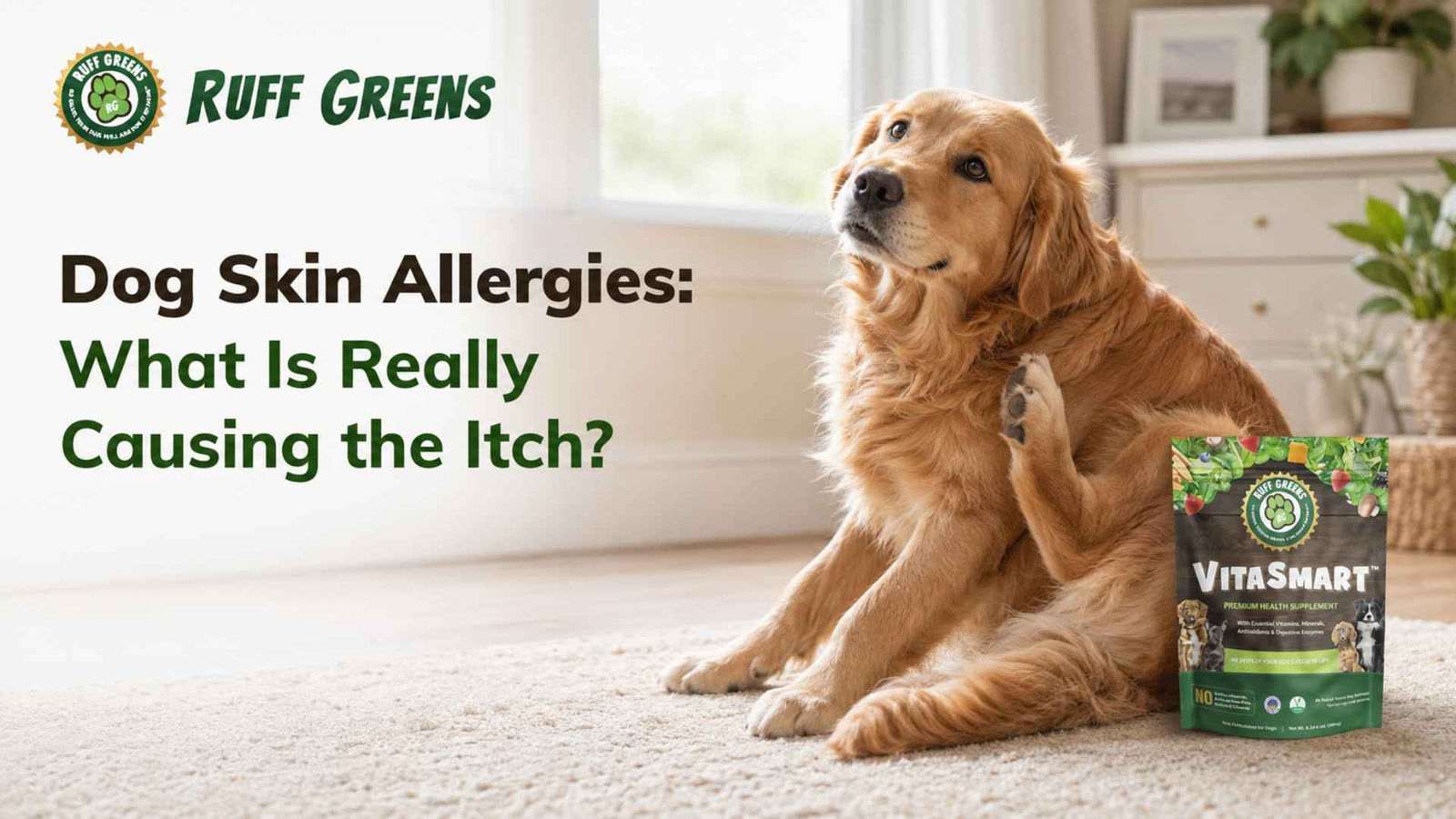


Dog allergy supplements are often one of the first things owners look for when the scratching will not quit. Maybe your dog chews the same paw every night. Maybe their ears keep bothering them, or their belly looks pink again. It is frustrating, especially when you cannot tell whether the trouble comes from food, fleas, pollen, or something else.
There is some good news here. Nutrition can support healthier skin and may help certain dogs feel more comfortable. It just works best as one part of the answer. First, find out what is driving the itch. Then you can choose support that fits your dog instead of buying one promising jar after another.
Key Takeaways
-
A Well-Rounded Formula Can Do More Than Support The Skin.
Probiotics, digestive enzymes, antioxidants, essential omegas, and whole-food nutrients can support several areas of your dog’s everyday wellness at once. -
Consistency Matters More Than Chasing A Quick Fix.
Nutritional support usually works gradually, making a steady daily routine more useful than constantly switching products. -
Supporting The Whole Dog Makes Sense.
Skin, digestion, immune health, nutrition, and overall wellness are connected, which is why comprehensive daily support can be valuable. -
Better Nutrition Can Be A Positive Step Forward.
Once serious causes of itching are addressed, adding dependable nutritional support like Ruff Greens VitaSmart can help.
Can Dog Allergy Supplements Really Help?
Dog allergy supplements really can help some dogs, but the important word is support. A supplement can supply fats and other nutrients used by the skin. It may complement a treatment plan. What it cannot do is remove pollen from the yard, kill fleas, clear an infection, or prove that chicken is making your dog itch.
That distinction saves time. It also keeps a dog from spending weeks in discomfort while everyone waits for a powder or chew to solve the wrong problem.
Essential fatty acids have the strongest practical foothold here. The Merck Veterinary Manual notes that they may reduce allergic itching in some animals. Not every dog responds, though, and improvement is gradual. Think in weeks, not hours.
Why Is Your Dog Itchy In The First Place?
Finding out why your dog is itchy starts with recognizing that scratching is a symptom, not a diagnosis. Dogs with very different problems can look remarkably similar from across the room. The location, timing, and other clues matter.

The Environment May Be The Trigger
Dogs can react to pollen, mold, dust mites, and other things around them. This is often called atopy or atopic dermatitis. The paws, face, ears, armpits, and belly are common trouble spots.
Cornell University College of Veterinary Medicine lists foot licking, face rubbing, hair loss, and recurring skin or ear infections among the signs owners may notice. Some dogs flare during one season. Others itch most of the year.
Fleas And Skin Infections Look Similar
A flea-sensitive dog does not need to be covered in fleas to have a miserable reaction. Meanwhile, all that chewing can damage the skin. Bacteria or yeast may take advantage, bringing odor, greasy patches, crusts, sores, or discharge with them.
Dog allergy supplements do not replace flea control. They do not clear bacterial or yeast infections either. Those problems need the right diagnosis and treatment.
Food May Not Be The Culprit
Food gets blamed quickly because it feels like something we can control. Still, an itchy dog does not automatically have a food allergy. The useful test is a strict elimination diet followed by a controlled food challenge, planned with a veterinarian.
This is not the time for “just one” flavored chew. Treats, table scraps, supplements, toothpaste, and flavored medicine can muddy the result. If your dog is doing a food trial, show every label to your vet before adding it.
Which Nutrients May Support Itchy Dogs?
The nutrients that may support itchy dogs are easier to evaluate once you look past crowded supplement labels. Ten ingredients are not automatically better than three. What matters is whether the formula has a clear job and provides a useful amount of each nutrient.
Omega-3 And Omega-6 Fatty Acids
Skin needs fat. EPA and DHA, the omega-3s usually supplied by fish or algae, help the body manage a normal inflammatory response. Omega-6 fats matter too; linoleic acid, for example, helps the skin barrier do its job.
That does not mean pouring extra oil over dinner is harmless. Oil adds calories, and too much may upset the stomach. The source, dose, and balance with the rest of the diet matter. Ask your veterinarian for guidance if your dog takes medication or has an existing health condition.
Zinc, Vitamin E, And Other Nutrients
Zinc and vitamin E both belong in a healthy diet. That does not mean a dog needs an extra dose from three different jars. Complete and balanced food already provides required vitamins and minerals, so check for overlap before adding more.
Put every food, topper, chew, and oil on one list. That simple step gives your vet a much clearer picture of what your dog gets each day.
Probiotics And Digestive Support
Why do probiotics show up in so many skin products? The digestive tract, immune system, and skin affect one another. But strains differ, and research is still developing. The phrase “contains probiotics” does not guarantee that a product will quiet your dog’s itch.
What Dog Allergy Supplements Cannot Do
Dog allergy supplements cannot diagnose the cause of your dog’s discomfort. If the real problem is fleas, yeast, bacteria, or an environmental allergy, that problem still needs attention. The same goes for prescription itch relief, a controlled food trial, or allergen-specific therapy when your veterinarian recommends it.
Waiting has a downside. Claws and teeth damage already-sore skin. Then that skin becomes itchier and easier to infect. It is a miserable loop, and nutrition alone rarely stops it once it gathers speed.
How To Choose A Dog Skin Supplement
Choosing a dog skin supplement starts with setting marketing claims aside and reading the back of the package. You should not need detective work to answer these questions:
- Is the product made specifically for dogs?
- Does it list every ingredient and the active nutrient amounts?
- Are the directions clear for your dog’s size?
- Does the company explain its quality and testing standards?
- Will it duplicate nutrients supplied by another product?
- Does it make realistic support claims instead of promising a cure?
Also count the calories, especially with oils and soft chews. If the formula is flavored, check it with your veterinarian before using it during an elimination diet.
Where Ruff Greens VitaSmart Fits
Ruff Greens VitaSmart fits best as daily nutritional support after you have started dealing with the reason for the itch. Ruff Greens VitaSmart is a food topper with whole-food nutrients, probiotics, digestive enzymes, antioxidants, and essential omegas. Add it to your dog’s usual meal for everyday support for the skin, coat, digestion, immune health, energy, and general wellness.
Could it tell you whether your dog is allergic to grass or chicken? No. Nor will it treat fleas, infection, or a bad flare. VitaSmart is for the otherwise stable dog who could benefit from steady nutritional support. Check with your vet first if your dog takes medicine, has a health condition, or eats a therapeutic diet.
Pair Nutrition With A Sensible Skin Routine
Pairing nutrition with a sensible skin-care routine means remembering that what goes in the bowl is only part of the picture. Keep up with flea prevention. Groom regularly, use the bathing schedule your vet suggests, and do not ignore a sore ear or damp hot spot. The Ruff Naturals collection has options for routine coat care. Diagnosed infections may need something medicated instead.
Change one or two things at a time when you can. If you replace the food, shampoo, treats, and supplements on the same weekend, you will have no idea which change helped—or which one caused an upset stomach.
When Does An Itchy Dog Need A Vet?
An itchy dog needs a vet when the problem keeps returning, wakes them, or leaves visible damage. Raw skin, open sores, discharge, strong odor, bald areas, or painful ears should not sit on a wait-and-see list. Sudden, intense itching deserves a call too.
Hives and facial swelling can signal a more serious reaction. Trouble breathing, collapse, or symptoms that worsen quickly are emergencies. Seek urgent veterinary help.
Frequently Asked Questions About Dog Allergy Supplements
These frequently asked questions about dog allergy supplements can help you sort through the options. These are the questions worth answering before you add anything new to your dog’s bowl.
What is the best supplement for a dog with allergies?
There is no universal winner. Many vets use omega-3 fatty acids as part of an allergic-skin plan, but your dog’s diet, health, medicines, and diagnosis should guide the choice.
Can dog allergy supplements stop itching?
Some dogs itch less after consistent nutritional support. Do not expect a supplement to settle an active flare tonight. A dog who is miserable or keeps scratching needs the vet.
Does fish oil help dogs with itchy skin?
It can. Fish oil supplies EPA and DHA, two fats that may help some itchy dogs. Concentrations vary a lot, though. Ask about an EPA-and-DHA amount rather than measuring an unspecified spoonful of oil.
Can probiotics help a dog with allergies?
Possibly. Certain strains may support digestive and immune health. A probiotic is still support, not a substitute for finding and treating the source of the itch.
Can I use supplements during a food-allergy trial?
Only after your veterinarian checks the ingredients. Meat flavors, proteins, and other additions can compromise a strict elimination trial, even when they appear in a skin supplement or chew.
When should I stop trying supplements and call the vet?
Call when your dog cannot settle, damages their skin, develops odor or discharge, has painful ears, or keeps getting worse. Once the cause is identified and treated, good nutrition can do what it does best: support healthier skin and help your dog feel comfortable again.
How long before a dog skin supplement works?
Give it time. Skin and coat changes often take several weeks. Use the directed serving while you watch for a real trend; doubling it on your own will not hurry the process.
