
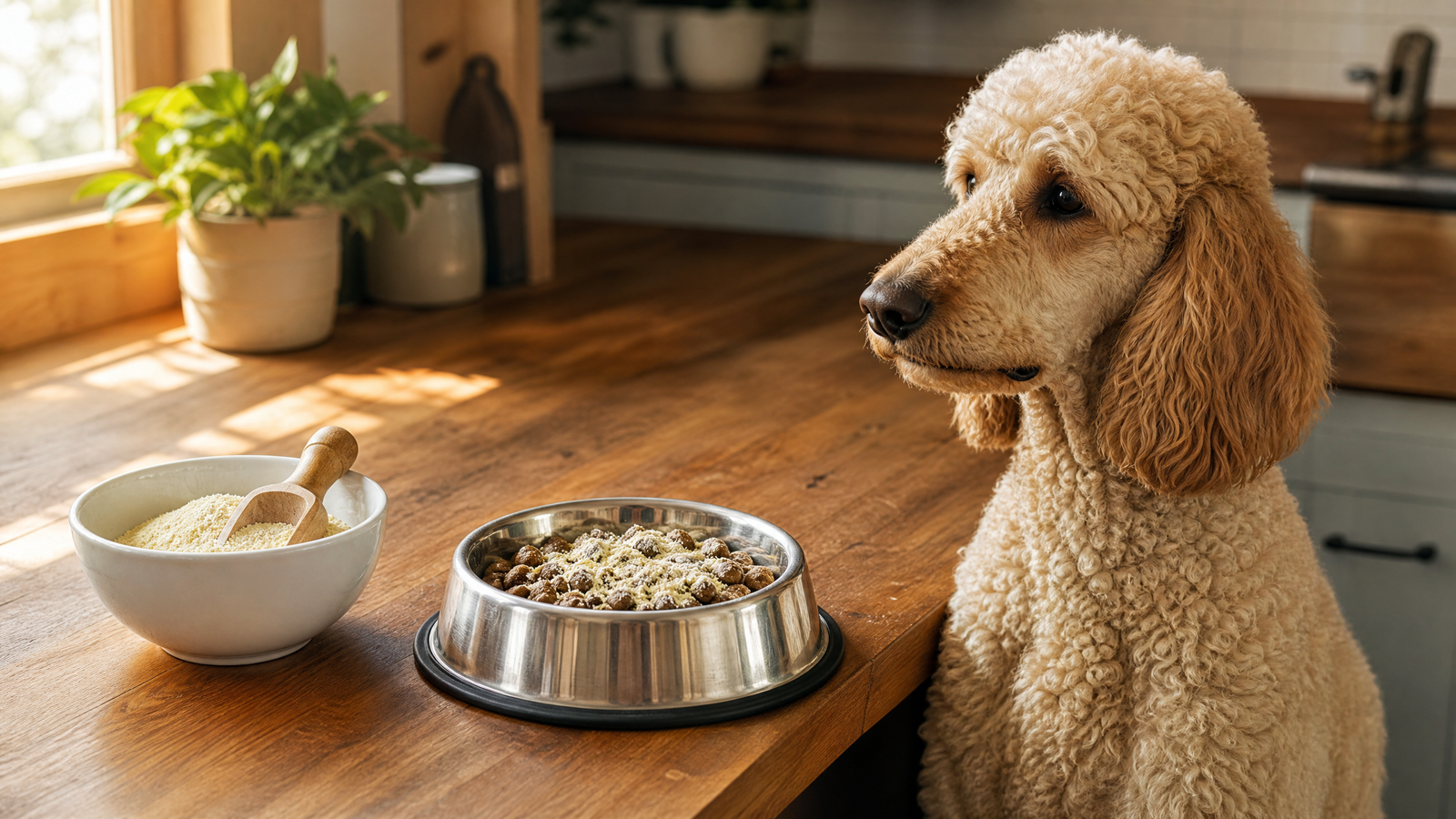

TL;DR: Colostrum for dogs is a supplement made from bovine (cow) first milk, rich in immunoglobulins, lactoferrin, and growth factors. Research shows it can support immune balance, gut lining repair, and allergy relief in adult dogs. It is considered very safe, with mild digestive upset being the only commonly reported side effect. Most dogs do well on a daily dose scaled to body weight, mixed into food.
Key Takeaways
-
Immune Support From First Milk
Bovine colostrum delivers immunoglobulins, lactoferrin, and cytokines that help balance a dog's immune response rather than simply stimulating it.
-
Gut Lining Repair Benefits
Growth factors and prebiotic oligosaccharides in colostrum help protect the intestinal barrier, which is why vets often suggest it for dogs with chronic digestive trouble.
-
Allergy Relief Potential
Proline rich polypeptides and lactoferrin appear to calm overactive immune reactions, making colostrum a popular natural option for itchy, allergy prone dogs.
-
Very Safe For Daily Use
No serious side effects are documented in dogs. Mild soft stool can occur when starting, and dogs with true dairy allergies should avoid it.
-
Quality Markers Matter
Choose a supplement standardized for IgG content, sourced from grass fed cows, and processed at low heat to preserve fragile immune proteins.
What Is Colostrum for Dogs?
Colostrum is the antibody rich first milk that every mammal mother produces in the first 24 to 72 hours after giving birth. It is fundamentally different from regular milk. Where mature cow's milk contains roughly 3% protein, bovine colostrum contains about 15% protein, and up to 80% of that protein is made up of immune active compounds rather than simple nutrition [1].
The supplement form used for dogs is almost always bovine colostrum, collected from dairy cows within the first milkings after calving. Because cows produce far more colostrum than a calf can drink, it can be collected humanely, gently dried, and standardized into powders, capsules, and chews.
The bioactive profile reads like a wish list for immune and gut support. Bovine colostrum contains immunoglobulin G at concentrations of 40 to 200 mg/mL, the iron binding protein lactoferrin at about 0.8 g/L, immune signaling cytokines, growth factors including IGF-1 and TGF beta, and prebiotic oligosaccharides at roughly double the level found in mature milk [1].
Nature designed this fluid to do one job: transfer a working immune system from mother to newborn. Puppies are born with almost no circulating antibodies of their own, with serum IgG around 0.3 g/L compared to 8 to 25 g/L in an adult dog. Colostrum supplies 85 to 95% of the immunoglobulins a puppy carries at two days old, and puppies that fail to receive enough face dramatically higher mortality [2].

How Colostrum Works in Adult Dogs
Here is the question every skeptical dog owner asks: if adult dogs cannot absorb whole antibodies the way newborns can, why would colostrum help them? It is a fair question, and the answer is what makes this supplement genuinely interesting.
A newborn puppy's intestinal barrier stays open to whole antibody absorption for only 12 to 16 hours after birth. After that window closes, intact immunoglobulins no longer pass into the bloodstream [2]. So in adult dogs, colostrum works through local and indirect mechanisms instead of systemic antibody transfer.
First, immunoglobulins and lactoferrin act inside the digestive tract itself. They bind pathogens, block bacteria like E. coli from attaching to the gut wall, and exert a local anti inflammatory effect on the intestinal lining. Veterinarians at VCA Hospitals note that colostrum may support gut microflora and provide this local anti inflammatory action even though older animals cannot absorb the antibodies whole [3].
Second, colostrum's oligosaccharides function as prebiotics. Compounds like 3'-sialyllactose and 6'-sialyllactose feed beneficial gut bacteria, which ferment them into short chain fatty acids. Those fatty acids nourish the cells lining the colon, strengthen the intestinal barrier, and help prevent opportunistic pathogens from gaining a foothold [1]. This is the same terrain targeted by a quality probiotic, which is why many owners pair colostrum with a vet approved probiotic for gut health.
Third, smaller bioactive fragments do survive digestion. Proline rich polypeptides, cytokine fragments, and growth factor peptides are far smaller than whole antibodies and can be absorbed or act on immune cells lining the gut. Since roughly 70% of a dog's immune system resides in gut associated lymphoid tissue, influencing the gut means influencing whole body immunity.

Proven Benefits of Colostrum for Dogs
Research on colostrum in dogs is younger than the human literature, but the findings so far are consistent across several key areas. A 2025 review published in the journal Animals by Nestlé Purina Research consolidated the evidence and found meaningful immune benefits across different life stages [1].
Immune System Modulation
Colostrum does not simply rev up the immune system. It modulates it, meaning it can strengthen weak responses and calm excessive ones. Studies show bovine colostrum can increase the effectiveness of certain vaccinations, improve immune response against specific viruses, and support dogs under stress, which is a known immune suppressant [3]. For owners focused on resilience, colostrum pairs naturally with the strategies in our guide on how to boost your dog's immune system.
Gut Health and Digestive Support
This is the best documented use in adult dogs. Colostrum's combination of antimicrobial lactoferrin, barrier supporting growth factors, and prebiotic oligosaccharides makes it a natural fit for dogs with loose stools, sensitive stomachs, or recovery after antibiotics. VCA reports evidence for improved fecal quality and gut microflora support [3].
Allergy and Itch Relief
Allergies are an immune overreaction, and colostrum's proline rich polypeptides appear to help dial that reaction down. In human studies, these polypeptides eased allergy symptoms, and lactoferrin suppressed allergic immune responses in an animal contact dermatitis model [1]. Many veterinarians now suggest colostrum as part of a broader plan for dogs with seasonal itching, which we cover in depth in our guide to the best dog supplement for itchy skin and allergies.
Recovery, Muscle, and Healthy Aging
Colostrum's growth factors, including IGF-1 and TGF beta, support tissue repair after surgery, illness, or injury. There is also evidence it may improve bone and muscle function in older animals, and even supportively treat periodontal disease in dogs [3]. That makes it a thoughtful addition for senior dogs whose immune function naturally declines with age, a process researchers call immunosenescence [1].
| Benefit Area | Key Compounds | Evidence Level in Dogs |
|---|---|---|
| Immune balance | IgG, cytokines, PRPs | Moderate, multiple studies |
| Gut lining and stool quality | Lactoferrin, growth factors, oligosaccharides | Moderate to strong |
| Allergy and itch support | PRPs, lactoferrin | Early but promising |
| Vaccine response | Immunoglobulins | Moderate |
| Senior muscle and bone | IGF-1, TGF beta | Early |
| Oral and periodontal support | Lactoferrin, lysozyme | Early |
Colostrum Dosage for Dogs by Weight
There is no single universally established veterinary dose for colostrum, because the FDA does not review non drug supplements before they reach the market and large scale dosing trials are still limited [3]. In practice, veterinarians recommend following the product label and starting low, then increasing gradually over one to two weeks to minimize the chance of soft stool.
Most quality powders and chews follow a weight based framework similar to the one below. Use it as a conversation starter with your vet, not a prescription.
| Dog Weight | Typical Starting Dose | Typical Full Daily Dose |
|---|---|---|
| Under 15 lbs | 1/8 tsp powder or 1/2 chew | 1/4 tsp powder or 1 chew |
| 15 to 40 lbs | 1/4 tsp powder or 1 chew | 1/2 tsp powder or 2 chews |
| 40 to 75 lbs | 1/2 tsp powder or 2 chews | 1 tsp powder or 3 chews |
| Over 75 lbs | 3/4 tsp powder or 2 chews | 1 1/2 tsp powder or 4 chews |
Colostrum can be given with or without food. If your dog vomits on an empty stomach, simply offer future doses with a small meal. Give it at the same time each day, and expect to wait several days to a few weeks before judging results, since immune and gut changes build gradually [3].
If you miss a dose, give it when you remember unless the next dose is close. Never double up. Consistency matters more than any single dose.

Side Effects and Safety
Colostrum has one of the cleanest safety profiles in the supplement world. VCA Hospitals states there are no documented side effects, though they note that studies are limited, so the picture could evolve as research grows [3].
The side effects that do occasionally appear are mild and digestive. Soft stools or minor stomach upset can happen in the first few days, which is exactly why the gradual introduction approach works so well. Starting at a quarter of the target dose and building up over two weeks sidesteps most of these issues.
The one firm contraindication is a true dairy or milk allergy. Because bovine colostrum contains milk proteins like beta lactoglobulin, dogs with confirmed milk allergies can react with digestive upset or itching. Sensitivities can also develop over time with repeated exposure, so watch your dog across the whole course of use, not just the first week [3].
No drug interactions are documented, but always tell your veterinarian about every supplement your dog takes. And a practical note: colostrum is lower in lactose than regular milk, so many dogs who are merely lactose intolerant (rather than allergic) tolerate it well [1].
How to Choose a Quality Colostrum Supplement
The supplement aisle is crowded, and colostrum quality varies enormously between brands. Because the FDA does not pre approve pet supplements, the burden of verification falls on you as the buyer [3]. Here is what separates a serious product from a fancy label.
Standardized IgG content. The single most important marker. Quality products state their immunoglobulin G percentage on the label, typically 20% or higher. If a brand will not tell you how much IgG is in the jar, it probably is not much.
First milking collection and low heat processing. Immunoglobulins and growth factors are fragile proteins. Colostrum collected from the earliest milkings and dried at low temperatures retains far more biological activity than heavily heat treated product.
Clean sourcing. Look for colostrum from grass fed, pasture raised cows, ideally from US or New Zealand dairies, with no added hormones or routine antibiotics. Third party testing for pathogens and purity adds another layer of confidence.

A complete nutritional foundation. Colostrum works best as one layer of a broader wellness strategy, not a standalone fix. Dogs eating a nutritionally complete diet with live vitamins, minerals, probiotics, and digestive enzymes get more from every add on. That is the philosophy behind Ruff Greens VitaSmart, a whole food based nutritional supplement you sprinkle over your dog's regular food to fill the gaps kibble leaves behind. Many owners find that once the nutritional foundation is solid, targeted additions like colostrum deliver noticeably better results. You can also start with the Ruff Greens Jumpstart Trial to see the difference a complete foundation makes before layering in specialty supplements.

Ruff Greens™ VitaSmart
Colostrum delivers its best results on top of a complete nutritional foundation. VitaSmart adds live vitamins, minerals, probiotics, and digestive enzymes to your dog's regular food, supporting the same immune and gut systems that colostrum targets.
If you are comparing immune and allergy oriented ingredients, our guide to quercetin for dogs explains the current evidence and safety questions.
Frequently Asked Questions
1. How long does it take for colostrum to work in dogs?
Most owners see digestive improvements within one to two weeks of daily use. Immune and allergy benefits take longer, typically four to eight weeks of consistent dosing. VCA notes colostrum may take several days to take effect, and improvement is not always immediately obvious, so commit to a full month before judging results [3].
2. Can I give my dog colostrum every day?
Yes. Colostrum is designed for daily use, and consistency is what drives results. No serious side effects are documented in dogs with long term daily supplementation. Follow the label's weight based dose, introduce it gradually over two weeks, and avoid it only if your dog has a confirmed dairy allergy [3].
3. Is colostrum or probiotics better for dog gut health?
They work through different mechanisms and pair well together. Probiotics add beneficial live bacteria to the gut, while colostrum feeds those bacteria with prebiotic oligosaccharides, protects the gut lining with growth factors, and blocks pathogens with lactoferrin. Many veterinarians recommend using both as complementary layers of gut support [1].

