
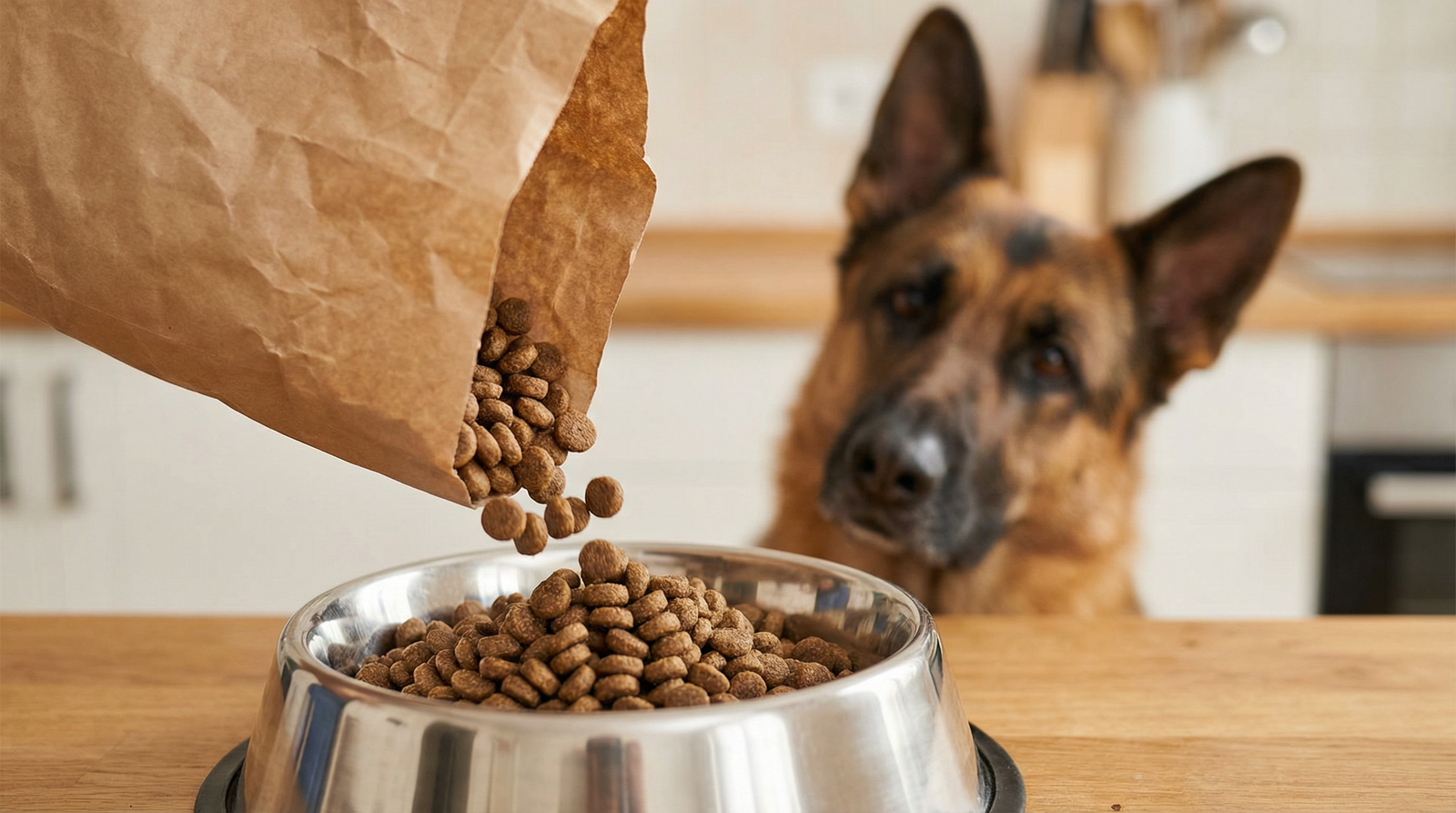

The essential vitamins in kibble are destroyed by the manufacturing process called extrusion, which uses extreme heat (often 250-400°F) and pressure to cook and shape the food. This intense process degrades or completely destroys heat-sensitive vitamins like B-complex, Vitamin C, and Vitamin A, as well as live probiotics and enzymes, resulting in a nutritionally compromised, or "dead," food.
Key Takeaways
-
High Heat Destroys Essential Nutrients
The extrusion process used to make kibble involves extreme heat that degrades delicate vitamins like B complex and Vitamin C. This leaves the food nutritionally compromised and lacking the vital elements your dog needs to thrive.
-
Synthetic Vitamins Degrade Quickly
Manufacturers spray synthetic vitamins onto kibble after cooking to replace what was lost. These lab created nutrients lose their potency as soon as the bag is opened and exposed to air and light.
-
Probiotics And Enzymes Are Wiped Out
The intense heat of kibble production completely destroys live probiotics and digestive enzymes. Without these crucial components your dog cannot properly digest their food or maintain a healthy immune system.
-
Revitalize Your Dogs Meals
You can easily restore the lost nutrition by adding a raw whole food supplement to your dogs bowl. This simple step infuses their diet with live vitamins probiotics and enzymes for optimal health.
You trust that the bag of kibble you buy is "100% complete and balanced," providing everything your dog needs. But have you ever wondered how a food can sit on a shelf for two years and still be considered nutritious?
The secret lies in the manufacturing process, and it's a destructive one. The very process that makes kibble convenient and shelf-stable is the same one that strips it of the most vital, life-giving nutrients your dog needs to thrive. This guide pulls back the curtain on kibble production to explain why it's often a "dead" food and what you can do about it.
The Kibble Manufacturing Process: A Quick Overview
Most commercial dry dog food is made through a process called extrusion. It involves mixing ingredients into a dough, feeding it into a machine (an extruder), and cooking it under intense heat and pressure. The dough is then forced through a die that cuts it into the familiar kibble shapes.
This process is efficient for mass production and creates a shelf-stable product. However, the high temperatures required are devastating to delicate nutrients.
Heat: The #1 Enemy of Vitamins
Many essential vitamins are notoriously unstable and begin to degrade when exposed to heat, light, or oxygen. The extrusion process, with temperatures often reaching between 250°F and 400°F, is a worst-case scenario for these delicate compounds [1].
Think of it like cooking vegetables. We all know that boiling broccoli turns it mushy and leaches out its nutrients. Now imagine cooking it at twice the temperature — that's what happens inside a pet food extruder. The molecular structure of the vitamins is altered or destroyed, rendering them useless to your dog's body.
Which Vitamins Are Most Affected?
While all nutrients are impacted to some degree, some vitamins are particularly sensitive to heat. These include:
| Vitamin | Role in the Body | Heat Sensitivity |
|---|---|---|
| Vitamin B1 (Thiamine) | Energy metabolism, nervous system function | Extremely sensitive |
| Vitamin B5 (Pantothenic Acid) | Energy production, hormone regulation | Very sensitive |
| Vitamin B9 (Folic Acid) | Cell growth, red blood cell formation | Very sensitive |
| Vitamin C | Immune function, antioxidant | Very sensitive |
| Vitamin A | Vision, immune health, skin | Moderately sensitive |
Studies on vitamin degradation in extruded pet foods have shown significant losses. For example, one study found that levels of Vitamin A, Vitamin E, and the B-group vitamins can decrease by as much as 50% or more during the extrusion process [2].
What About the Vitamins Added Back In?
Pet food manufacturers are aware of this nutrient loss. Their solution is to spray the finished kibble with a pre-made "vitamin pack" after it has been cooked. This is how they can legally claim the food is "complete and balanced."
However, there are two problems with this approach:
- They are synthetic: The vitamins being added back are often synthetic, lab-created versions, not the natural, whole-food-based nutrients your dog's body is designed to recognize and use.
- They degrade over time: These sprayed-on vitamins are exposed to oxygen and light the moment the bag is opened. Their potency diminishes over time, so the last scoop in the bag is far less nutritious than the first [3].
It's Not Just Vitamins: Probiotics and Enzymes Are Lost, Too
The nutritional destruction doesn't stop at vitamins. Two other critical components of a healthy diet are completely wiped out by extrusion:
- Probiotics: These live, beneficial bacteria are essential for gut health and immunity. They cannot survive the high temperatures of kibble production.
- Digestive Enzymes: These proteins, found in raw foods, help your dog break down and absorb nutrients. They are also destroyed by heat.
A food devoid of live vitamins, probiotics, and enzymes is what many nutritionists refer to as a "dead food."
How to Add Live Nutrients Back to Your Dog's Bowl
If kibble is a "dead food," how can you bring it back to life? The answer is to add back what the processing took out.
An all-in-one nutritional supplement like Ruff Greens is the easiest and most effective way to do this. It's a powder made from real, raw, whole-food ingredients that you simply sprinkle over your dog's existing food. One scoop infuses their meal with:
- Live, plant-based vitamins and minerals to fill the nutritional gaps.
- 15 strains of live probiotics to support a healthy gut and immune system.
- 20+ digestive enzymes to ensure they absorb the maximum nutrition from their food.
By adding Ruff Greens, you are transforming your dog's dead, processed kibble back into a live, nutrient-rich meal, just as nature intended.
Bring your dog's food back to life with a free Jumpstart Trial Bag of Ruff Greens.
Related Articles

Ruff Greens™ VitaSmart
A premium nutritional food topper designed to fill the nutritional gaps in commercial dog food with over 30 vitamins, minerals, probiotics, and omega fatty acids.
Frequently Asked Questions
1. Is grain-free kibble any better? Not when it comes to nutrient destruction. Whether a kibble is made with grains or alternative carbohydrates like peas and lentils, it still goes through the same high-heat extrusion process that destroys essential vitamins, probiotics, and enzymes.
2. What about canned or "fresh" pet food? Canned food is also cooked at high temperatures for sterilization, leading to similar nutrient loss. Subscription-based "fresh" foods are generally cooked at lower temperatures and are a better option, but they are significantly more expensive and require refrigeration.
3. How can I be sure Ruff Greens' nutrients aren't destroyed? Ruff Greens is not cooked or extruded. It is a blend of raw, dehydrated, and air-dried ingredients, carefully processed to preserve the live vitamins, probiotics, and enzymes, ensuring your dog receives their full nutritional benefit.
References
[1] Food and Agriculture Organization of the United Nations. "Feed processing and its effects on nutrient availability." fao.org, https://www.fao.org/3/x5738e/x5738e0g.htm.
[2] National Library of Medicine. "Effects of extrusion and storage on the vitamin content of a dog food." ncbi.nlm.nih.gov, 1 Feb. 1994, https://pubmed.ncbi.nlm.nih.gov/8012423/.
[3] Petfood Industry. "Vitamin stability in pet food." petfoodindustry.com, 1 May 2012, https://www.petfoodindustry.com/pet-food-ingredients/vitamins/article/15456299/vitamin-stability-in-pet-food.
Sources: American Kennel Club, VCA Animal Hospitals

