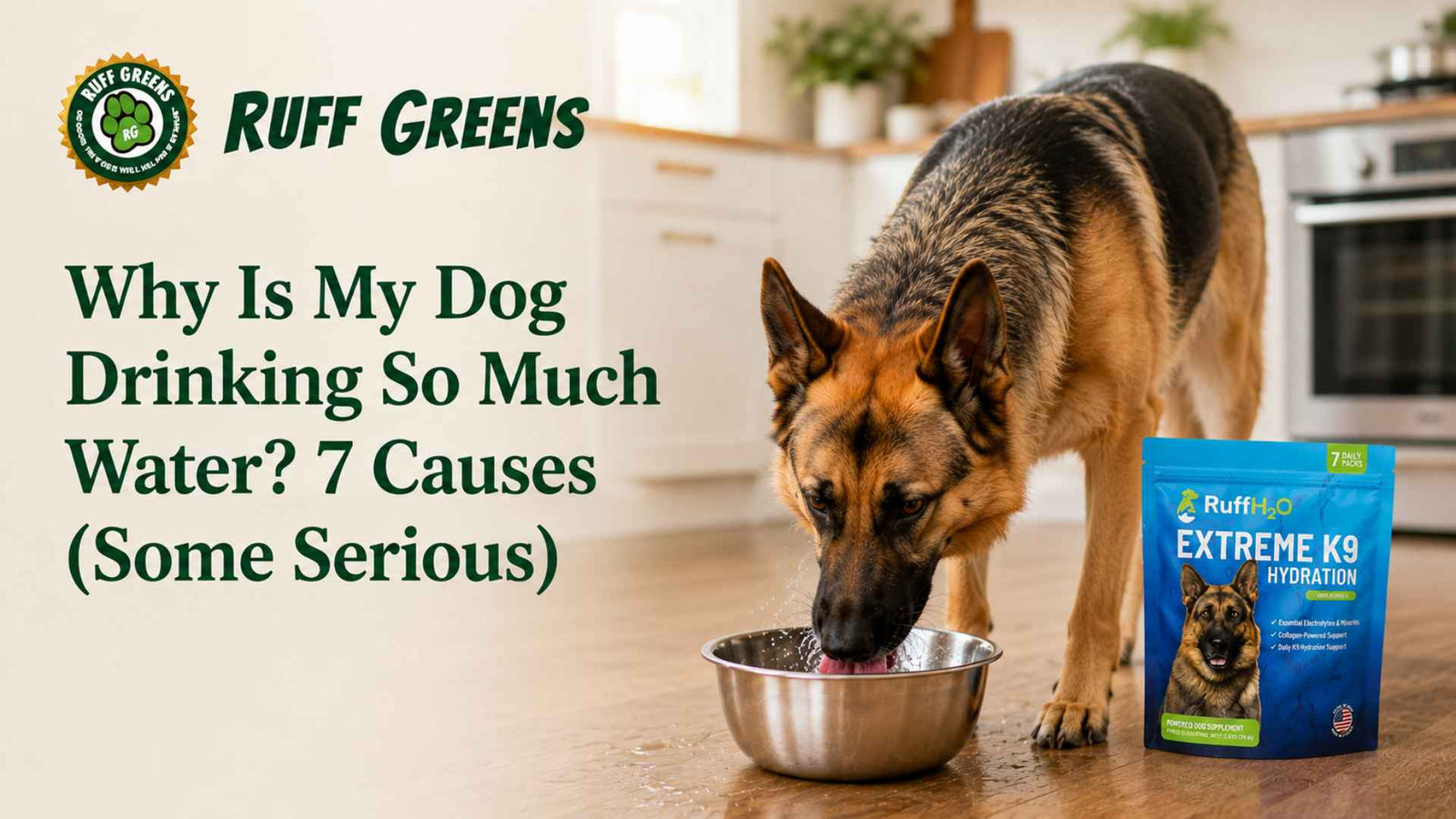

Why is my dog drinking so much water? Maybe it was 95 degrees, maybe the walk ran long, maybe dinner was especially dry. Those things happen. What gets an owner’s attention is the dog who suddenly drains the bowl, scratches at the door at 2 a.m., or has an accident after years of good house manners.
A sudden change in your dog’s drinking habits should not be ignored.
Key Takeaways
Persistent thirst can be your dog’s way of telling you something changed
If your dog keeps drinking more than usual for a day or two, it is worth paying closer attention to the pattern.
More drinking and more peeing can provide an important clue
When both happen together, medications or health conditions are some possibilities.
Keep water available while you figure out why your dog is so thirsty
Restricting water can make dehydration or an underlying problem worse, so continue offering water unless your veterinarian specifically tells you otherwise.
Healthy hydration starts with noticing what is normal for your dog
Once serious causes are ruled out, fresh water and everyday hydration support like Ruff H2O can help make a consistent hydration routine easier to maintain.
How much water is too much for a dog?
There is no single water number that settles the question. You may see the “one ounce per pound per day” rule of thumb, and it can be a useful starting point. Still, a dog’s needs move around with weather, activity, age, body size, meals, and health.

A 50-pound dog drinking more after a hot trail walk is not automatically a crisis. A bowl that is suddenly empty every day is different. So is waking you up to go out or a previously house-trained dog having accidents.
Want to give your veterinarian something useful? Mark the water bowl, or use a measuring cup when you refill it for a day. With more than one pet, separate bowls for a short stretch. It is a little bit of a hassle, but the answer is much clearer.
7 reasons your dog may be drinking more water
1. Heat, hard play, or a long day outside
This is the ordinary explanation. A hard game of fetch, a swim, a warm ride home, a day at the park, each takes water out of a dog. Panting does too. Offer cool, fresh water and let your dog settle somewhere shady or air-conditioned.
But there is a line. Panting that will not settle, bright-red gums, thick saliva, stumbling, or confusion are not ordinary post-play signs. Treat those as urgent.
2. Diet changes or salty food
Dinner can change the water-bowl routine. Dogs on dry food usually get less moisture from meals than dogs eating canned food. A salty table scrap, a different treat, or a trip into a bag of snacks can make a dog thirsty as well.
Still, one salty snack is not a satisfying explanation for a dog who is drinking and urinating much more for several days. If it keeps going, it is time to stop blaming dinner.
3. Medication side effects
Your dog’s medicine may be causing the extra thirst. Some common examples include water pills, prednisone, and certain seizure medicines. These can make dogs drink and urinate more.
Do not stop the medicine on your own. Call your veterinarian, explain what has changed, and ask what they recommend.
4. Vomiting, diarrhea, fever, or dehydration
When fluid is leaving the body, dogs often head for the water bowl. Vomiting, diarrhea, fever, and dehydration can all do that. The hard part is that a sick dog may gulp water, then throw it up again.
Repeated vomiting or diarrhea, sticky gums, ropey saliva, weakness, no appetite, or water that will not stay down mean call a vet now. This is not a situation for a hydration product at home; it is a situation for medical advice.
5. Diabetes mellitus
Veterinarians pay close attention when thirst and frequent urination show up together because diabetes mellitus can cause both. Extra glucose ends up in the urine and pulls water with it. Owners may also notice weight loss, fatigue, or an appetite that seems bigger than usual.
If that combination comes with weakness, vomiting, poor appetite, or an odd sweet or acetone-like smell on the breath, seek urgent veterinary help. Diabetes can turn serious when it is not controlled.
6. Kidney disease
The kidneys help the body hold onto water. When they are not doing that job well, a dog may make more dilute urine and drink more to make up for it. In the beginning, the signs can be easy to miss: another trip outside, more refills, or a dog who begins finishing the bowl before bed.
You cannot diagnose kidney disease by watching a water bowl. An exam, blood work, and urine testing are how a veterinarian starts sorting it out.
7. Cushing’s disease and other hormone problems
Cushing’s disease is another reason a dog may drink and urinate more. It is tied to excess cortisol. Some dogs also develop a pot-bellied appearance, pant more, lose hair, have thinner skin, or seem hungrier than usual.
There are other causes, too, including rare diabetes insipidus and certain electrolyte problems. You do not need to memorize the whole list. A persistent, new change in thirst is reason enough to have the veterinary conversation.
When to call a vet for a thirsty dog
Call your veterinarian promptly if the change lasts more than a day or two without a clear reason. Do the same if you are seeing more urination, accidents, weight loss, appetite shifts, or behavior that is not like your dog.
Go in urgently for collapse, confusion, marked weakness, breathing trouble, severe panting, repeated vomiting, ongoing diarrhea, blood in the urine, straining to urinate, or water that will not stay down.
What to do today if your dog is drinking too much water
For today, keep fresh water available and jot down what you notice. Is your dog normal otherwise? Eating? Peeing more? Panting? Vomiting? Losing weight? Is this just the hottest day of the month, or has something genuinely shifted?
The main thing not to do is pull the bowl away. Unless a veterinarian has specifically told you otherwise, restricting water can deepen dehydration and create another problem on top of the first one.
For a healthy dog, Ruff H2O can make sense as part of a normal hydration routine for warm weather, travel, or activity. It is added to fresh water; it is not a replacement for water. If a dog is drinking dramatically more than usual, the job is to find out why, not cover up the change with a new routine.
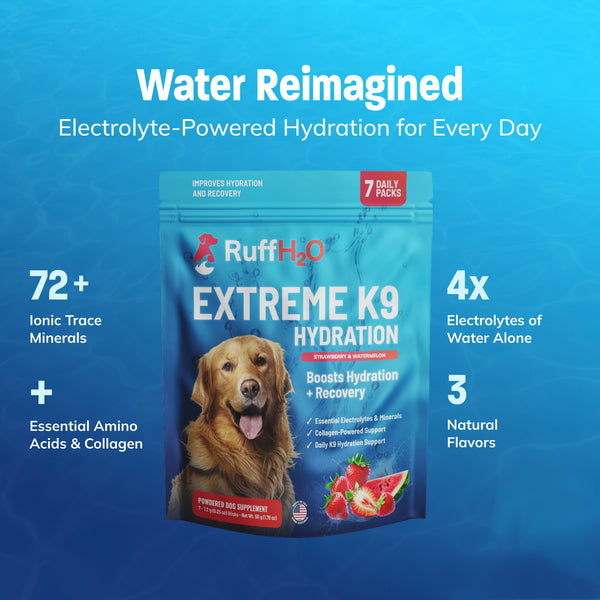
Ruff H2O, K9 Hydration
7 Daily Packs of Powdered Hydration Supplement for Dogs Every dog deserves more than plain water. Ruff H2O™ supports deeper hydration by replenishing essential electrolytes and nutrients dogs lose ev… Read more
Ruff Greens VitaSmart and Ruff Naturals have a place in everyday care in different ways: nutritional support at mealtime and a grooming routine that can help owners stay tuned in to coat, skin, and comfort changes. But none of those products replaces a veterinarian when thirst has become a symptom.
FAQs
Is it more normal for senior dogs to drink more water?
Aging itself doesn't make a healthy dog drink more, but senior dogs are more likely to develop the conditions that cause increased thirst, such as kidney disease, diabetes, and Cushing's, so the change shows up more often in older dogs. Age also isn't a reason to wait and see. If your senior dog's water intake climbs noticeably, get bloodwork done rather than chalking it up to getting older.
Why is my dog drinking so much water and peeing so much?
Heat and medication can cause it, but so can diabetes, kidney disease, Cushing’s disease, and other problems. If it is a new pattern for your dog, schedule a veterinary visit.
Should I limit my dog’s water if they are drinking too much?
No. Do not limit water unless your veterinarian directs you to. A dog who is ill or dehydrated can worsen without access to it.
How can I help my dog stay better hydrated every day?
Start with plenty of fresh water, consistent meals, and extra hydration support when needed. Small daily habits can make it easier to keep your dog’s hydration routine on track.
Can Ruff H2O help support my dog’s hydration?
Yes. Ruff H2O is designed to support everyday hydration and make drinking water more appealing. It won’t treat the underlying cause of excessive thirst, but it can be part of a healthy daily hydration routine.
Can Ruff H20 fix excessive thirst in dogs?
No. Excessive thirst is a symptom, not a hydration deficiency, and a sudden increase in drinking often signals an underlying issue like kidney disease, diabetes, or a medication side effect. Ruff H2O supports normal daily hydration and electrolyte balance in healthy dogs, but it won't address the cause of abnormal thirst. If your dog is drinking noticeably more than usual, schedule a vet visit for bloodwork before adding any supplement.

