


Learning how to hydrate a dog safely can feel urgent when your dog suddenly stops visiting the water bowl or seems unusually tired after a hot day. The challenge is knowing whether your dog simply needs encouragement to drink or is showing signs that require veterinary care.
The good news is that an otherwise healthy dog may respond to a few simple changes, such as fresh water, a clean bowl, and a cool place to rest. By checking your dog’s behavior and symptoms first, you can choose the safest next step with more confidence.
Key Takeaways
-
Safe Hydration Starts With Your Dog's Behavior
Check your dog's behavior and symptoms before deciding whether to offer water at home or call the vet. -
Fresh Water Is The First Step For Safely Hydrating Your Dog
A clean bowl, cool water, and easy access can encourage an otherwise healthy dog to drink. -
Never Force A Sick Dog To Drink
Pouring or syringing water into a weak or poorly swallowing dog's mouth can cause liquid to enter the lungs. -
Serious Dehydration Symptoms Require Veterinary Care
Repeated vomiting, weakness, confusion, collapse, breathing trouble, seizures, or suspected heat illness are not home-hydration situations. -
Ruff H2O Supports Healthy Hydration In Dogs
It can make water more appealing during normal activity, travel, or warm weather, but it does not treat medical dehydration.
How to Hydrate a Dog Safely at Home
Hydrating a dog safely at home begins with confirming that your dog is alert, acting normally, and able to keep water down. The following steps make water easier to find and more appealing without forcing your dog to drink.
Refresh the Bowl
Refreshing the bowl starts with dumping old water, washing away the slippery film, and refilling it with clean water. Try cool water and a quiet location. If the dish slides or catches your dog's tags, swap it for a wide, steady one. Keep a second bowl upstairs or near the room where your dog spends the day.
Offer water during walks, play, and travel instead of waiting until the outing is over. Let your dog drink at their own pace. Never pour or syringe water into the mouth of a weak, vomiting, or poorly swallowing dog. They could inhale it.
Add Moisture to a Familiar Meal
Adding moisture to a familiar meal can gently increase your dog's water intake, and wet food already contains water. You can also stir a little fresh water into your dog's usual kibble. Keep the meal familiar so you do not create an upset stomach while trying to add moisture.
This tip is for a dog who otherwise seems well. A dog who suddenly refuses both dinner and water needs veterinary advice.
Signs of Dehydration in Dogs
Signs of dehydration in dogs can include dry or tacky gums, low energy, poor appetite, sunken-looking eyes, less-elastic skin, and reduced drinking. Vomiting and diarrhea also cause fluid loss.
The skin-tent test, lifting a fold of skin and watching it settle, can offer a clue, but it is not a diagnosis. Age and body condition affect the result. Think back over the day instead. Was the weather hot? Did your dog run hard? Are they still interested in food and family? Have they vomited? Several changes together are more useful than one home test.
You also know the normal rhythm of your dog's water bowl. Notice if it suddenly stays full or empties much faster. Do not restrict water if thirst increases. Call your veterinarian if the change continues or comes with changes in urination, weight, appetite, or behavior.
When to Call the Vet
Knowing when to call the vet is especially important if your dog drinks and then vomits again, because they are still losing fluid. Call your veterinarian when vomiting repeats, diarrhea continues while drinking drops, food and water are both refused, or your dog grows quieter or weaker.
Severe weakness, confusion, trouble standing, collapse, breathing difficulty, seizures, worsening vomiting, or suspected heat illness are urgent. A sick or medically dehydrated dog may need an examination and professionally managed fluids. No powder, broth, or home recipe replaces that care.
How to Get a Dog to Drink More Water
Getting a dog to drink more water often starts with improving convenience and routine when the dog otherwise seems healthy. A small change in the bowl or the timing of water breaks may be enough.
Make the Water Easy to Reach
Making water easy to reach means placing bowls near the rooms where your dog spends the most time. In a multi-level home, keep a bowl on each floor. Bring a travel bowl in the car. Try cool water and room-temperature water on different days to see whether your dog has a preference.
Build Water Breaks Into the Day
Building water breaks into the day means offering water after waking, near meals, before a long walk, during activity breaks, and after your dog cools down. Several easy chances to drink are better than trying to catch up at the end of a long outing.
An appropriately sized ice cube can be a fun extra for a healthy dog. Broth requires more caution because many products made for people are salty or contain onion and garlic. Neither option is a treatment for dehydration.
Can Dogs Drink Electrolytes For Better Hydration?
Dogs can have certain canine-formulated electrolytes, but human sports drinks may contain sugar, sodium, flavorings, or sweeteners they do not need. If you want hydration support beyond plain water, choose a product made and labeled for dogs. Read its ingredient list and follow its mixing directions.
The two points below explain where a dog-specific product can fit and where common alternatives need more caution.
Where Ruff H2O Fits For Hydrating Your Dog Safely
Ruff H2O fits as hydration support for an otherwise healthy dog who needs encouragement to drink during warm weather, travel, or activity. It mixes with fresh water and contains electrolytes, amino acids, collagen, zinc, and vitamin B12.
Replace prepared Ruff H2O water every 24 hours and keep fresh plain water available. Ruff H2O does not treat heatstroke, vomiting, diarrhea, illness, or medical dehydration. Ask your veterinarian before use if your dog has a medical condition or prescribed diet.
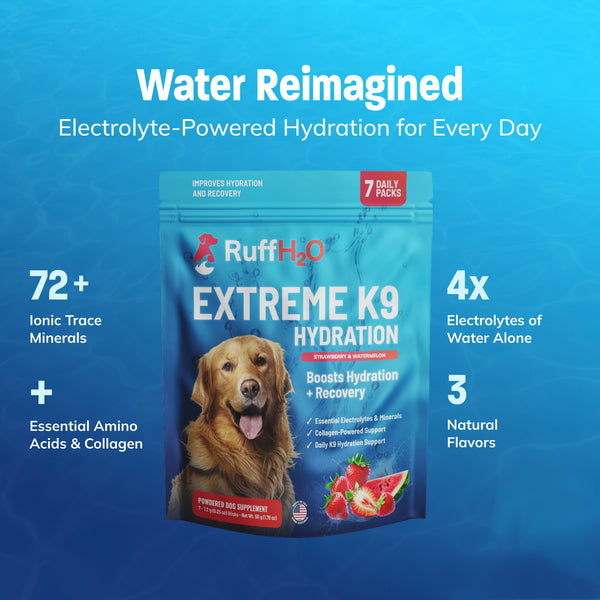
Ruff H2O, K9 Hydration
7 Daily Packs of Powdered Hydration Supplement for Dogs Every dog deserves more than plain water. Ruff H2O™ supports deeper hydration by replenishing essential electrolytes and nutrients dogs lose ev… Read more
Broth and Ice Can Help Occasionally
Broth and ice are occasional hydration extras, and an appropriately sized ice cube may make drinking more interesting for a healthy dog. If you offer broth, use only a dog-safe product with ingredients you have checked. Plain water should remain the center of your dog's hydration routine.
How Much Water Should a Dog Drink To Stay Hydrated?
How much water a dog should drink varies, but a common starting guide is 44 to 66 milliliters per kilogram of body weight each day. It is not a pass-or-fail number. Wet food contributes water, while heat and exercise can increase the amount a dog needs. Age, health, pregnancy, and nursing also matter.
Your dog's usual pattern can be more helpful than chasing one perfect measurement. Speak with your veterinarian if your dog begins drinking far more or less than usual. Do not restrict water because intake has increased, especially if the change comes with different urination, appetite, weight, or behavior.
Hydration After Exercise or Hot Weather
Hydration after exercise or hot weather starts with bringing water on longer walks and pausing in the shade before your dog looks exhausted. Once home, offer fresh water and allow time to cool down. For an otherwise healthy active dog, Ruff H2O may be used as directed alongside plain water.
An alert dog asking for a drink after a walk is one picture. A weak, disoriented dog who is vomiting, struggling to breathe, or collapsing is another. Suspected heat illness is an emergency, so call a veterinarian or emergency clinic instead of trying different drinks.
Hydration Tips for Puppies and Senior Dogs
Hydration needs differ for puppies and senior dogs, and puppies may play past the point when they need a water break. Pause the game and offer water before they become extremely thirsty. Call your veterinarian if poor drinking occurs with vomiting, diarrhea, unusual sleepiness, or weakness.
Senior dogs need bowls they can reach without dealing with stairs or slippery floors. A new increase or decrease in thirst deserves attention. Dogs with kidney disease, heart disease, diabetes, another medical condition, or a prescribed diet should have veterinary guidance before using an electrolyte product regularly.
Frequently Asked Questions About Dog Hydration
These frequently asked questions about dog hydration cover how to choose and use hydration products safely. They apply to otherwise healthy dogs; illness or serious dehydration still calls for veterinary guidance.
What should I look for in a dog hydration powder?
When choosing a dog hydration powder, look for a dog-specific label, a full ingredient list, and clear mixing, serving, and storage directions. Avoid products that claim to treat medical dehydration.
Are dog hydration packets better than human electrolyte water?
Dog hydration packets are generally a better fit than human electrolyte water because they are formulated and labeled for dogs. Drinks made for people may contain sugar, sodium, flavorings, sweeteners, or ingredient amounts that are unsuitable for dogs.
What is the best hydration product for a dog that will not drink?
The best hydration product for a dog that will not drink depends first on ruling out illness as the cause. If your dog is acting normally, a mild dog-specific hydration product may help make water more appealing. If your dog refuses all water or seems unwell, call your veterinarian.
How long can mixed Ruff H2O water sit out?
Mixed Ruff H2O water can sit out for up to 24 hours before it should be replaced. If you cannot remember when it was mixed, wash the bowl and make a fresh serving instead of topping off the old water.
Can my dog use a hydration product every day?
Whether a dog can use a hydration product every day depends on the product label, while plain water should always remain available. Ask your veterinarian first if your dog has a medical condition, takes medication, or eats a prescribed diet.
When should I use hydration support instead of calling the vet?
Hydration support makes sense instead of a vet call when an otherwise healthy dog simply needs encouragement to drink. Call the veterinarian when poor intake comes with illness, repeated vomiting, weakness, confusion, collapse, breathing trouble, seizures, or suspected heat illness. Knowing that boundary is the heart of how to hydrate a dog safely.
