
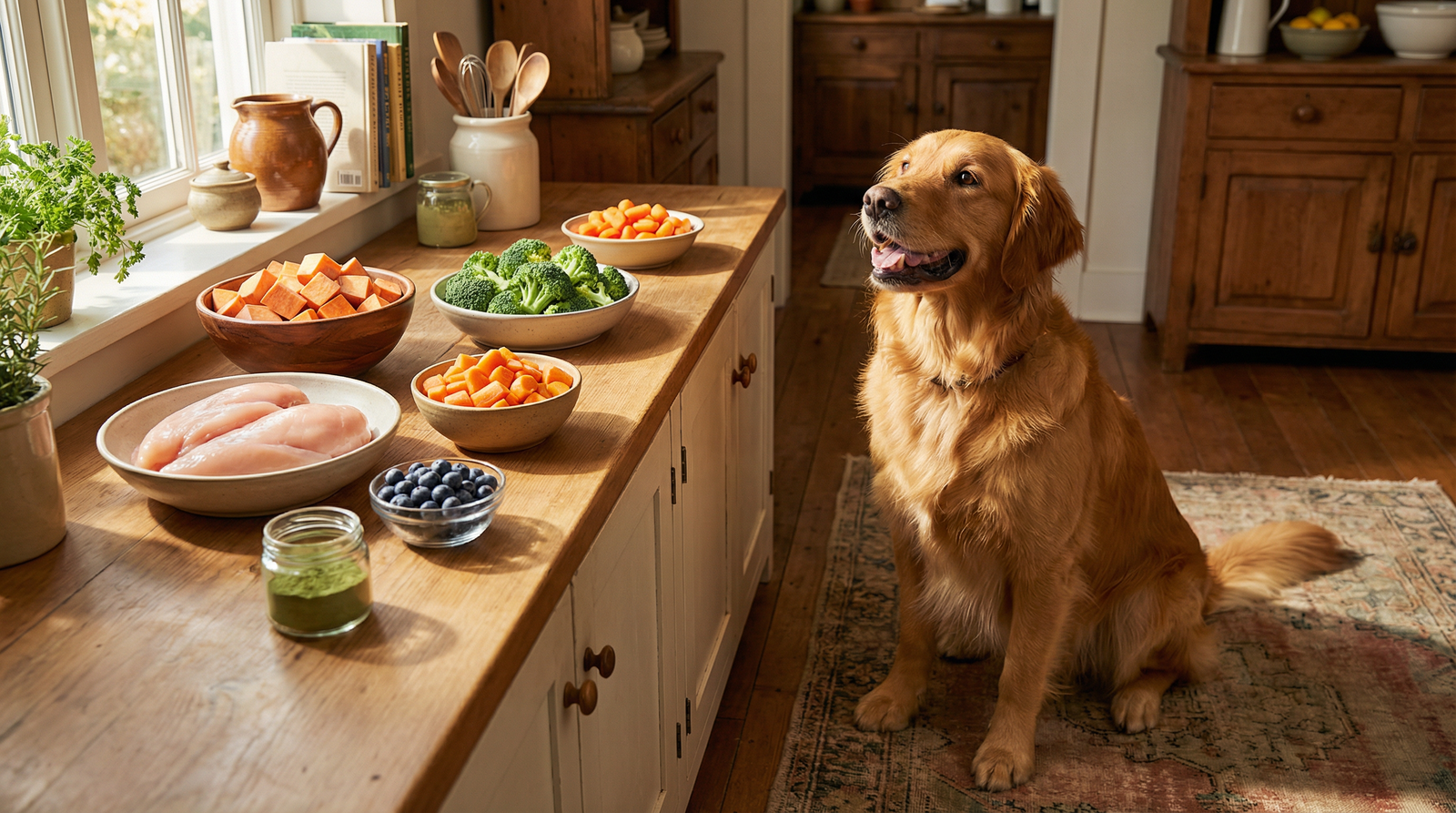

TL;DR: While cooking for your dog offers fresh ingredients and control, research shows 94% of homemade dog diets lack complete nutrition. Essential nutrients like calcium, zinc, vitamin D, and choline are often missing. To prevent irreversible health issues like bone softening or immune dysfunction, you must balance homemade meals using a comprehensive daily supplement that provides vitamins, minerals, probiotics, and digestive enzymes.
Key Takeaways
-
Most Homemade Diets Lack Complete Nutrition
Research shows that 94 percent of homemade dog food recipes are missing essential nutrients. Without careful planning and supplementation your dog could suffer from severe deficiencies.
-
Missing Nutrients Cause Irreversible Health Issues
Lacking vital components like calcium and vitamin D can lead to devastating conditions such as bone softening and immune dysfunction. These symptoms often take months or years to appear when the damage is already done.
-
Diet Drift Poses A Serious Risk
Even if you start with a balanced recipe it is easy to accidentally change ingredients or measurements over time. This common mistake can completely unbalance your dog's meals and jeopardize their health.
-
Whole Foods Alone Are Not Enough
Dogs require nearly 40 essential nutrients daily which is incredibly difficult to provide through whole foods alone. You must add a comprehensive daily supplement to ensure their homemade meals are truly balanced.
If you are preparing nutritious meals for yourself, you might wonder whether it is worth doing the same for your dog. While cooking fresh ingredients gives you a sense of control over what your pet eats, it is not always the best or healthiest option without careful planning. Many online recipes do not provide your dog with a complete and balanced diet, which can lead to severe nutritional deficiencies over time.
Understanding homemade dog food nutrition is the first step toward ensuring your furry companion thrives. In this guide, we will explore the common pitfalls of home cooked diets, the essential nutrients your dog needs, and how to safely bridge the nutritional gaps in their bowl.
The Hidden Dangers of Unbalanced Homemade Dog Food
Cooking for your dog requires absolute precision because canine nutritional needs are vastly different from human requirements. A recent 2025 study by the Dog Aging Project and Texas A&M University analyzed 1,726 homemade dog food formulations. The findings were alarming: only 6 percent of homemade diets had the potential to be nutritionally complete. This means an overwhelming 94 percent of homemade dog diets lack complete nutrition.
Furthermore, research from the University of California Davis (cited by AKC) found that 95 percent of 200 analyzed home cooked dog food recipes lacked at least one essential nutrient, and 84 percent lacked multiple essential nutrients. Only 10 recipes met the minimum standards, and most of those were written by board certified veterinary nutritionists.
The biggest challenge for pet parents is diet drift. Even with a perfectly balanced recipe, fewer than 15 percent of owners stick to their original home cooked diet plan after a year. Swapping out ingredients, changing cooking methods like steaming versus roasting, or eyeballing measurements instead of using a gram scale can completely unbalance the diet and pose a serious risk to your dog's health.
Common Nutritional Gaps in Home Cooked Meals
Dogs require nearly 40 essential nutrients daily to build and maintain tissues and carry out biological functions. When you prepare meals at home, it is incredibly difficult to meet all these requirements through whole foods alone.
According to veterinary nutritionists, the most common missing nutrients in homemade dog food include:
| Missing Nutrient | Why Your Dog Needs It | Common Food Sources (Often Insufficient) |
|---|---|---|
| Calcium | Essential for bone health, muscle contraction, and nerve signaling. | Bone meal, dairy (often poorly tolerated) |
| Vitamin D | Regulates calcium and phosphorus balance for skeletal health. | Fish, egg yolks |
| Zinc | Supports immune function, skin health, and wound healing. | Red meat, poultry |
| Choline | Vital for brain function, liver health, and metabolism. | Liver, eggs |
| Vitamin E | A powerful antioxidant that protects cells from oxidative damage. | Leafy greens, seeds |
Without these crucial components, your dog is not getting the complete nutrition they need, even if the ingredients you are using are high quality and human grade.
The Consequences of Nutritional Deficiencies
The most concerning aspect of homemade dog food nutrition gaps is that the signs of deficiency can take months or even years to appear. By the time you notice symptoms, the damage may be irreversible.
If your dog's calcium and phosphate levels get out of balance, they can develop severe bone health problems. This includes a condition nicknamed rubber jaw, where the bone starts to become soft like cartilage. A vitamin D deficiency can cause nutritional secondary hyperparathyroidism, leading to lameness, bone deformities, and even death.
Other common issues stemming from an unbalanced homemade diet include poor coat quality, immune system dysfunction, gastrointestinal distress, and life threatening liver or kidney disease. For dogs with existing illnesses, the stakes are even higher. Dogs that are not already in good health can have exacerbated symptoms if they do not receive a balanced diet specifically formulated to treat their disease.
How to Build a Balanced Dog Bowl
If you choose to cook for your dog, you must work with a board certified veterinary nutritionist to formulate a recipe. A balanced homemade diet must include the correct amount and proportion of several essential components.
First, dogs are carnivorous omnivores, meaning they need roughly twice the amount of protein that humans need to meet all their essential amino acid requirements. This should primarily come from animal based protein sources like chicken, beef, or turkey.
Second, dietary carbohydrates such as grains, legumes, vegetables, and fruits provide readily available energy. While dogs do not have a specific requirement for carbohydrates, these ingredients are good sources of other essential nutrients and dietary fiber.
Third, healthy fats are necessary for energy and the absorption of fat soluble vitamins. Finally, vitamins and minerals must be added in precise amounts. This is where adding the right supplements to your dog's food becomes absolutely critical.
The Solution: Supplementing Your Homemade Diet
Because it is nearly impossible to provide all 40 essential nutrients through whole foods alone, homemade dog food supplements are required to ensure the meals are balanced. You cannot rely on human multivitamins, as dogs have vastly different requirements and tolerances.
To fill the nutritional gaps in your homemade recipes, you need a comprehensive solution that provides a full spectrum of vitamins, minerals, probiotics, and digestive enzymes. This is exactly what Ruff Greens is designed to do.
Created by Naturopathic Doctor Dennis Black, Ruff Greens provides your dog with the live nutrients they need to thrive. It contains 20 essential vitamins and minerals, 15 strains of probiotics, over 20 digestive enzymes, and healthy Omega oils. Packed with nutrient dense superfoods like barley grass, blackberry, blueberry, broccoli, flaxseed, kale, and kelp, it delivers the vital antioxidants and micronutrients that are almost always missing from homemade diets.
Furthermore, the probiotics in Ruff Greens are crucial for your dog's overall wellness. The gastrointestinal tract contains about 70 percent of a dog's immune system. Probiotics boost the healthy gut bacteria that help digest food, counter urinary tract infections, manage immune system disorders, and even reduce anxiety. If your dog struggles with itchy skin and allergies, a balanced microbiome is essential for relief.
Whether you feed your dog kibble, raw food, or home cooked meals, adding a high quality nutritional powder ensures they get the complete, balanced diet they deserve.

Ruff Greens™ VitaSmart
A premium nutritional food topper designed to fill the nutritional gaps in commercial dog food with over 30 vitamins, minerals, probiotics, and omega fatty acids.
Frequently Asked Questions
1. Is homemade dog food better than kibble?
There is no hard scientific evidence that homemade food is inherently better than commercial diets. While home cooking provides fresh, minimally processed ingredients, 94 percent of homemade diets lack essential nutrients. A homemade diet is only beneficial if it is perfectly balanced and supplemented correctly.
2. Do I need to add supplements to my homemade dog food?
Yes, absolutely. It is nearly impossible to meet a dog's daily requirement of nearly 40 essential nutrients using only whole foods. A comprehensive supplement providing vitamins, minerals, calcium, and probiotics is necessary to prevent severe, irreversible health issues like bone deformities and immune dysfunction.
3. What happens if my dog's homemade food is unbalanced?
An unbalanced diet can lead to severe nutritional deficiencies. Symptoms may take months or years to appear and include poor coat quality, gastrointestinal issues, bone fractures, rubber jaw, and organ failure. Always consult a veterinary nutritionist to ensure your recipes meet all dietary requirements.

