
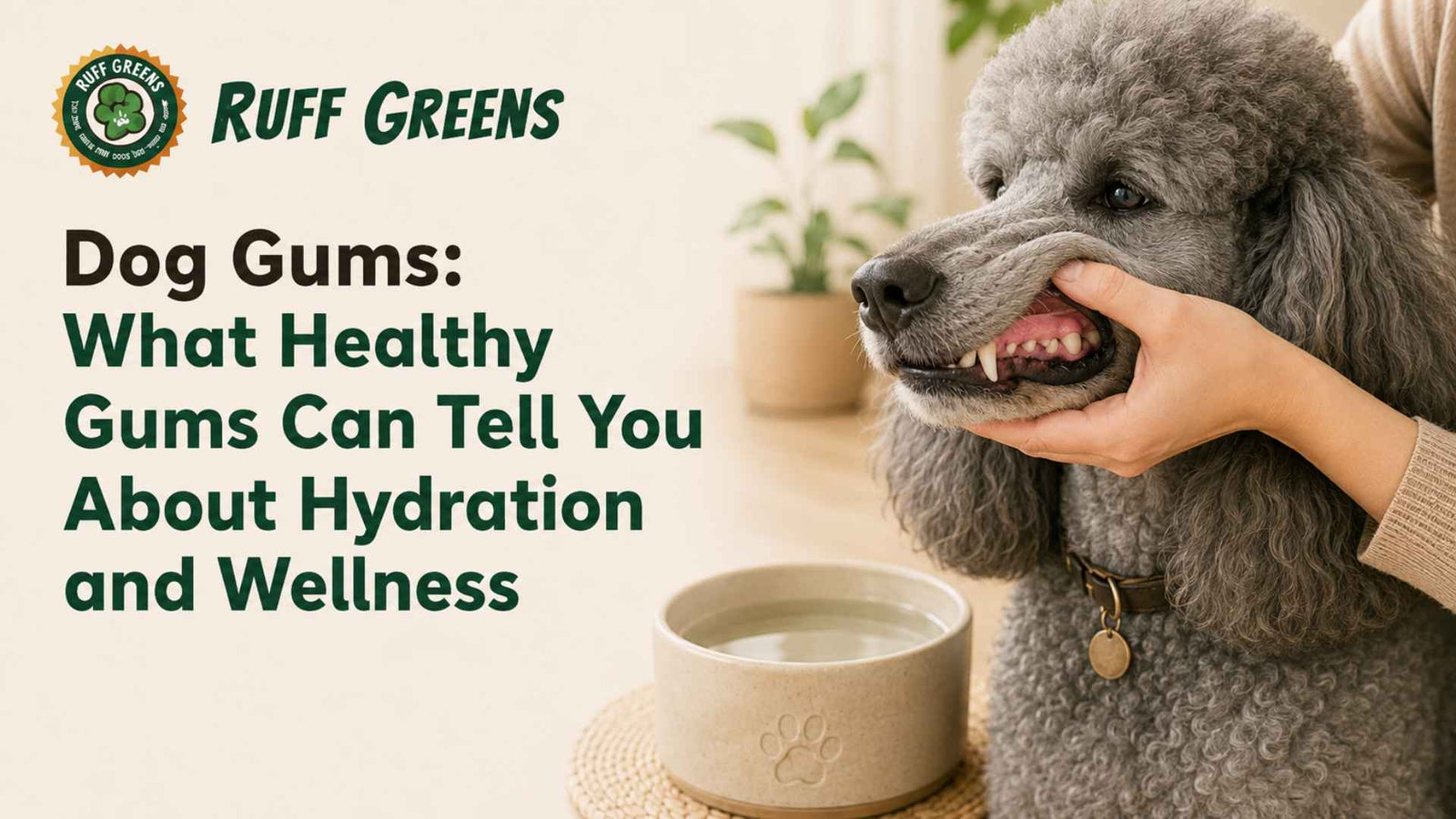


Healthy dog gums can offer useful clues about proper hydration for dogs and overall wellness, giving you one more simple way to notice when your dog may need attention.
Dog gums can get dry when a dog is short on fluids. They can also change color when something more serious is going on.
Think of this as a quick “something seems off” check, not a way to diagnose your dog from the kitchen floor.
Key Takeaways
Know What Healthy Dog Gums Should Look Like
Healthy dog gums are often pink and moist, but knowing your dog’s normal color and pigmentation makes changes easier to spot.
Sticky Dog Gums Can Be a Hydration Clue
Dry or tacky gums may occur when a dog needs more fluids, but energy, appetite, drinking habits, heat, vomiting, and diarrhea also matter.
Abnormal Dog Gum Colors Can Signal a Bigger Problem
Pale, blue, gray, yellow, or unusually bright-red gums can be warning signs that deserve prompt veterinary attention.
Hydration Support Has a Role, but It Has Limits
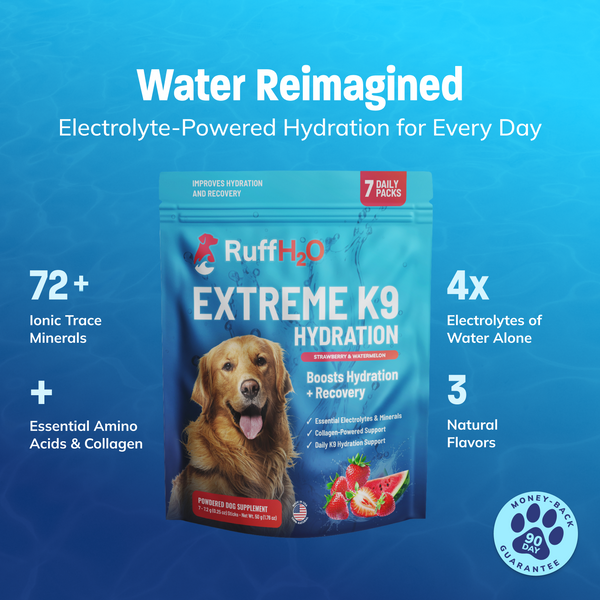
Fresh water should always come first, and Ruff H2O can support a healthy dog’s everyday hydration routine; there are other things to consider.
Start with what is normal for dog gums
Healthy gums are often described as bubble-gum pink. You may also hear salmon pink. Both descriptions are fine, but do not get hung up on the exact shade. Some dogs have a lot of natural brown or black pigment in their mouths. That can be completely normal.

The more useful question is: has anything changed? A spot that has been there for years is one thing. A new raised area, a bleeding spot, or a patch that is changing size or color is another.
When your dog is calm and feeling good, lift their lip and take a quick look. You might even take a phone photo for yourself. It makes it much easier to notice a real change later.
Healthy gums should not feel sticky
Healthy gums should feel moist and slick rather than sticky or unusually dry. Color gets a lot of attention, but moisture matters too. Normal gums generally look a little shiny and feel smooth. If you lightly touch a pink area with clean hands, your finger should not stick.
Tacky or dry gums can happen when a dog is dehydrated. They can also show up after a lot of panting, a stressful car ride, or a hot afternoon outside. Let your dog rest somewhere cool and offer fresh water. Then check again later, once they are relaxed.
If the gums are still sticky, and especially if you are also seeing low energy, thick saliva, vomiting, diarrhea, poor appetite, or sunken-looking eyes, call your veterinarian. A gum check is a clue. It is not the whole story.
A quick gum check you can do at home
You do not need to inspect your dog’s mouth every day. Once a week, or while you are already doing a little dental care, is plenty for most dogs.
- Check the color: Gently lift the lip and look for unusual color changes.
- Look at the gumline: Notice swelling, bleeding, tartar, sores, or new growths.
- Check the moisture: Healthy gums are usually wet and smooth, not dry or sticky.
- Watch your dog’s behavior: Pay attention to appetite, energy, and changes in drinking.
A normal-looking mouth does not always mean everything is fine, and slightly red gums after exercise or excitement may be temporary.
What gum colors can tell you about the health of your dog
These gum color signs can tell you quite a bit about your dog's health.

Pale or white gums
Pale gums can be associated with anemia, blood loss, poor circulation, shock, or severe pain. They are not a normal “let’s check again tomorrow” finding. If your dog also seems weak, is breathing differently, has been injured, collapses, or is acting unwell, seek urgent veterinary care.
Blue, gray, or purple gums
Blue, gray, or purple tissue can mean there is a problem with oxygen or blood flow. Treat that as an emergency, especially if your dog is coughing, struggling to breathe, choking, collapsing, or extremely weak. Go to an emergency veterinarian.
Yellow gums
Yellow gums can be a sign of jaundice. It can be related to liver concerns or conditions affecting red blood cells. A dog with yellow gums should be seen promptly, particularly if you also notice yellowing in the eyes, vomiting, reduced appetite, or low energy.
Bright-red gums
Gums can look red for a little while after excitement or exercise. They should settle as your dog settles. Gums that stay unusually bright red, particularly with heavy panting, confusion, weakness, or overheating, need urgent veterinary advice.
Red, swollen gums near the teeth
This pattern often points to a mouth problem rather than hydration. Dental disease, inflammation, and infection can cause redness at the gumline. Bad breath, visible tartar, bleeding, chewing on one side, or dropping food are all useful details to tell your veterinarian.
Dark spots and pigment
Black or brown pigment is common in many dogs. Do not assume every dark spot is a problem. But if one is new, raised, growing, bleeding, or distinctly different from the surrounding gum tissue, make an appointment.

FAQs
Do dry gums mean my dog is dehydrated?
They can, but not always. Panting, stress, and recent exercise can dry the mouth for a short time. Dry gums that remain that way, especially with other symptoms, need veterinary advice.
What color are healthy dog gums?
Many dogs have moist gums that are light pink or salmon pink. Some have normal dark pigment or spots. A change from your dog’s usual appearance matters more than matching a color sample online.
Are black spots on dog gums normal?
They often are. Natural pigment is common. A new, changing, raised, or bleeding spot should be checked by a veterinarian.
Can Ruff H2O help if my dog has dry gums?
Ruff H2O can support normal daily hydration for a healthy dog. It does not diagnose or treat dehydration, illness, or the reason gums have become dry or tacky.
