Developed by veterinary nutritionists
Meets highest quality standards
Manufactured in a FDA Registered Facility
Dog food toppers are an easy way to add a nutritional boost, extra flavor, and increased moisture to your dog's regular meals. While not a replacement for a complete and balanced diet, they can be used to entice picky eaters, support specific health needs like joint or skin health, and add variety. However, it’s crucial to use them correctly to avoid nutritional imbalances and weight gain.
Dog food toppers add extra flavor and moisture to your pet's regular meals. They are a great way to entice picky eaters and fill nutritional gaps without changing their base diet.
Toppers and treats should make up no more than ten percent of your dog's daily caloric intake. This prevents weight gain and ensures their main diet remains balanced.
Always start by adding a small amount of the new topper to your dog's food and mix it in thoroughly. Monitor them for any digestive upset over a few days before increasing to the full serving size.
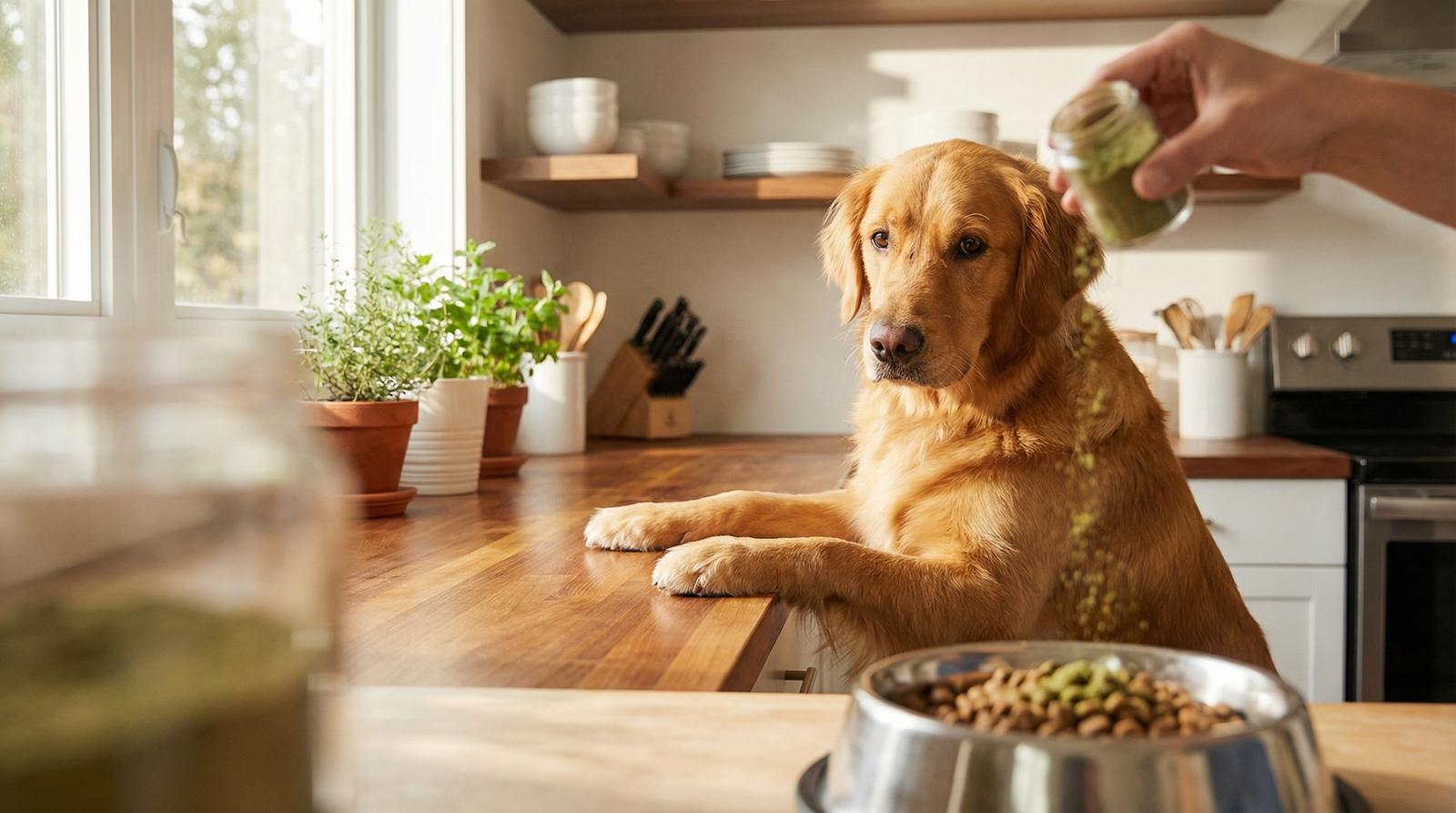
Select a topper that targets your dog's specific health needs like joint support or digestion. Powder options like VitaSmart offer a versatile and nutrient dense boost that easily mixes into any meal.
Dog food toppers are supplemental foods designed to be added to your dog’s primary meal. They are not intended to be a complete meal on their own but rather to enhance the nutritional value and palatability of your dog’s existing food. As noted by veterinarian Dr. Jennifer Coates for PetMD, toppers should add to—not replace—a balanced diet [1]. The global dog food topper market is projected to grow to over $7 billion by 2030, showing a significant rise in popularity among pet owners seeking to provide the best for their dogs [2].
These meal enhancers come in various forms, including powders, freeze-dried chunks, wet gravies, and broths. The primary goal is to make mealtime more exciting and nutritious, especially for dogs who may have become bored with their daily kibble. Whether your dog is a senior who has lost interest in food or a young pup who needs a little extra encouragement, a well-chosen topper can make all the difference.
When used correctly, food toppers can offer several key benefits for your dog’s health and happiness.
One of the most common reasons pet parents turn to toppers is to encourage a picky dog to eat. A sprinkle of a flavorful powder or a spoonful of savory gravy can make a boring bowl of kibble irresistible. Rather than switching foods entirely—which can cause digestive upset—a topper provides variety without overhauling your dog’s entire diet.
Toppers can be a fantastic way to introduce targeted nutrients into your dog’s diet. Whether it’s omega-3s for a healthier coat, glucosamine for joint support, or probiotics for digestive health, a high-quality topper can fill nutritional gaps that may exist in some commercial dog foods. This is especially important considering that many essential vitamins in kibble can be destroyed during processing. Research from the Dog Aging Project, published by the AVMA, found that owner feeding choices directly correlate with nutritional health outcomes in dogs [3].
Many dogs, especially those on a dry kibble-only diet, don’t get enough hydration. Broths and wet food toppers are an excellent way to increase your dog’s water intake, which is crucial for kidney function and overall health. Even powder-based toppers, when mixed with a splash of water, can encourage dogs to consume more fluids at mealtime.
From senior dogs needing extra joint support to active dogs requiring more protein, toppers can be formulated to meet specific life stage or health requirements. For example, a topper rich in antioxidants and probiotics can help support your dog’s gut health and immune system. Dogs recovering from illness or surgery may also benefit from a palatable topper that encourages them to eat during recovery.
While toppers offer many benefits, it’s essential to be aware of the potential downsides. Dr. Duncan Houston, BVSc, warns that improper use can lead to several issues [4].
The biggest risk is unbalancing a carefully formulated diet. Commercial dog foods are designed to be complete and balanced according to AAFCO standards. Adding too much of a topper can disrupt this balance, providing an excess of some nutrients and not enough of others. This is why choosing a topper that is formulated to complement—rather than compete with—your dog’s base diet is so important.
Toppers add calories. It’s easy to overfeed your dog if you don’t account for the extra calories from the topper, which can lead to obesity and related health problems like diabetes, arthritis, and heart disease. Always check the calorie content of any topper and adjust your dog’s main meal portion accordingly.
If you only add a topper when your dog refuses their food, they can quickly learn to hold out for the “good stuff.” This can create a frustrating cycle of picky eating. The key is to use toppers consistently as part of the meal routine, not as a reward for refusing food.
To avoid these risks, follow the “10% rule” recommended by most veterinarians: toppers and treats should make up no more than 10% of your dog’s total daily caloric intake. If you notice any signs of digestive upset or weight changes, consult your vet. Understanding the signs that your dog needs a nutritional supplement can also help you make informed decisions.
Not all toppers are created equal. The right choice depends on your dog’s specific needs, your budget, and your lifestyle. Here is a side-by-side comparison of the most common types.
| Topper Type | Pros | Cons | Best For |
|---|---|---|---|
| Powder | Easy to store, long shelf life, precise dosing, nutrient-dense | May not add much moisture on its own | Delivering concentrated vitamins, minerals, and probiotics |
| Freeze-Dried | Retains most nutrients, highly palatable, lightweight | Can be expensive, requires rehydration for moisture benefit | Picky eaters, adding high-quality protein |
| Wet/Gravy | Adds significant moisture, highly palatable, soft texture | Shorter shelf life after opening, can be messy | Senior dogs, dogs needing more hydration |
| Bone Broth | Excellent hydration source, contains collagen for joints | Lower in overall nutrients compared to other types | Adding moisture, supporting joint health |
Deciding between powder vs. chewable or other supplement forms often comes down to your dog’s preference and your specific goals. Powder-based toppers tend to offer the most versatile and nutrient-dense option, as they can be easily mixed into any food type and stored for long periods without refrigeration.
When adding any new food to your dog’s diet, it’s crucial to start slowly. Begin by adding a small amount of the topper to your dog’s food and mix it in thoroughly. This prevents them from just eating the topper and leaving their balanced meal behind.
Monitor your dog for any signs of digestive upset, such as diarrhea, vomiting, or excessive gas. If they tolerate it well after a few days, you can gradually increase the amount to the recommended serving size. Most veterinarians suggest a transition period of 5–7 days when introducing any new food element.
It’s also important to consider your dog’s overall diet when adding a topper. If your dog is already eating a high-quality food, the topper should complement what’s already there. For more guidance on what to add to your dog’s meals, check out our guide on what supplements you should add to your dog’s food.
For pet owners looking for a simple yet powerful way to enhance their dog’s diet, a powder-based topper like Ruff Greens VitaSmart is an excellent choice. Unlike many toppers that only address one area of nutrition, VitaSmart is a comprehensive blend that includes:
Because it’s a powder, VitaSmart is easy to mix into any food—wet, dry, or raw—ensuring your dog gets a balanced boost of nutrition in every bite without the mess or hassle of other topper types. You can also try it risk-free with the Ruff Greens Jumpstart Trial.
Whether you’re concerned about whether your dog is getting enough nutrition from kibble alone or simply want to give your best friend an extra edge, VitaSmart delivers a veterinarian-formulated nutritional boost that goes far beyond what a typical food topper can offer.

A premium nutritional food topper designed to fill the nutritional gaps in commercial dog food with over 30 vitamins, minerals, probiotics, and omega fatty acids.
1. Do healthy dogs really need a food topper?
According to the American Kennel Club, toppers are not strictly necessary for healthy dogs on a complete and balanced diet [5]. However, they can be used to enhance nutrition, add variety, and address specific health concerns, making them a valuable tool for proactive pet parents who want to give their dogs every advantage.
2. Can I use human food as a dog food topper?
Some human foods, like plain cooked chicken, pumpkin puree, or certain vegetables, can be safe in small amounts. However, you must avoid toxic foods like onions, garlic, grapes, and anything with xylitol. It’s generally safer and more nutritionally sound to use a topper specifically formulated for dogs to ensure proper nutrient balance.
3. How do I choose the right dog food topper for my dog?
Consider your dog’s individual needs. Are they a picky eater? Do they have dry skin or stiff joints? Read the ingredient labels and choose a topper with ingredients that target your goals. A powder-based option like VitaSmart offers the broadest range of nutritional benefits. When in doubt, consult your veterinarian for a personalized recommendation.
Written By

Have a Promo Code?
Enter your code below to receive your free trial.
Just pay shipping with your special offer.
Use code: FREETRIAL and pay only shipping