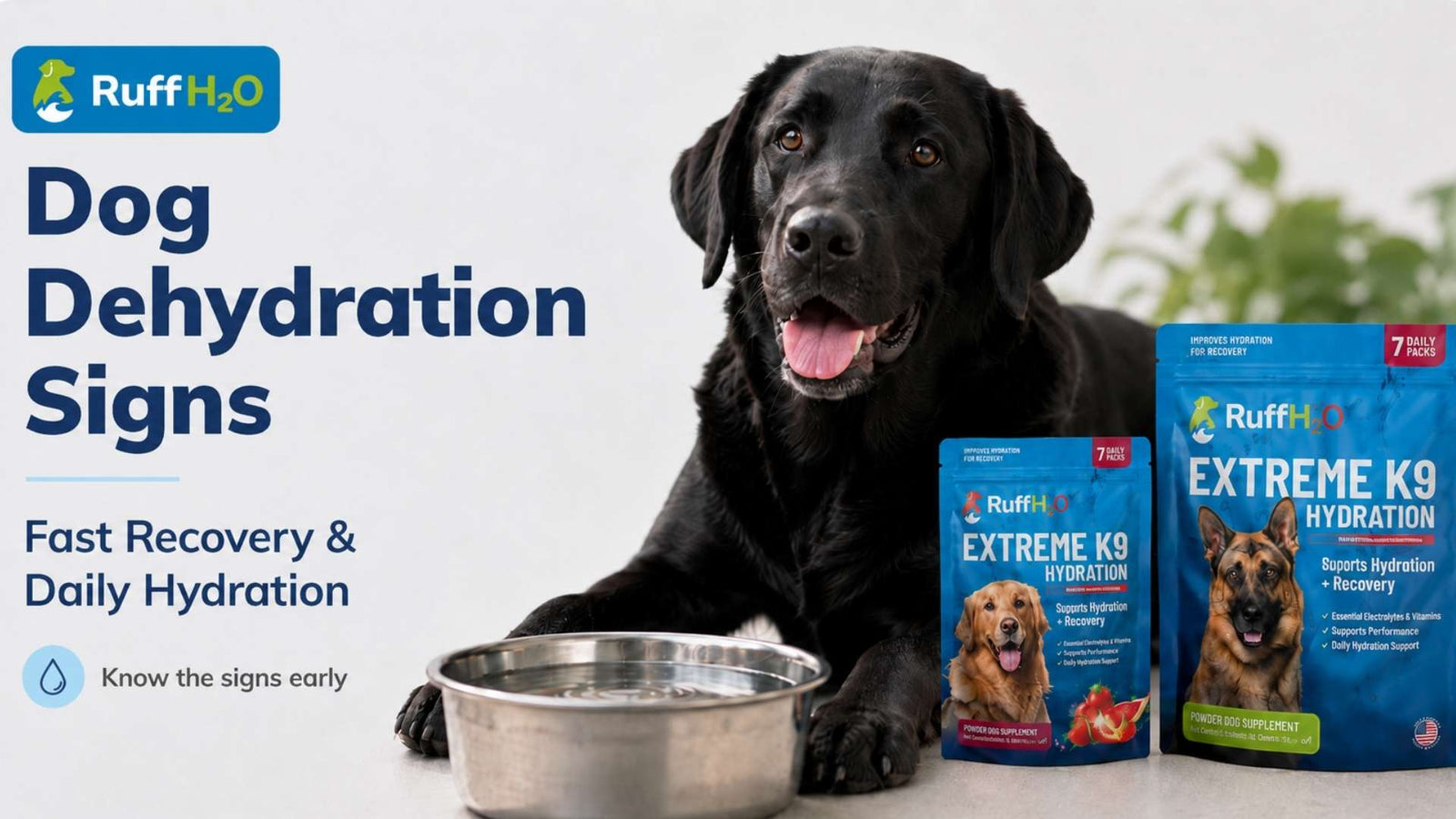

Dog dehydration symptoms can be sneaky, especially when your dog still seems normal. Sometimes the clue is sticky gums, lower energy, or a water bowl that keeps getting ignored. Catching those signs early makes it easier to tell whether your dog just needs a calm reset with a dog-focused hydration supplement or needs a vet.
Key Takeaways
-
Sticky gums in dogs are an early sign of dehydration.
A two-second touch test tells you more than watching the water bowl ever will. -
Your dog's dry nose isn't proof of dehydration.
The sign most owners check first is the least reliable one on the list. -
Dehydrated dogs can still act normally.
Tails keep wagging while fluid levels quietly drop, and that gap is what fools people. -
Certain signs of dog dehydration are true emergencies.
Collapse and repeated vomiting move a dog past what water alone can fix. -
Most Dogs Recover Quickly
When dehydration is caught early, prompt fluid intake and rest can often help your dog begin to feel better.
Dog dehydration symptoms often show up in the mouth first
A lot of dog dehydration symptoms are easier to spot in the mouth than anywhere else, so that is where we would start. Healthy gums should look moist and feel slippery. If your finger catches on your dog's gums, instead of gliding, pay attention.
That is not final proof. It is one piece of the picture.
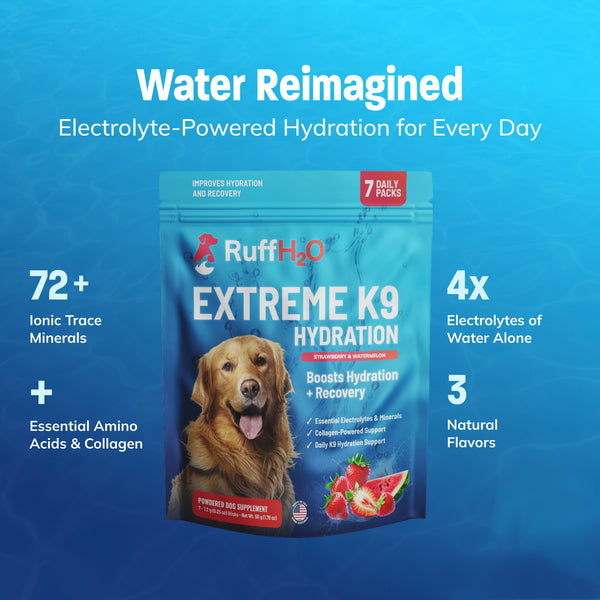
Ruff H2O, K9 Hydration
7 Daily Packs of Powdered Hydration Supplement for Dogs Every dog deserves more than plain water. Ruff H2O™ supports deeper hydration by replenishing essential electrolytes and nutrients dogs lose ev… Read more
Another clue comes from the loose skin over the shoulders. Lift it gently, let go, and watch what happens. In a well-hydrated dog, it usually drops back fast. If it seems to linger, fluid loss may be part of the story.
After that, step back and look at the whole dog instead of locking onto one sign. Do the eyes look a little sunken? Does the saliva seem thicker than usual?
Is your dog moving less, acting tired, or losing interest in things that usually get an immediate reaction? That whole pattern matters more than any single sign.
And this is worth saying plainly: a dry nose by itself isn't enough. Owners worry about that one a lot. On its own, it's weak evidence. Next to tacky gums, low energy, heavy panting, and thick saliva, it starts to mean more.
Dog Dehydration Signs That Can Be Easy To Ignore
Dog dehydration signs that are easy to ignore can disguise themselves as normal dog behavior at a glance, and that is where people start second-guessing themselves.

This is the dog that still wags. Still follows you. Still seems mostly fine.
But the energy is lower. The walk feels shorter. The dog heads over to the bowl, thinks about it, and walks away.
If your dog seems only a little off, is still alert, and is not vomiting, start small with cool water and then pause.
If your dog still wants food, adding moisture to food can help too. Some dogs will take in fluids that way more easily than by standing at the bowl and drinking on command. This could be a great opportunity to consider a hydration supplement for your dog.
When to stop guessing about dog dehydration signs, and get help
The moment we would stop guessing about your dog being dehydrated is if there are signs of weakness, collapse, repeated vomiting, ongoing diarrhea, sunken eyes, or water that will not stay down.
At that point, home care is not enough. Heat can move things in the wrong direction fast. After a hot walk, rough play in warm weather, or any time in a hot car, we would treat those same signs as urgent. That is when we would call an emergency vet.
Same if your dog refuses water completely and looks flat or sick. If your dog tries to drink and throws it back up. Same if your dog seems confused, shaky, or much weaker than normal.
Puppies and senior dogs deserve extra caution here. So do dogs with chronic health problems. They simply have less room for error.
Changes in urination matter too. If your dog is barely drinking, peeing in a strange way, or looking sick on top of the hydration issue, get help sooner instead of later.
Bad dehydration is bigger than thirst. Once the body gets too dry, blood flow and organ function can start taking the hit, even though you cannot see that part happening.
What to do first at home for dog dehydration
What you should do first depends on whether the dog looks mildly off or clearly sick.
If the signs seem mild:
- Move your dog somewhere cool and quiet.
- Offer a little cool water.
- Wait.
- If that stays down, offer a little more.
There is a reason to go slow. A dog with an upset stomach may gulp a full bowl and bring it right back up.
If food still sounds good to your dog, a wetter meal can add a bit more fluid.
Then watch what happens next:
- Is the mouth less tacky?
- Is the energy improving?
- Is the water staying down?
Those small follow-ups tell you a lot. If things aren't improving fairly quickly, make the call. If your dog starts looking worse, stop the home trial and get help.
For daily planning, a common rule of thumb is around 1 ounce of water a day for each pound of body weight. That number is only a ballpark. Heat, exercise, age, food type, and health problems can all move it around.
Daily hydration is easier with RuffH2O
Ruff H2O, K9 Hydration
7 Daily Packs of Powdered Hydration Supplement for Dogs Every dog deserves more than plain water. Ruff H2O™ supports deeper hydration by replenishing essential electrolytes and nutrients dogs lose ev… Read more
Daily hydration is not about complicated tricks. It is about making water easier and more appealing for your dog to drink consistently. Fresh bowls, water breaks after walks and play, and extra attention during hot weather all help, but some dogs still need a little more encouragement.

That is where RuffH2O fits in. RuffH2O is a dog-focused hydration supplement designed to support daily fluid intake with essential electrolytes and additional nutritional support. Simply mix it with fresh water as directed to give your dog a more appealing way to stay hydrated at home, after activity, or while traveling.
For dogs that are picky about plain water, RuffH2O can make the daily hydration routine simpler. It works with the bowl your dog already uses, requires no complicated preparation, and can be added alongside wet food, multiple water stations, and regular drink breaks.
RuffH2O does not replace fresh water or veterinary care during a true dehydration emergency. But for everyday hydration and recovery support, it gives owners a practical answer to a common problem: how to help their dog drink more consistently.
FAQs
My dog will not drink water, but acts normal. Is that always dehydration?
No. Some dogs really are picky about water freshness, bowl type, or bowl location. That is why we would check the gums, energy, saliva, and skin response instead of guessing from the bowl alone.
What is the quickest at-home check for dog dehydration symptoms?
One of the quickest ways to check for dog dehydration symptoms is to start with the gums. If they feel tacky instead of slick, that matters. Then we would pair that with the skin check and the dog's overall energy.
When is dehydration an emergency in dogs?
We would treat it as an emergency when dehydration shows up with collapse, repeated vomiting or diarrhea, marked weakness, sunken eyes, heavy heat exposure, or trouble holding water down.
How can a hydration product enhance your dog's health?
Using a hydration product such as Ruff H20 can help increase your dog's water intake and provide an optimal balance of electrolytes, including sodium, potassium, chloride, and magnesium. These are well-documented electrolytes that help muscle function and cellular fluid balance, which helps them retain water more efficiently.
Ruff H2O, K9 Hydration
7 Daily Packs of Powdered Hydration Supplement for Dogs Every dog deserves more than plain water. Ruff H2O™ supports deeper hydration by replenishing essential electrolytes and nutrients dogs lose ev… Read more

