

Dog dandruff and dog dry skin may look similar, but flakes can have several causes and do not point to one diagnosis by themselves. If your dog also has strong itching, odor, redness, sores, or hair loss, arrange a veterinary check.
What can cause dog dandruff?
Some dogs have a primary scaling disorder. More often, scaling is secondary to another problem. Allergies and hormonal disorders are among the common causes of seborrhea in dogs. Parasites, infection, and other skin conditions can also cause flakes or irritation. A veterinarian can examine your dog and look for the cause.
The Merck Veterinary Manual’s guide to seborrhea explains that scaling may appear with oiliness, inflammation, infection, or hair loss. That range is one reason dog dandruff is not always a simple grooming issue.
Gentle grooming for flaky skin
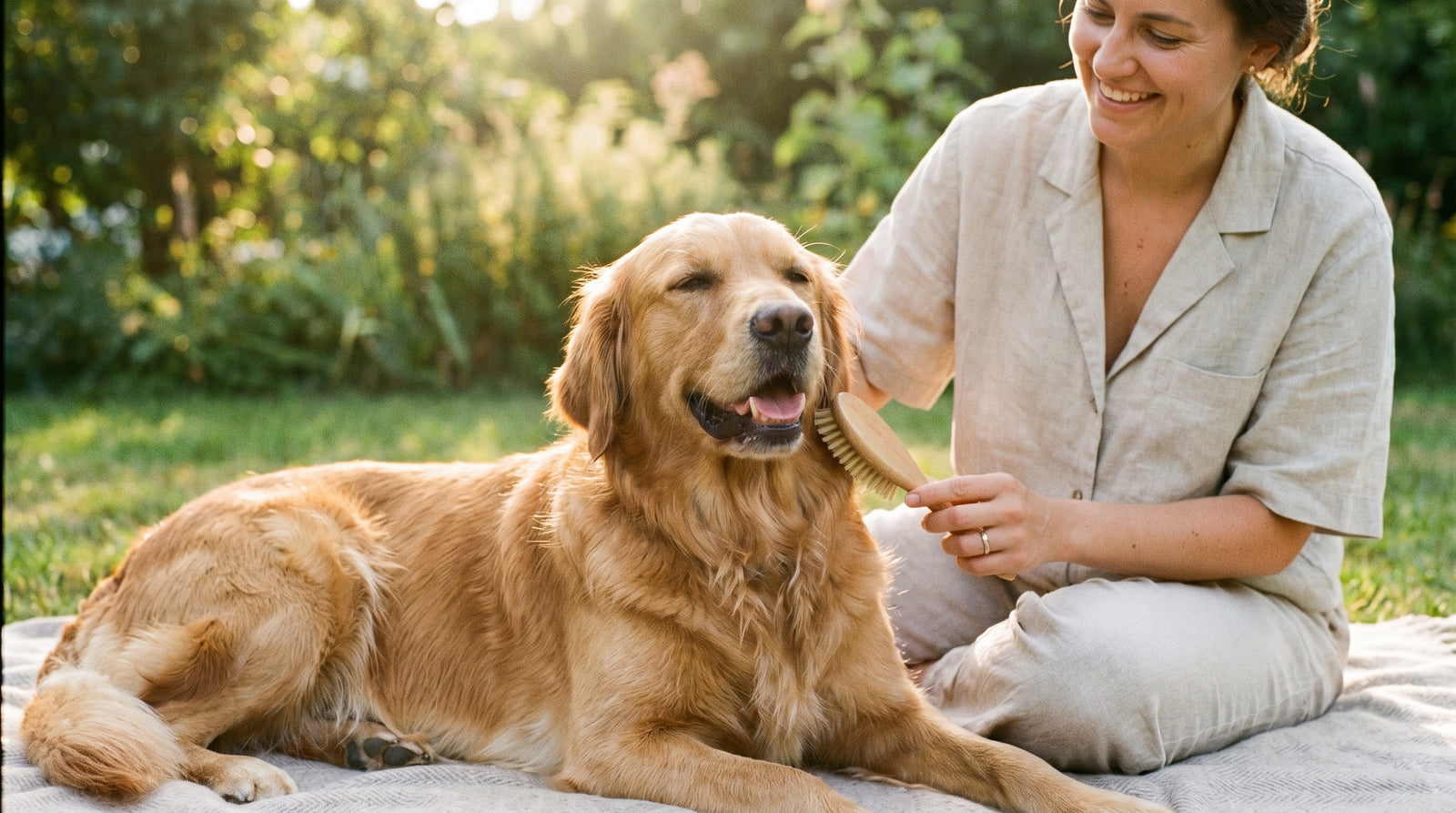
Brush your dog gently to loosen loose fur and flakes. Stop if the skin looks sore or brushing causes discomfort. Wash bedding and grooming tools as part of your normal routine. Avoid picking at scales or using scrubs, essential oils, or human shampoo. Merck advises pet owners not to use a shampoo made for people without veterinary consent.
Choose bathing products for dogs, and ask your veterinarian which type suits your dog’s skin. A medicated shampoo may be useful for some conditions, but the right product depends on the cause. Bathing more often or changing products repeatedly can make it harder to tell what is helping.
Does nutrition affect dog dandruff?
A complete, balanced diet supports your dog’s overall nutrition, but flakes alone do not show that a dog has a nutrient deficiency. Persistent dog dry skin also has many possible causes. Do not add oils or supplements to treat dog dandruff without checking with your veterinarian. Your dog’s age, diet, health history, and current medications can all affect what is appropriate.
If you are comparing food choices, start with the ingredient and feeding information on the label. Our skin and coat guide and dog food allergies guide cover related topics. They cannot replace an examination when the skin is persistently itchy or irritated.
When to contact your veterinarian
Contact your veterinarian if you notice any of these signs:
- Flakes that keep returning or frequent, intense itching.
- Redness, scabs, open sores, or hair loss.
- Unusual odor, pain, or a sudden change in the skin.
Seek advice sooner if symptoms begin suddenly or seem painful. A veterinarian can check for parasites, infection, allergies, hormonal problems, or other causes and recommend care for your dog.
Dog dandruff questions
Can I use human shampoo on my dog? Ask your veterinarian first. Human shampoo may not suit your dog’s skin, and veterinary guidance is important when flakes persist.
Will a supplement clear up flakes? Flakes alone do not identify a dietary problem. Ask your veterinarian before changing food or adding a supplement.
When should I get help? Contact your veterinarian for ongoing flakes, heavy itching, odor, redness, sores, or hair loss.
The right next step for dog dandruff depends on what is causing it. Gentle grooming can help keep the coat tidy, while veterinary guidance can help address persistent skin changes. A food topper or grooming product is not a substitute for diagnosis or treatment.

Ruff Greens™ VitaSmart
A dog food topper with probiotics, digestive enzymes, vitamins, minerals, and omega fatty acids. Review the product label and ask your veterinarian whether it fits your dog’s diet.

