
Scientifically Formulated

Developed by veterinary nutritionists

Human Grade All-Natural Ingredients

Meets highest quality standards

Expertly Crafted in the USA

Manufactured in a FDA Registered Facility

Featured image for Dog Bad Breath: A Vet-Backed Guide to Causes & Remedies (2026)

Dog Bad Breath: A Vet-Backed Guide to Causes & Remedies (2026)

TL;DR: Dog bad breath is most often caused by periodontal disease, which affects 80 to 90 percent of dogs over age 3. Daily tooth brushing, vet dental cleanings, and gut support with probiotics and digestive enzymes fix most cases. A sudden fruity, urine, or rotten odor can signal disease and needs a vet visit.

Key Takeaways
  • Plaque Is the Usual Suspect

    Periodontal disease affects 80 to 90 percent of dogs over age 3 and is the number one cause of bad breath. The odor comes from sulfur compounds made by oral bacteria.

  • The Smell Tells a Story

    A fishy or rotten odor points to dental disease, a urine smell suggests kidney trouble, and a sweet fruity odor can signal diabetes. Sudden changes deserve a vet visit.

  • Daily Brushing Is the Gold Standard

    Brushing once a day with a canine toothpaste breaks up plaque before it mineralizes into tartar. Never use human toothpaste, which can contain toxic xylitol.

  • Fresh Breath Starts in the Gut

    An unbalanced gut microbiome and poor digestion contribute to chronic odor. Daily probiotics and digestive enzymes support your dog from the inside out.

  • Small Breeds Need Extra Care

    Toy and flat faced breeds have crowded teeth that trap plaque faster. They benefit most from early brushing habits and twice yearly dental checks.

Table of Contents

Why Does My Dog Have Bad Breath?

The most common cause of dog bad breath is periodontal disease, an infection of the gums and tooth support structures driven by plaque bacteria. According to the Cornell University College of Veterinary Medicine, studies show that 80 to 90 percent of dogs over the age of 3 have some component of periodontal disease, even when their teeth look clean.

Here is how the smell develops. Plaque, an invisible bacterial biofilm, coats your dog's teeth within hours of eating. Within days it mineralizes into rough tartar, which traps even more bacteria against the gumline. As VCA Animal Hospitals explains, these bacteria produce volatile sulfur compounds, the same rotten egg chemistry behind human morning breath, only stronger and more persistent.

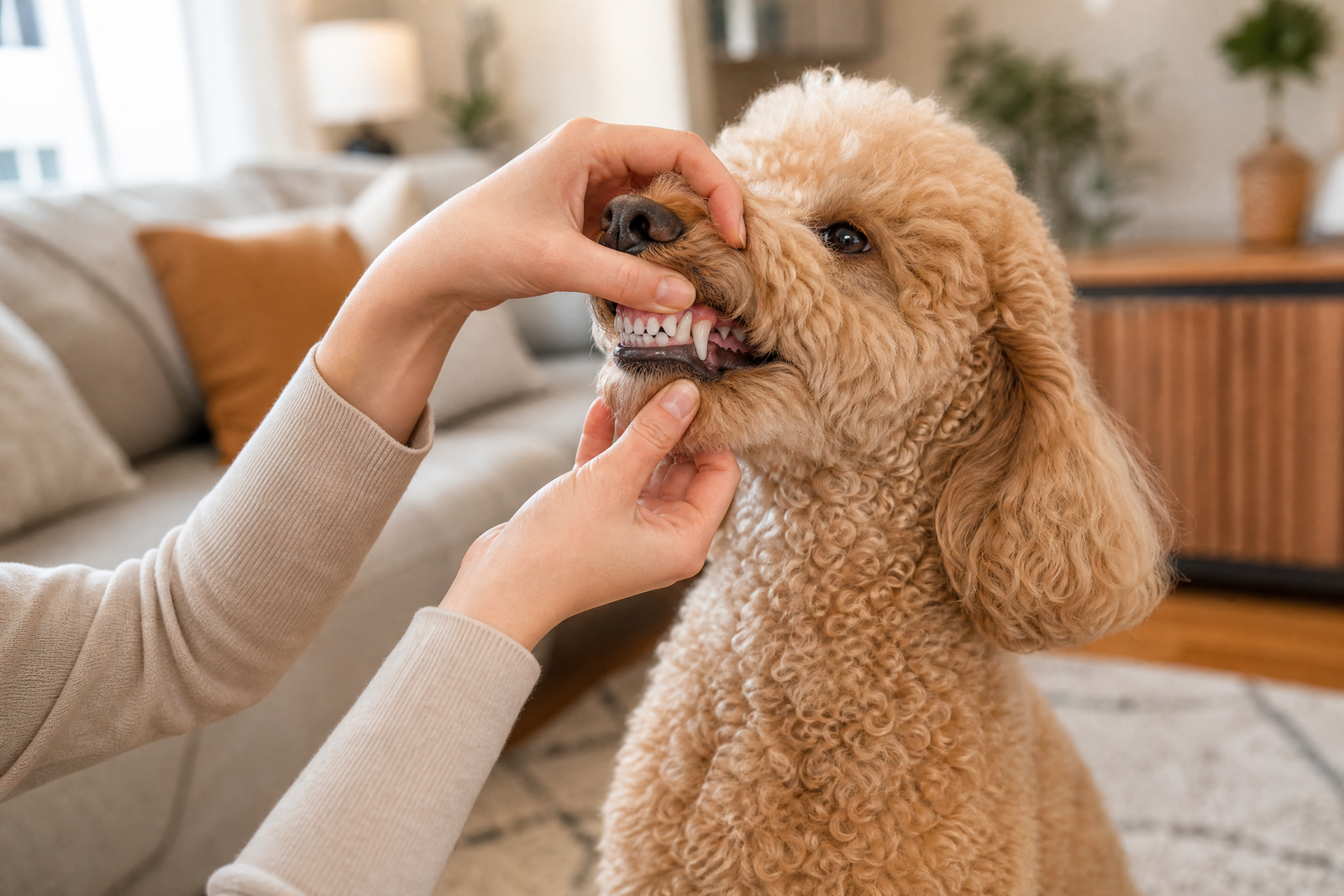
Apricot Poodle having teeth examined by owner at home showing early signs of plaque that causes dog bad breath

Dental disease is not the only culprit. Bad breath in dogs can also come from something stuck in the mouth, an abscessed tooth, an oral mass, unpleasant snacking habits like raiding the litter box, or systemic illness affecting the kidneys, liver, or blood sugar. Left unchecked, oral bacteria do not stay in the mouth either. Cornell veterinarians note that periodontal disease has been linked to liver and heart disease, which makes fresh breath a genuine health signal rather than a cosmetic concern.

Some dogs are simply built for trouble. Small breeds like Poodles, Yorkies, and Shih Tzus have teeth packed closely together, which speeds up plaque accumulation. Flat faced breeds and dogs with long facial hair around the mouth also trap more food debris and moisture, feeding the bacteria that create odor.

What Your Dog's Breath Smell Means

The specific odor of your dog's breath is a diagnostic clue. Veterinarians use breath changes to help identify underlying disease, so learning to decode the smell can tell you whether you are dealing with a dental problem or something that needs immediate attention.

Breath Smell Most Likely Cause What to Do
Fishy or rotten eggs Periodontal disease, plaque and tartar buildup Schedule a dental exam and start daily brushing
Urine or ammonia Kidney disease allowing urea to build up in blood See your vet promptly for bloodwork
Sweet or fruity Diabetes producing ketones See your vet promptly, especially with increased thirst
Feces Coprophagia (eating poop) or an intestinal blockage Block access to feces; call the vet if vomiting occurs
Sour or acidic Digestive upset, acid reflux, gut imbalance Support digestion; ask your vet about diet changes
Rotting or necrotic Abscessed tooth, foreign object, or oral tumor Book a veterinary oral exam right away
Fishy or rotten eggs
Most Likely CausePeriodontal disease, plaque and tartar buildup
What to DoSchedule a dental exam and start daily brushing
Urine or ammonia
Most Likely CauseKidney disease allowing urea to build up in blood
What to DoSee your vet promptly for bloodwork
Sweet or fruity
Most Likely CauseDiabetes producing ketones
What to DoSee your vet promptly, especially with increased thirst
Feces
Most Likely CauseCoprophagia (eating poop) or an intestinal blockage
What to DoBlock access to feces; call the vet if vomiting occurs
Sour or acidic
Most Likely CauseDigestive upset, acid reflux, gut imbalance
What to DoSupport digestion; ask your vet about diet changes
Rotting or necrotic
Most Likely CauseAbscessed tooth, foreign object, or oral tumor
What to DoBook a veterinary oral exam right away
Fishy or rotten eggs
Most Likely CausePeriodontal disease, plaque and tartar buildup
What to DoSchedule a dental exam and start daily brushing
Urine or ammonia
Most Likely CauseKidney disease allowing urea to build up in blood
What to DoSee your vet promptly for bloodwork
Sweet or fruity
Most Likely CauseDiabetes producing ketones
What to DoSee your vet promptly, especially with increased thirst
Feces
Most Likely CauseCoprophagia (eating poop) or an intestinal blockage
What to DoBlock access to feces; call the vet if vomiting occurs
Sour or acidic
Most Likely CauseDigestive upset, acid reflux, gut imbalance
What to DoSupport digestion; ask your vet about diet changes
Rotting or necrotic
Most Likely CauseAbscessed tooth, foreign object, or oral tumor
What to DoBook a veterinary oral exam right away

According to PetMD, a urine odor points to serious kidney dysfunction, while a sweet acetone smell suggests unregulated diabetes, often accompanied by weight loss and increased thirst and urination. A truly foul odor paired with vomiting, poor appetite, or yellow tinged gums can indicate liver disease. None of these respond to dental chews, which is why identifying the smell matters before you reach for a breath freshener.

If the odor is fishy but the teeth look clean, check the other end. Dogs who lick irritated anal glands transfer that fishy scent to their mouths. And if your dog has flaky, irritated skin along with mouth odor, the root problem may be broader, as we cover in our guide to what dog dandruff and flaky skin really mean.

The Gut Connection: Bad Breath That Starts in the Belly

Not all bad breath begins in the mouth. The digestive tract is a major and often overlooked source of chronic odor. When food is poorly digested, it ferments longer than it should, producing gases that escape upward. Veterinarians at PetMD note that imbalances in the normal bacteria of the mouth or gut, sometimes triggered by raw or unbalanced home cooked diets, contribute directly to bad breath.

Apricot Poodle eating from a stainless steel bowl topped with green nutritional powder supporting gut health and fresher dog breath

Think of your dog's gut as an engine. When the microbiome is balanced and digestion runs clean, less odor causing gas is produced and less undigested material lingers in the stomach. When the gut is out of balance, you get gas, gurgling, sour breath, and inconsistent stools. If your dog clears the room regularly, our article on why your dog is so gassy explains the digestive chain reaction behind it.

Two nutritional tools support this system. Probiotics replenish the beneficial bacteria that crowd out gas producing microbes, a mechanism we break down in our vet approved guide to probiotics for dogs and gut health. Digestive enzymes help your dog fully break down protein, fat, and starch so less undigested food ferments in the gut, which our guide to digestive enzymes for dogs covers in detail.

This is exactly where a daily food topper earns its keep. Ruff Greens VitaSmart combines live probiotics, digestive enzymes, vitamins, minerals, and omega fatty acids in one scoop over the food your dog already eats, supporting the gut side of the fresh breath equation every single day.

7 Vet-Backed Remedies for Dog Bad Breath

Fixing dog bad breath means treating the cause, not masking the smell. These seven remedies cover the full range, from the gold standard to daily habits.

1. Start with a veterinary dental exam. If the breath is persistently bad, book an exam first. Your vet will check for periodontal disease, abscessed teeth, foreign objects, and oral masses, and can rule out kidney, liver, or blood sugar problems with simple bloodwork. VCA veterinary dentists recommend dental examinations at least twice a year.

2. Get a professional cleaning when needed. A proper cleaning is done under anesthesia so the vet can scale plaque and tartar above and below the gumline, take dental X-rays, and address diseased teeth. Home scaling cannot reach below the gumline where the real damage happens.

3. Brush daily with canine toothpaste. Daily tooth brushing is the gold standard of home care, and the American Kennel Club recommends it as the single most effective way to prevent stinky dog breath. Use a dog specific enzymatic toothpaste. Human toothpaste contains detergents, fluoride, and sometimes xylitol, which is toxic to dogs.

Owner brushing an apricot Poodle's teeth with a canine toothbrush to remove plaque and freshen dog bad breath

4. Offer dental chews and chew toys. Chewing creates abrasive action that slows plaque buildup between brushings. Look for products carrying the Veterinary Oral Health Council (VOHC) seal, which is only awarded to products with scientific proof they reduce plaque and tartar.

5. Support the gut with probiotics and enzymes. Since chronic odor often has a digestive component, daily probiotics and digestive enzymes address the source that toothbrushes cannot reach. This also helps dogs with gurgling stomachs and gas, symptoms we unpack in our guide to dog stomach gurgling noises.

6. Upgrade the diet and stop gross snacking. Secure the trash, move the litter box out of reach, and clean up the yard promptly to stop coprophagia. A complete, balanced diet also matters, because nutritional gaps disrupt the bacterial balance of the mouth and gut.

7. Try water additives and oral rinses. VOHC accepted water additives reduce oral bacteria with zero effort from your dog. Products containing zinc are notably effective because zinc binds sulfur compounds, neutralizing odor at the chemical level.

How to Prevent Bad Breath for Good

Prevention is a routine, not a product. The dogs with the freshest breath are the ones whose owners layer several small habits that each block a different pathway to odor.

Habit Frequency What It Prevents
Tooth brushing with canine paste Daily Plaque buildup before it becomes tartar
Dental chews or VOHC treats Daily Plaque between brushings
Probiotic and enzyme support Daily with meals Gut driven odor, gas, poor digestion
Fresh water changes Daily Bacterial growth in the water bowl
At home mouth checks Weekly Foreign objects, gum redness, growths
Veterinary dental exam Every 6 to 12 months Advanced periodontal disease
Tooth brushing with canine paste
FrequencyDaily
What It PreventsPlaque buildup before it becomes tartar
Dental chews or VOHC treats
FrequencyDaily
What It PreventsPlaque between brushings
Probiotic and enzyme support
FrequencyDaily with meals
What It PreventsGut driven odor, gas, poor digestion
Fresh water changes
FrequencyDaily
What It PreventsBacterial growth in the water bowl
At home mouth checks
FrequencyWeekly
What It PreventsForeign objects, gum redness, growths
Veterinary dental exam
FrequencyEvery 6 to 12 months
What It PreventsAdvanced periodontal disease
Tooth brushing with canine paste
FrequencyDaily
What It PreventsPlaque buildup before it becomes tartar
Dental chews or VOHC treats
FrequencyDaily
What It PreventsPlaque between brushings
Probiotic and enzyme support
FrequencyDaily with meals
What It PreventsGut driven odor, gas, poor digestion
Fresh water changes
FrequencyDaily
What It PreventsBacterial growth in the water bowl
At home mouth checks
FrequencyWeekly
What It PreventsForeign objects, gum redness, growths
Veterinary dental exam
FrequencyEvery 6 to 12 months
What It PreventsAdvanced periodontal disease

Start young if you can. Puppies that learn to accept brushing turn the habit into a lifelong routine. For adult dogs, go slow: touch the lips, reward, touch the gums, reward, then introduce paste and finally the brush over a couple of weeks.

Nutrition rounds out the plan. A dog with a balanced microbiome, complete vitamins and minerals, and healthy digestion has fewer sources of odor overall. That daily nutritional foundation is what VitaSmart's blend of probiotics, enzymes, and whole food nutrients is designed to deliver, and the Ruff Greens JumpStart trial makes it easy to see how your dog responds. For the full picture on keeping teeth and gums healthy, see our complete dog dental care guide to clean teeth and fresh breath.

When Bad Breath Means a Vet Visit

Call your veterinarian promptly if bad breath appears suddenly or comes with other symptoms. Breath that smells like urine or ammonia, a sweet fruity odor, or a rotten smell paired with drooling, pawing at the mouth, bleeding gums, dropped food, or refusal to eat all point to problems that home care cannot fix.

Veterinarian examining an apricot Poodle's mouth and teeth during a dental checkup for persistent dog bad breath

Watch especially for combinations. Bad breath plus increased thirst and urination suggests diabetes or kidney disease. Bad breath plus vomiting, weight loss, or yellowish gums suggests liver trouble. Bad breath plus a swollen face or eye can mean a tooth root abscess. Cornell veterinarians emphasize that by the time a dog shows obvious signs of oral pain, such as dropping food or withdrawing from the family, periodontal disease is already advanced.

The good news is that nearly every cause of dog bad breath is treatable, and the earlier you act, the simpler and cheaper the fix. A dog whose breath stays consistently fresh on a routine of brushing, chewing, gut support, and regular vet checks is a dog whose whole body is healthier for it.

Fresh breath is a daily habit, not a one time fix. Combine consistent dental care with daily gut support, and you address both ends of the problem at the source. If you want to start with the inside out approach, a scoop of VitaSmart on tonight's dinner is the easiest first step you can take.

Frequently Asked Questions

1. Why does my dog's breath smell like fish?

A fishy odor usually comes from sulfur compounds produced by plaque bacteria in periodontal disease, the most common cause of dog bad breath. It can also happen when dogs lick irritated anal glands. Start with a dental exam, begin daily brushing, and ask your vet to check the anal glands if the smell persists.

2. Can probiotics help my dog's bad breath?

Yes, probiotics can help when the odor has a digestive origin. They rebalance the gut and oral microbiome, crowding out the bacteria that produce odor causing compounds. Probiotics work best combined with dental care, since they support the gut side of the problem while brushing controls plaque on the teeth.

3. When is dog bad breath an emergency?

Seek veterinary care quickly if bad breath appears suddenly with drooling, refusal to eat, facial swelling, or bleeding from the mouth, or if the breath smells like urine or acetone. These signs can indicate kidney disease, diabetes, or an abscessed tooth, all of which need prompt professional treatment.

Written By

Dennis Black, NMD
Dennis Black, NMD

Dr. Black is former Army Ranger, a Helicopter Pilot, Stage 4 Cancer Survivor and a Naturopathic Doctor living in Dallas, Tx. For decades, Dr. Black has shown thousands of people how to get healthy using Natural protocols. When those same people asked him to create something to get their pets healthy, he rose to the challenge and created the Ruff Greens Family of Products.