

Key Takeaways
-
Enzymes Unlock Essential Nutrients
Digestive enzymes are crucial proteins that break down food so your dog can actually absorb the nutrients. Without them, even premium kibble passes right through without fueling their body.
-
Processed Diets Deplete Natural Enzymes
The high heat used to make commercial dog food destroys naturally occurring enzymes. This forces your dog's pancreas to work overtime and can lead to enzyme depletion as they age.
-
Watch for Signs of Deficiency
If your dog struggles with excessive gas, loose stools, or unexplained weight loss, they might not be digesting their food properly. Recognizing these symptoms early can help you intervene before chronic issues develop.
-
Choose a Comprehensive Canine Supplement
Avoid human supplements and look for a product specifically formulated for dogs. The best approach combines digestive enzymes with probiotics and essential vitamins to support total gut health.
TL;DR: Digestive enzymes for dogs are essential proteins that break down food into absorbable nutrients. While dogs naturally produce enzymes like protease, amylase, and lipase, highly processed diets (like kibble) and aging can deplete their natural supply. Supplementing with digestive enzymes can resolve issues like gas, bloating, and diarrhea while maximizing the nutritional value of your dog's food. For optimal gut health, look for a comprehensive supplement that combines enzymes with probiotics and essential vitamins.
What Are Digestive Enzymes for Dogs?
Digestive enzymes are specialized proteins that act as biological catalysts, breaking down the complex molecules in your dog's food into smaller, easily absorbable nutrients [1]. Without these crucial proteins, even the highest quality dog food would simply pass through your pet's digestive tract without providing the necessary fuel for their body.
In a healthy dog, the pancreas is the primary organ responsible for producing and releasing digestive enzymes into the small intestine [2]. When your dog eats, the pancreas secretes a carefully balanced mixture of enzymes designed to dismantle proteins, fats, and carbohydrates.
However, the modern canine diet presents a significant challenge. The high heat and extreme pressure used to manufacture commercial kibble destroy any naturally occurring live enzymes in the ingredients [3]. This forces your dog's pancreas to work overtime, producing massive amounts of enzymes to compensate for the "dead" food. Over time, this constant strain can lead to enzyme depletion, especially as your dog ages.
The 4 Main Types of Digestive Enzymes
To fully understand how these proteins work, it is helpful to look at the specific types of enzymes and the distinct roles they play in canine digestion.
| Enzyme Type | Primary Function | Why Your Dog Needs It |
|---|---|---|
| Protease | Breaks down proteins into amino acids | Essential for muscle repair, immune function, and cellular growth [1]. |
| Amylase | Breaks down starches and carbohydrates | Helps convert complex carbs into usable glucose for energy [1]. |
| Lipase | Breaks down dietary fats into fatty acids | Crucial for absorbing fat-soluble vitamins and maintaining a healthy coat [1]. |
| Cellulase | Breaks down plant fiber (cellulose) | Dogs do not naturally produce cellulase, making it vital for digesting grains and plant matter in commercial foods [3]. |
Does Your Dog Need Digestive Enzyme Supplements?
Many pet parents assume that if their dog is eating a premium diet and having regular bowel movements, their digestive system is functioning perfectly. However, the reality of modern canine nutrition suggests otherwise.
Because the cooking process destroys natural enzymes at temperatures above 118°F (48°C), dogs eating heat-processed kibble or canned food receive virtually zero enzymatic support from their meals [3]. This places the entire burden of digestion on the dog's internal organs.
Furthermore, as dogs enter their senior years, their natural enzyme production naturally declines. This age-related decrease in digestive efficiency is a primary reason why older dogs often struggle to maintain their weight or develop sudden sensitivities to foods they previously tolerated well. If you are exploring the Best Supplements for Senior Dogs, digestive enzymes should be at the top of your list.
Signs Your Dog Has an Enzyme Deficiency
When a dog's body cannot properly break down and absorb nutrients, the undigested food ferments in the digestive tract, leading to a cascade of uncomfortable symptoms. Recognizing these warning signs early can help you intervene before chronic issues develop.
Common indicators of an enzyme deficiency include:
- Excessive gas, burping, or flatulence
- Frequent episodes of diarrhea or loose stools
- Dog constipation or repeated straining
- Regurgitation of undigested food shortly after eating
- Noticeably foul-smelling breath or stools
- Visible pieces of undigested food in their feces
- Unexplained weight loss despite a healthy appetite
- Loud stomach gurgling or signs of abdominal cramping [3]
If your dog frequently experiences these symptoms, it may be time to evaluate their gut health. For a deeper dive into canine dietary sensitivities, our comprehensive guide on Dog Food Allergies provides valuable insights into how poor digestion contributes to systemic inflammation.
Health Conditions That Benefit from Enzymes
While healthy dogs eating processed diets can benefit from routine supplementation, certain medical conditions make digestive enzymes an absolute necessity.
Exocrine Pancreatic Insufficiency (EPI)
- EPI is a severe condition where the pancreas fails to produce adequate digestive enzymes [2]. Dogs with EPI essentially starve regardless of how much they eat because they cannot absorb nutrients. This condition requires lifelong prescription pancreatic enzyme replacement therapy, typically administered as a powder mixed into moistened food.
Chronic Pancreatitis
- When the pancreas becomes inflamed, its ability to secrete enzymes is severely compromised. While acute pancreatitis requires immediate veterinary intervention, dogs managing chronic, low-grade pancreatitis often benefit from supplemental enzymes to reduce the workload on their recovering pancreas [3].
Dysbiosis and Leaky Gut
- Poor digestion allows large, undigested protein molecules to pass through the intestinal lining and enter the bloodstream, triggering an immune response. This condition, known as leaky gut syndrome, is a root cause of many systemic allergies and skin conditions. By ensuring proteins are fully broken down into harmless amino acids, digestive enzymes help maintain the integrity of the intestinal barrier.
This process works synergistically with beneficial bacteria. To understand this vital relationship, read our guide on Probiotics for Dogs: A Vet Approved Guide to Gut Health.
Natural Food Sources of Digestive Enzymes
If you want to boost your dog's enzyme intake naturally, several whole foods contain beneficial active enzymes. However, these foods must be fed raw, as cooking will destroy their enzymatic properties.
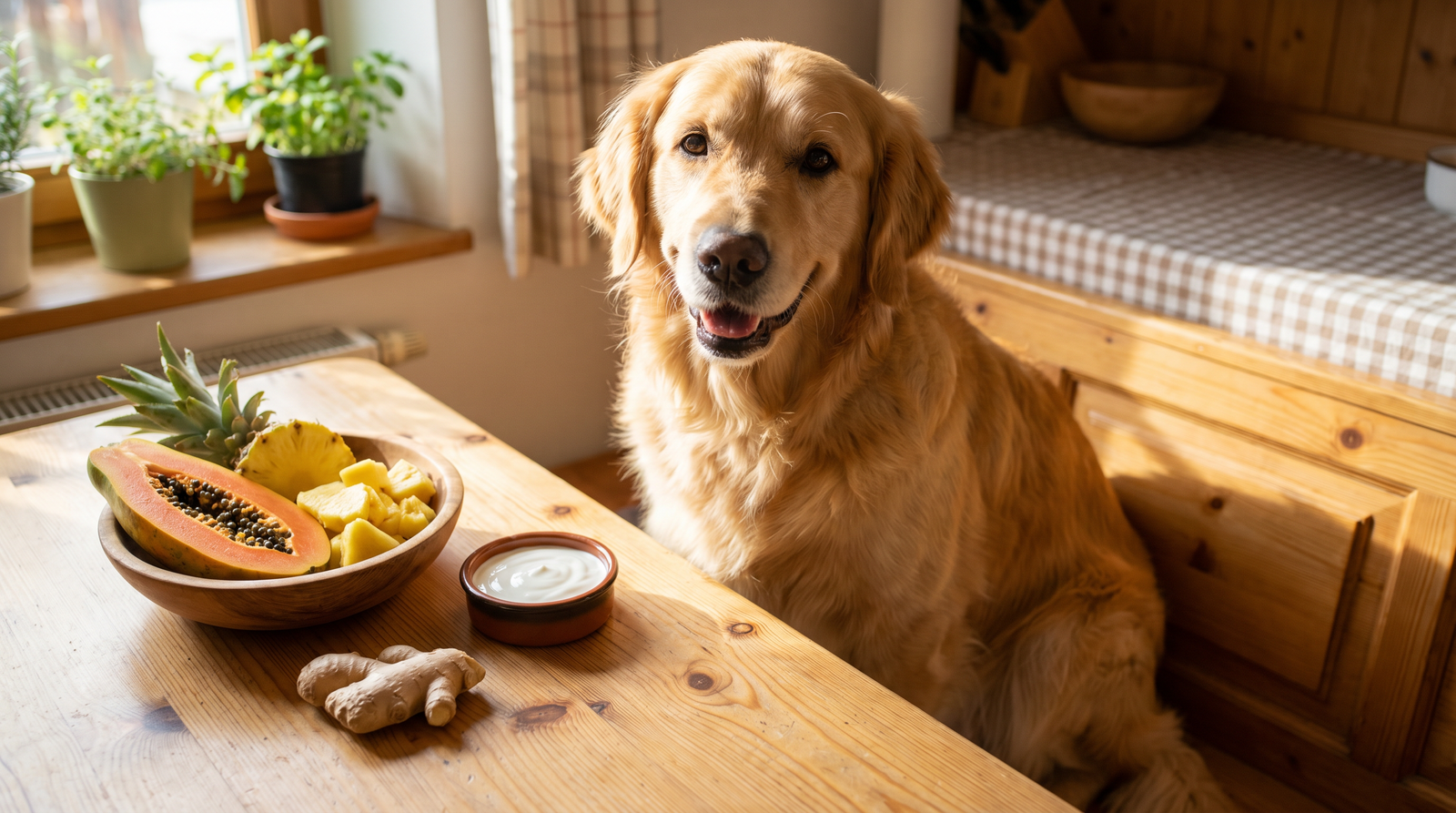
Safe, enzyme-rich foods for dogs include:
- Papaya: Contains papain, a powerful protease that breaks down meat proteins [3].
- Pineapple: A rich source of bromelain, which aids protein digestion and reduces inflammation [3].
- Kefir or Plain Yogurt: Provides both live enzymes and beneficial probiotics.
- Fermented Vegetables: The fermentation process creates a wealth of digestive enzymes and beneficial bacteria.
- Ginger: Contains zingibain, an enzyme that helps digest proteins and soothes the digestive tract.
Choosing the Best Digestive Enzyme Supplement
When selecting a supplement for your dog, quality and comprehensive formulation are paramount. Avoid human enzyme supplements, as a dog's digestive requirements and natural pH levels are vastly different from our own.
The most effective digestive support comes from a multi-faceted approach. Rather than giving a standalone enzyme product, look for a comprehensive nutritional supplement that combines digestive enzymes with prebiotics, probiotics, and essential vitamins.
This is where Ruff Greens VitaSmart excels. VitaSmart is a premium nutritional supplement scientifically formulated to bridge the gap between processed dog food and optimal canine health. It delivers a robust blend of digestive enzymes to ensure your dog extracts maximum nutrition from every meal, paired with a powerful probiotic complex to maintain a thriving gut microbiome. By addressing digestion from multiple angles, VitaSmart helps eliminate gas, improve stool quality, and boost your dog's overall vitality.
Explore Ruff Greens VitaSmart and Start Your Jumpstart Trial Today
Frequently Asked Questions (FAQs)
Can I give my dog human digestive enzymes? No, you should avoid giving your dog human digestive enzyme supplements. Dogs have different natural enzyme ratios, stomach pH levels, and dietary requirements than humans. Always choose a supplement specifically formulated for canine physiology to ensure safety and efficacy.
How long does it take for digestive enzymes to work in dogs? Digestive enzymes begin working immediately upon entering the digestive tract, typically within one to two hours of ingestion [2]. While you may notice improvements in acute symptoms like gas or bloating within a few days, it can take several weeks of consistent supplementation to see broader benefits like improved coat quality, weight gain, or increased energy levels.
Are there any side effects of giving dogs digestive enzymes? For the vast majority of dogs, digestive enzymes are incredibly safe and well-tolerated. In rare cases, a dog may experience mild, temporary gastrointestinal upset (such as loose stools) when first introduced to a new supplement [2]. If this occurs, simply reduce the dosage and gradually increase it as their system adjusts. Always consult your veterinarian before starting any new supplement, especially if your dog has a pre-existing medical condition.
References
[1] PetMD. "All About Digestive Enzymes for Dogs." Accessed April 17, 2026. https://www.petmd.com/dog/nutrition/all-about-digestive-enzymes-dogs
[2] VCA Animal Hospitals. "Enzymes." Accessed April 17, 2026. https://vcahospitals.com/know-your-pet/enzymes
[3] Dogs Naturally Magazine. "When To Give Digestive Enzymes For Dogs." Accessed April 17, 2026. https://www.dogsnaturallymagazine.com/enzymes-and-your-dog/

Ruff Greens™ VitaSmart
A premium nutritional food topper loaded with probiotics, digestive enzymes, and prebiotics that support healthy digestion, nutrient absorption, and gut balance in dogs.

